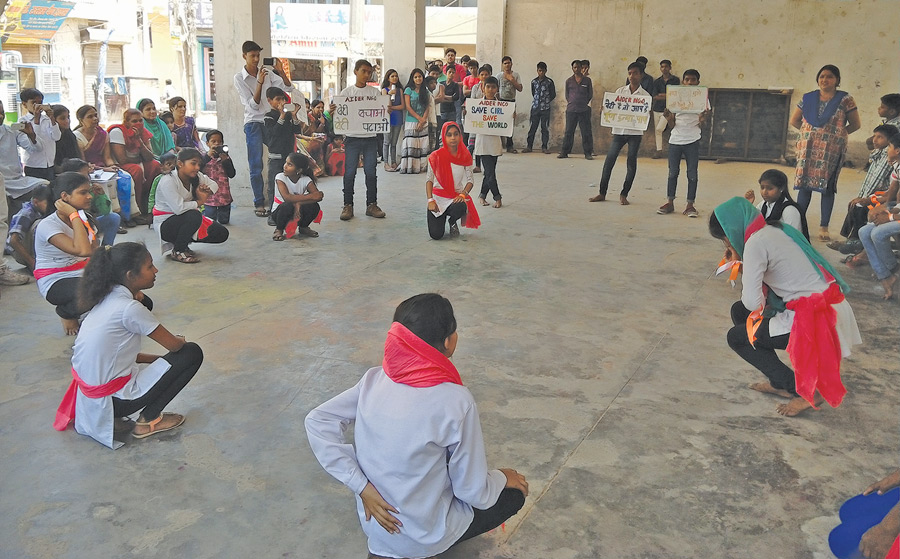
This year’s International Labour Day (May 1) celebration was nothing special for the workers of Indian garment industry. Small gatherings and meetings were organized in most of the hubs across India; workers urging the authorities to fulfil their demands, while asking the workers to remain united. In Bangalore, the activities were more significant, particularly in the light of recent agitation on EPF issue. There were few demonstrations in the city organized by the Garment and Textile Workers Union (GATWU), Garment Labour Union (GLU) and other trade unions, focusing on the garment workers’ protest and the plight of the arrested workers. The workers from the All India Trade Union Congress (AITUC) observed the day as a Solidarity Day with the garment workers who came from various industries. In Gurgaon, another garment hub, the children of garment workers enacted an interesting street play with a social message on the occasion of the May Day.
For the Bangalore-based garment workers, the day did create some hope as on the occasion of the May Day programme, organized by Indian National Trade Union Congress (INTUC), the Karnataka Chief Minister Siddaramaiah assured garment workers that he will consult the police and initiate measures to withdraw cases booked against them during the recent EPF scheme amendment made by the Central Government. As per the unconfirmed reports, almost 200 garment workers are now behind the bars, some booked for serious charges like attempt to murder.
Despite being Sunday on International Labour Day, many factories were running on that day, struggling to match shipment deadlines. For many workers it was a regular day as they get no reimbursement in terms of money or holiday.
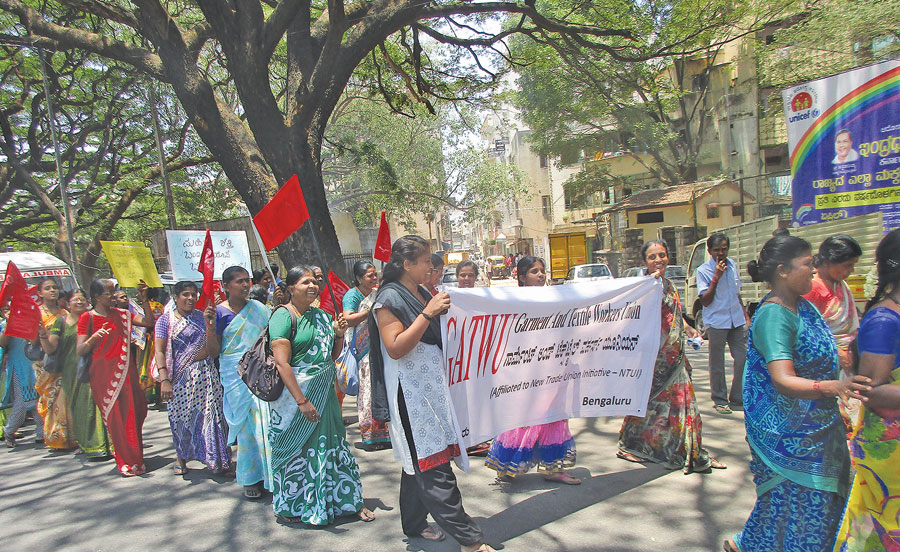
in Bangalore
During the event, some workers felt a sense of victory when the Chief Minister congratulated them on what he called “a historic and successful workers’ movement” that forced the Central Government to rollback the “ill-conceived amendments to the EPF scheme”, thereby benefiting workers across the country. “The Centre had taken such a decision without consulting the working class,” the CM added. But as far as the demand for sustainable solutions of the workers is concerned, there is no such visible hope or even process, as workers were demanding the minimum wage of garment workers to be raised to Rs. 18,000, as per the Seventh Pay Commission recommendation.
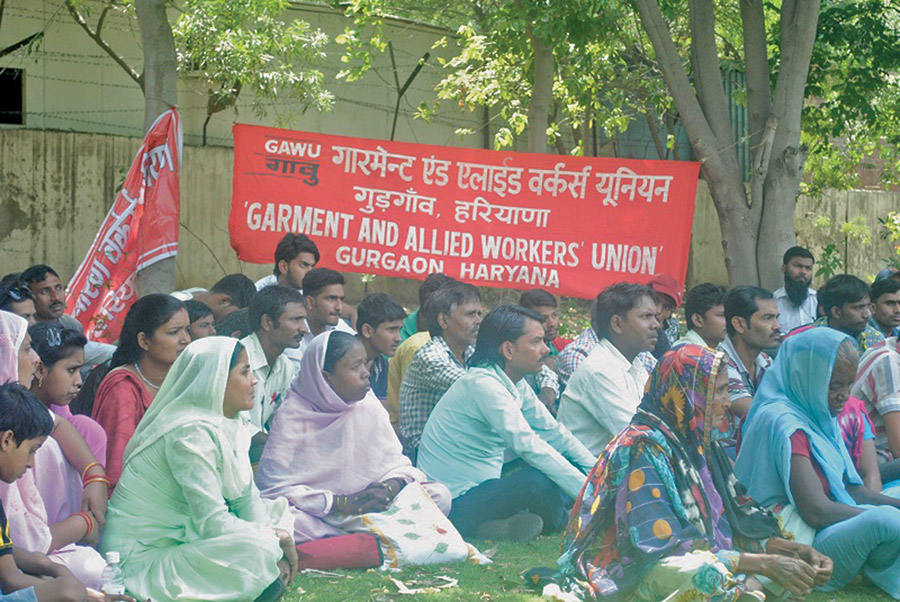 Earlier in Gurgaon, on 28th of April, Ananya Bhattacharya of Garment and Allied Workers Union (GAWU) organized a protest demonstration and demanded the payment of minimum wages for the garment factory workers in Udyog Vihar. Exporters were of the opinion that due to labour scarcity they are paying more than the minimum wages, raising questions as to which tailor or helper will agree to work on less than the minimum wage in today’s time? It is worth mentioning here that Ananya was sued by two of her colleagues, blaming her for working for personal gains and failing to pay the promised salary to them.
Though normally both NGOs and unions have a negative image in the industry, but on the other side, there are some who are doing positive work also, may be at a small level, but nevertheless it really matters. Another Delhi-based NGO, AIDER, decided to celebrate the International Labour Day in Gurgaon in a very constructive manner. Several garment workers and their children participated in the ‘Awareness Peace March’, followed by street plays on issues like Beti Bachao, Beti Padhao (Save the Girl Child, Educate the Girl Child); Swachh Bharat Abhiyan (Clean India Campaign), etc. Virender K Jha, President of the NGO informed Apparel Online, “Through this initiative, we will try to create awareness in the areas like the borders of Gurgaon city, Udyog Vihar, Dhundahera village, etc. Street plays by the children of garment workers at the village chaupal gave the social message to the community in a very positive manner, and even enhanced the confidence of these children.” AIDER claims that it is actively involved in support of the garments workers through various free training/education programmes and is making effort to empower them and their families to have respectable life in the society.



 Bharat Tex Special Report 2026