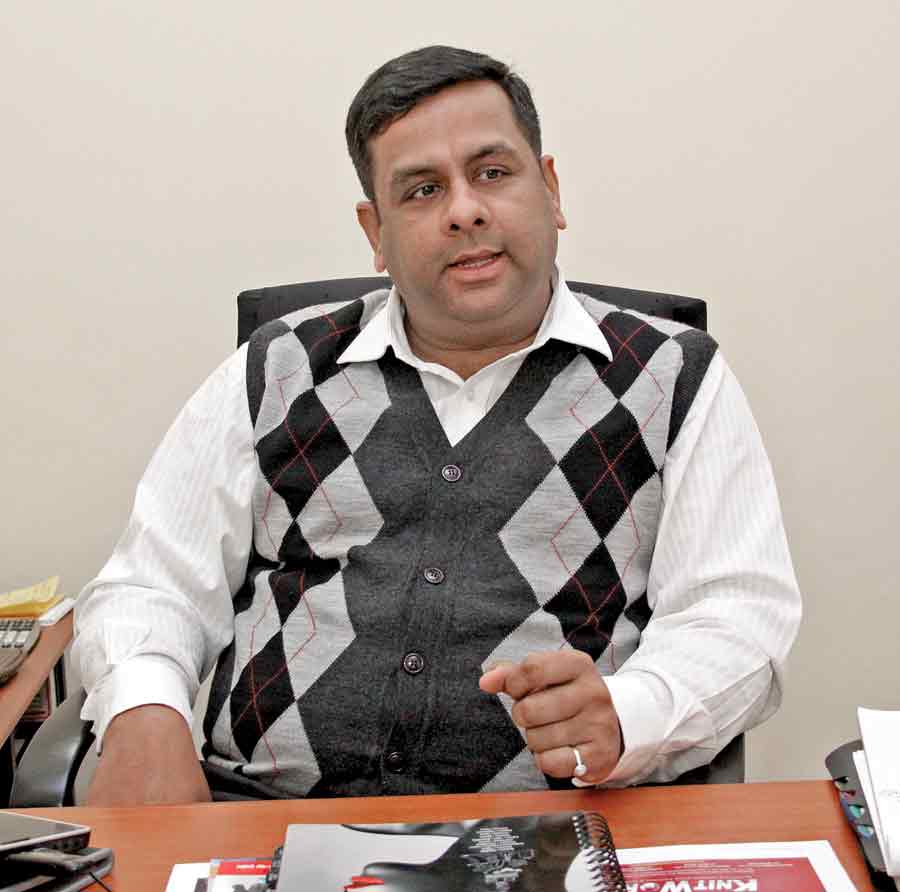
VHC Brands, a US based trading company, initiated as a wholesale stop-shop for buyers looking for product categories in bedding, tabletop, kitchen, window and beyond, has gone from strength to strength and is now looking at expanding into corporate lines to cater to the needs of bigger brands like BAM, Dillards, Tuesday Morning. All set to enter this new phase of buying, Prashant Sharma, Head of Operations in India for VHC Brands, talks to Team Apparel Online about the company and its future plans…
Starting from an office in Branson, Missouri in 1995, Victorian Heart Inc. (VHC, Inc.) and now “VHC Brands” began with offering small shop owners handmade patchwork bedding made mostly in India and subsequently expanding the product offerings to include handbags, window treatments, kitchen textiles, rugs, woven throws & coverlets and Christmas/Seasonal items, all under different brands created by the family-owned company – “Lasting Impressions”, “Nancy’s Nook” & “Bella Taylor” as their brands. Understanding and catering to the need of today’s consumer the company operates from multiple channels including their website, catalogs and supplements.
Our design process has really changed with time, earlier we started with a bedding collection and then trickled down to tabletop, window and bags with the same concept. Not anymore, now each category and collection has an individual skill set and designs. Honestly, bedding does not need to be a part of a bag collection anymore.
The company has recently introduced a new division for corporate customers, built with their vast pool of knowledge about Indian textiles garnered from over ten years of working with the country to exclusively service bigger brands/retailers looking for Indian textiles in their collections. “Even though our office in India is very young, having opened some six years ago, we have been working with Indian manufacturers long before that. Our familiarity with the culture and the relationship we share with our manufacturers is one of our core strengths and also one of the reasons of our consistent performance even during recession,” reasons Prashant. Contrary to the experience of many other sourcing operations, 2012 was one of the best years so far for Victorian Heart, since recession set in from 2008 in the US. Prashant expects to increase their turnover of US $ 6 million at least another 25-30 per cent in 2013 with their latest expansion into corporate lines for big brands.
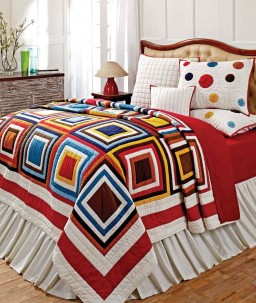

Sourcing exclusively from India, the niche for the company still remains patchwork quilts, though they are much more expensive than regular quilts. “Patchwork is more expensive, as cutting of fabric and then sewing not only increases the time invested in the piece, but also increases the labour cost,” asserts Prashant.
Working with 100% cotton and yarn dyed checks in the past, the company is now experimenting with their product base and has started using blends such as cotton poly, cotton acrylic and wool. The shift will help the company book more business with their corporate accounts claims Prashant. “Though corporate accounts want the look and quality we are giving, particularly the primitive Americana look that we specialize in, but with the change in the consumer base we thought it was wise to diversify and move onto a more contemporary look,” reasons Prashant.
The company is sourcing mainly from a vendor base from Delhi, Panipat and Gurgaon. “We tried working in the south, but it didn’t work out well as we are used to keeping a close watch on our products, and monitoring manufacturing in south didn’t turn out to be a viable decision,” elaborates Prashant Working with a small vendor base consisting of medium size factories, Prashant explained that the structure suited them more as being suppliers focusing on variety and designs, rather than quantity, their vendors gave best results. “We are extremely happy with our vendors; they give us the importance that we need, so we are not really looking forward to changing the matrix anytime soon. Also we have had a very long relation with them, they being upfront to invest in more machines and infrastructure in accordance to our needs, I would rather give them the business for our corporate lines than look for a new factory and then get in the process of training them for what we want,” concludes Prashant.