As the garmenting business is moving towards greater professionalism, strengthening the middle management should be the key focus in the coming time, as they need to take the responsibility for the execution of an organization’s vision and strategy. The emerging issues that factories are now facing are shortage of skilled workforce, demand for fast turnaround times, decreasing margins, higher turnovers and low awareness of workers regarding their rights and responsibilities. Each of these issues leads to decrease in productivity and factory performance, which a factory owner cannot resolve alone without an effective middle management. A few top companies in Bangladesh are working towards strengthening their middle management by inducting management professionals; however, there is still a long way to go. Team Apparel Online discussed this issue with many entrepreneurs and CEO’s of various companies to understand why the middle management is still a weak link in the country and what steps they are taking to strengthen the same…
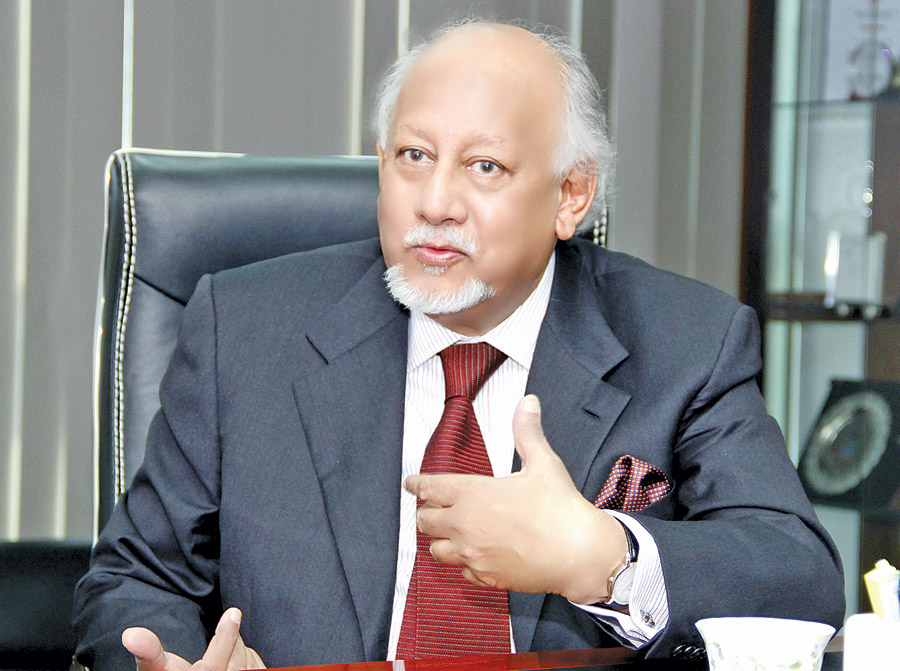
AK Khan & Co. Ltd.
Famous for investing in the latest machines and technology, Bangladeshi entrepreneurs are gradually realising that as they are moving towards automation, their focus for productivity needs to shift from operators to build a strong mid-management. “Almost every apparel manufacturer is looking at producing value-added products, which generally require a lot of coordination and foresight for ensuring on-time delivery, and a company can do the same only by having a strong middle management with the capability to handle small order quantities,” reasons Sudhir Nair, Country Manager, Connor International Ltd. The inability of Bangladeshi middle managers to take responsibility has forced the 2nd largest apparel manufacturer to rely on foreign professionals, who demand hefty packages, from countries such as India, Sri Lanka, and Philippines.

Salahuddin Kasem Khan, Managing Director & CEO, AK Khan & Co. Ltd. shared that according to his estimations a whopping amount of US $ 3 billion per annum is being paid as package just to the Indian expats. “I think one of the reasons why India is doing so well is because of the vision of statesmen like its first Prime Minister, Pandit Jawaharlal Nehru who envisaged the importance of creating the IIM’s & IIT’s, which gave the country a sound managerial base for the growth that one can see in India today. Unfortunately, we have not been able to develop that culture and we are totally dependent on expats,” remarks Khan who is also the Co-Chairman of the EC National Skills Development Council (NSDC), which is headed by the Prime Minister Sheikh Hasina. Khan is now looking at opening a management institute in Chittagong by collaborating with institutes such as Wharton to give an opportunity to Bangladeshi nationals to attend world-class management courses. He is also positive of a strong collaboration with Indian institutes as well. “Skill development doesn’t stop at the shopfloor, it has to go right to the top,” avers Khan.


The redemption of Bangladesh’s middle management not only lies in their own hands but also in the hands of owners and entrepreneurs who employ them because owners still do not want to depend on managers.“Earlier the scales were small, but now the factories are getting bigger and it is increasingly becoming obvious to the owners that they cannot handle everything by themselves, so it has become important to have competent people in-between,” observes Rahul Chhabra, General Manager-Bangladesh & India, s.Oliver Overseas Ltd. A major reason for the lack of trust and dependability on the middle management is because of the high job migration rate and minimal training activities in the industry. “The head of a department should continuously train and groom his team. Rotation of staff and cross functions can give you many surprises. A merchandiser can give the accounts department a lot of inputs on costing. Similarly, a production personnel can impart product(ion) knowledge to merchandisers, and a fabric sourcing person can look at the problems faced by the production team due to flaws in fabric,” believes PiyushVyas, COO, BD Designs, who is a strong believer of on the job training.
One area for effective on the job training was recognized by Stephen Woolley, Country Manager, Trutex Bangladesh, “In the first 7 months of taking charge as the Country Manager, my major focus has been on information exchange with our UK office, under which I have made a lot of procedures and systems both within our office in Bangladesh and also at our vendor’s end. People tend to write books when the job can be done by writing a line, so presently I have been engaged in breaking down and simplifying e-mails, making my people do relentless follow-ups with the vendors not over e-mails, but over phone and recently we have increased the use of Skype for our interactions with our vendors and with our UK office as per a weekly conference call schedule,” explains Stephen. Due to such small-small interventions, the company has eased out issues that used to arise in sourcing of fabric and other raw materials. “Most of the companies are swarmed with expats, but we have to understand that you can’t have an expat at every point as you have to train local people sooner or later. They have got the skills and the education, you just have to take things in your hands and train them correctly,” believes Stephen.
“I think one of the reasons why India is doing so well is because of the vision of statesmen like its first Prime Minister, Pandit Jawaharlal Nehru who envisaged the importance of creating the IIM’s & IIT’s, which gave the country a sound managerial base.” – Salahuddin Kasem Khan, Managing Director & CEO, AK Khan & Co. Ltd.
The good news is that the critical importance of middle managers is being recognized, and organizations are providing more opportunities for their development. “Middle management is the heart of a company’s operations, and is also instrumental in earning profits for the organization. The companies can fall or face huge problems due to a ‘misleading’ middle management which is a critical link between the top management and the workers. It’s very important for them to take responsibilities and feel that they are accountable for any shortfall,” shares M. M. Nazrul Islam, Dy. Managing Director, Manvill Styles, who strongly believes in training of the middle management and invests in the same by sponsoring his middle management to attend workshops on management and leadership building twice a year, spending between US $ 1,300 to US $ 3,000 per annum on the initiative. “We strongly believe that training is a continuous process and that by providing training to our middle management we will find an optimal solution in building the capacity of our labour force, hence strengthening our overall business performance,” says Humayun Rashid, Managing Director & CEO, Energypac Fashion, who is looking at sending his mid-level managers to Sri Lanka, Cambodia, and Vietnam for hands on training in production, compliance and maintenance, so that they can manage and understand all the operations of a garment unit.
Our recent visit to Mahmud Group and Crony Group convinced us that there is serious movement in the industry to develop the middle management as both the companies have put in a lot of efforts to create a strong mid-management in all its departments. Sharing his views on middle management, Gazi Mahbubul Alam, Director, Mahmud Group says, “It’s very important for us to have proactive mid-level managers. We are sending our middle management to attend various training programmes conducted by Bureau Veritas which is helping them a lot to upgrade their managerial skills.” Adding further, A H Aslam, Managing Director, Crony Group states, “We are proud of the fact that no expat is working in our company as of now and our last foreign recruitment was of 6 Sri Lankan technicians for streamlining the manufacturing system, but now the same is being taken care by the people who were trained under them.”




 Bharat Tex Special Report 2026