Developed as a manufacturing base with focus on CM production and supported wholeheartedly by the Government for the financial stability and employment opportunities that it provides, the garment industry in Bangladesh has gone from strength to strength. From just being convertors to having spinning, weaving, knitting, and self-sufficiency in trims and embellishments and now moving into wet processing, Bangladesh is determined to be a complete package for international retailers…
Vertical integration seems to be the norm with most large-scale garment manufacturers in the country today, starting with those working in knits. “The initial investment in building a vertically integrated infrastructure in knits costs cheaper than building the same for woven. Also the demand for knits is much higher in comparison to woven in Bangladesh, so it makes better business sense,” reasons
M. A. Jabbar, Managing Director, DBL which houses 110 circular knitting machines producing 32 tonnes of knitted fabric per day with 2 dye houses doing 40 tonnes per day. Like many other companies in the country, back in 1991, the company used to import fabric from India, but after that, DBL strategized to acquire techniques and experience and started building their backward linkage. Today, with another dyeing house coming up in Kalasari, increasing the dyeing capacity by 60 tonnes, the company has created a niche in all kinds of knit products for men, women and kids for prestigious brands like H&M, Espirit, Puma, G-star, Decathlon and Walmart.

The US $ 210 million, Palmal Group, which is the largest knitwear exporter in Bangladesh, producing all types of knitted garments, and fabrics with solid colours and prints, has grown very fast over the last decade from just 6 to 30 factories on its vertically integrated strength. They have 145 circular knitting machines with a capacity of producing 50 tonnes of fabric per day. The textile division of the company has a turnover of US $ 60-70 million and Palmal is looking at increasing in-house fabric production to satisfy 65% of their garment manufacturing requirements. Five years ago, the company imported 100% fabric from China or India. “Textiles have been our major thrust for investment over the last 4 years and it will continue to be so for the next 3 years,” says Aseem Sood, Vice President, Palmal Group.
About six years ago, the country firmly established itself as the ‘Mecca’ for jeans manufacturing, and today most of the big jeans manufacturers have their own denim fabric mills. With 22 denim mills, 8 of which are integrated units in Bangladesh, producing approximately 150 million metres/annum, the industry is fast becoming self-sufficient. Because of the increased focus on fabric, things are changing and Bangladesh has moved up the value chain by producing fashion denims, from 4.5 oz to 14 oz, slubs, multi counts, and stretch with latest finishes like coatings… all is available. The country is widely known to be catering to volume and basic merchandise buyers like Walmart, GAP and H&M and now has M&S, C&A, Zara, Next, Lindex, Nautica, Tommy Hilfiger, Wrangler, Lee too lining up for higher priced denim.
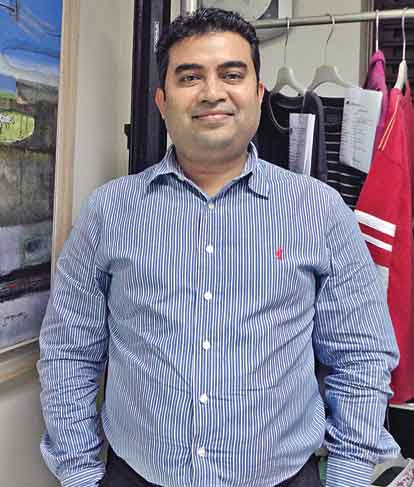
The companies, having tasted success, are now investing in technology to upgrade their skills. Esquire Group, which produces 15 tonnes of cotton fabric per day, besides 22 tonnes of knitted fabric, is one group that realizes the importance of having a strong fabric base. “In fabric making, Bangladesh in the last 10 years, and especially in the last 5-6 years, has really progressed a lot in terms of selection of machinery and the expertise that we grew over the period of time. Today, the men behind the machines are actually much richer in experience,” says Ehsanul Habib, MD, Esquire Group.
One of the biggest factors that have driven Bangladesh towards fabric production is the decreasing lead times. In the case of imported fabrics, the companies are compelled to ask for 90 days’ lead times, but for products manufactured with local fabric, they can offer 60 day’s lead times. “Say, if I buy fabrics from India or China and it takes a month to reach, then we have to forget the fashion business that we are doing; that’s why I have to be vertical,” reasons Syed Naved Husain, Group Director & CEO, Beximco Ltd. One of the biggest textile and garmenting groups in the country, Beximco produces 65 tonnes of yarn, 30 million metres of woven fabric, 20 million metres of denim and 30 tonnes in knits, which is being increased to 100 million metres per annum. “All our mills are setup for fashion, the goal is that we sell fashion, not fabric, nor yarn,” says Husain.

Apart from speed to market, innovation is another important factor that is driving verticalization. “If I have to develop a new type of yarn or fabric, it’s in my hand and I can do what I want with my facilities; if I go to third party to get it then they’ll say these are the things which we make and we don’t have time to do these kinds of developments. Basically I am the captain of my own destiny; I don’t have to depend on anyone,” reasons Husain.
In fact, backward vertical integration in textile production is used not just to streamline and control their supply chain but also to present it as a marketing tool to the buyers who prefer working with integrated units. While most vertically integrated garment units prefer to use their fabric for their captive use, Evince Group wisely treats its fabric division as a separate profit centre. Started in 1983 by Anwar Ul Chaudhary, ex-President of BGMEA, the company is today the country’s leading dress shirt manufacturer, apart from having an unmatched textile setup for woven yarn dyed fabrics and denims. “Ever since we started this mill, we are committed to our buyers as their nominated fabric suppliers so the first preference is given to their vendors. Secondly, our fabric mill has been setup to provide us security in unwarranted situation, rather than act as our in-house supplier,” says Kawser Majumdar, Director, Evince Textile, a US $ 128 million company.
This business model has fared really well for Evince, with the company successfully able to create different clientele for garments and textile, respectively. Tesco, Wranglers, Caps, Celio, K-Mart, SEARS are some of their leading customers for garments, while customers like H&M and C&A, only buy fabric from them. Evince Group presently holds two textile mills. Argon Denims produces one-and-a-half million yards of denim fabric, while Evince Textile weaves a million yard of yarn dyed fabric with absolute focus on shirts. The company is planning to establish a spinning unit with a focus on woven quality yarn, producing 25 tonnes per day.
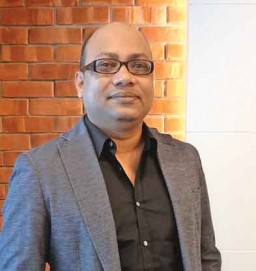


Though some big companies have still not taken the plunge, they firmly believe that it is the only way forward. “India is a textile country, while Bangladesh is a garment manufacturing country, so people here first get into garment manufacturing and then they integrate backward or forward but the core always remains garment manufacturing. For the individual company it doesn’t really matter, you can specialize in garmenting and keep sourcing from different people, but for the country it is important to have strong backward integration because the buyers do require shorter lead time and quicker decision making abilities,” says Sharif Zahir, Managing Director, Ananta Group. Some of the companies investing into fabric include Ha-Meem Group, Mahmud Group, Gaint Group while Denim Expert and Tusuka Fashions is adding latest facilities for washing.
Even companies not yet into manufacturing fabric are promoting the use of local fabrics. “We are definitely looking at local fabrics; the textile industry here has evolved too, and in the last 4-5 years it has fast tracked a great deal. Earlier, you could not even think of sourcing certain fabrics locally but today that’s no longer the case, and the developing textile industry is lending good support to us manufacturers as well,” concludes Syed Asad Ali, Director Armana Group.