It has been a long and difficult journey for the apparel export industry since the global markets hit a slowdown in 2008; initially there was an air of optimism that the economic situation would improve quickly, but the US witnessed one of its worst financial crises and the European Union followed on its heels. After a feeling of utter dismay, with many in the industry eating into their reserves to keep their factories running, some reducing capacities and few others just giving up, the industry is now being more pragmatic and slowly but surely confidence is seeping back into the players with many determined to emerge winners from the mess. Apparel Online has been closely watching and reporting the changing face of the industry and can say firmly that the industry is now wake to new strategies and it is heartening to see that even new players are ready to take the plunge…
While many exporters may disagree that the situation in apparel exports is improving, but the undercurrent coming from people who have been travelling or are very clued into buyers demand cannot be ignored. The signs that spell business inching up for India include, slow but sure revival of market in the US, more focus on smaller quantities value products, Chinese market moving away from lower-end market, Bangladesh in the eye of a storm on ethical sourcing and better equipped factories in India that are prepared to work more efficiently.
Working on reducing cost…
It is very encouraging to see that cost cutting and waste control is now a major agenda for the industry and it is no longer confined to the big export houses. Companies are working on this in various ways, like Spain focused Nirvana Exports, which was earlier a merchandize exporter outsourcing its requirements, but now it has its own factory in Ahmedabad to produce ladies wear and swim wear, and in the process has been able to reduce cost by 40 per cent. “Apart from cost cutting, we have better control on quality and delivery that makes us more effective,” says Vijay Daryanani, Partner, Nirvana Exports. As Spain is not doing so well currently, the company has expanded its reach to other European countries, and is now looking for buyers in US and Australia.
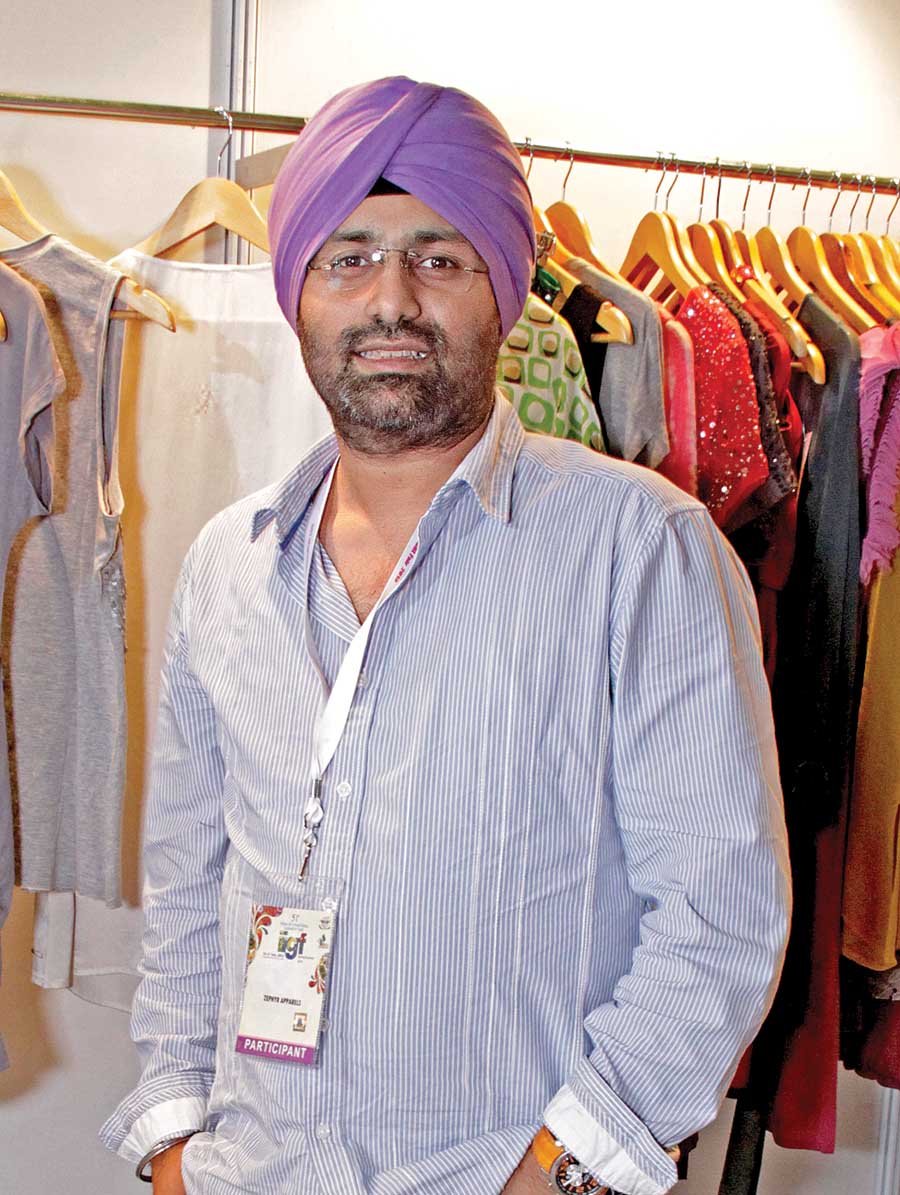
Many companies are removing extra people from production floor to control cost, while others are incentivizing production to get better efficiencies. Zephyr Apparels, Noida is one company that has benefited from implementing this strategy. “We have 100 machines but 150 Adda workers, so it was very difficult to reduce manpower; however we have tried and found some success. In addition, we are now offering good incentives to the supervisors and finishing in-charge so that they can get same production with reduced team. The team is hopeful of positive results,” informs Arminder Channa, Partner, Zephyr Apparels. Contrary to what most in the industry say, Arminder does not see any reason to explore new markets as he believes that the concept of “emerging market” is just hype and currency fluctuation has also affected these markets. “US, Europe, Canada are still better options,” he says.
Focus on new markets…
Though most exporters are happy that US is reviving, for many Latin America, South America, Australia and Russia are growth potentials. Exporters are now very clear that dependency on few markets is not a good strategy so they are working to tap various markets and welcoming even small size buyers from anywhere across the world to initiate business. “Russia is an emerging market and we find that more than styles the buyers from Russia are scouting for different fabrics. They particularly look for organic fabrics, which suits their tastes. They are now opening to bolder colours and little embellishments with sequins work,” avers Vijay Singh of Shilpayan Décor, Jaipur. Jiwanram Sheoduttrai Industries, Kolkata and Sri Sri International, Ludhiana are trying to explore Australian markets, while JD Apparels, Faridabad has just restarted with Mexico and the first shipment is ready to go. East Africa is another market which is being explored by some players.
Exporting heavily embroidered boutique type products like cocktail dresses, evening dresses, beachwear at the average wholesale price of US $ 8 to 10, which is the USP of the three-year-old company, Akanksha Creations, Mumbai is working mostly with South American and Australian market. “People of these markets are more style conscious, we are offering what they want and at better pricing, which has created an edge that works for us,” says Akanksha Sadh Bali of Akanksha Creations.
Monaco Import Export, Mumbai is also trying to create a niche in cotton and tie&dye products with more Indian touch. “If any buyer wants an Indian touch and traditional/vintage style, we are the best option for him. Countries like Croatia in Europe have good market for these products. From the last 2 years we are also sending these products to Venezuela at an average FOB from US $ 2.5 to 6, which buyers in these two countries are happily accepting,” says Jacky, Proprietor, Monaco Import Export.
Extending product offerings and order size flexibility…

Many exporters are now looking to offer buyers a fuller product basket to ensure better chances of orders. Jiwanram Sheoduttrai Industries, Kolkata, which is primarily known for workwear has now added men’s and ladies’ wear into its profile with a new factory. “Buyers appreciate us for variety like we have workwear and safety gear, denim, knits and many more products. We have also setup a warehouse in US, which has eased the export process in a great way as we are now more accessible to the buyer,” says Tridib Dutta of the company.
Ajanta Export House, Ghaziabad having 600 machines has extended its products to offer woollen jackets, accessories and ladies wear. Similarly, J.C.S. Exports, Mumbai is capable of providing casual wear for men/women, jackets, uppers and bottoms. The strategy is to enhance the product basket, provide maximum to the buyer, so buyer cannot ignore you. “As stores sell a number of products, we are the best option for him as we can give him lot many products. It will be easy and cost-effective for the buyer also. We keep adding new items time to time to see the buyers’ reaction. Currently, we are offering various products in the same print like bags, jackets, scarves and dresses. We have separate divisions and teams for different products and we are satisfied with our strategy, which has worked well for us,” says D.K. Bhardwaj, CEO, Ajanta Export House. The company has good market in South America and has plans for the domestic market also.
Few companies are changing to or trying new fabric base as they want to offer something different from what they were doing earlier like Fashion International Inc., Noida, which was earlier working with only polyester, but is now making 50% collection in cotton for its ladies wear. “We started exporting to the US and Russia just a year ago so accordingly we changed the products and are getting good response. For Spain and UK our polyester base range is a preferred choice,” avers S. K. Kapoor, Director, Fashion International Inc., Noida.
Today, most buyers are asking for small orders and exporters are ready for the challenge. Sri Sri International claims that its jerseys can be supplied for any demand, even if it is just team shirts for a football team in the US. “Buyers come to us for our expertise and quality even though they can get a cheaper product in China,” says Rajesh Mathur of Sri Sri International.

Having big setup in Egypt and Sri Lanka, J.C.S. Exports, Mumbai has an 80-machine factory in India specifically to cater to the small orders. “Our overseas factories are for bulk orders, but we don’t want to lose the small or medium size orders and our Chennai based state-of-the-art unit is the best to cater to a variety of products in smaller quantities,” says Dhaivat Desai, Director, J.C.S. Exports adding, “In India, especially in the current market situation, you can’t expect huge or volume orders if you are not already working with such buyers from a long time so whatever the orders and products that are available, we are ready to serve the buyer.”
New players ready to take off…
At this very interesting juncture that the export industry is standing on, it is heartening to see some new players making entries from related segments. They have different kinds of edges like in-house fabric manufacturing, niche product category, established domestic brand or deep understanding of fashion but one thing is common, they have recently entered into export and are quite positive with aggressive future plans.

With expertise in fabric and being a nominated supplier to brands like Adidas, Paras Ram Textiles, Ludhiana a year ago started apparel manufacturing for the same brands. Now the company is aggressively looking to attract other buyers. “You can say we are expanding step by step, now as we have enough understanding of garmenting and especially sportswear so we are now focusing on exports,” says Gagandeep Batra of Paras Ram Textiles. Although the company has no specific targeted market, it is very enthusiastic about its future prospects. “With the existing setup of 100 machines we can produce 3,000 pieces daily, but in next two years we are hopeful to install 400 machines and also extend the product category from the current Tees which we are making at the moment,” adds Gagandeep. Better price, good margins and bulk orders are the main three reasons that motivated the company to enter into exports. Having fabric capacity of 12 tonnes per day, the company also has plans for own apparel brand in the domestic market.

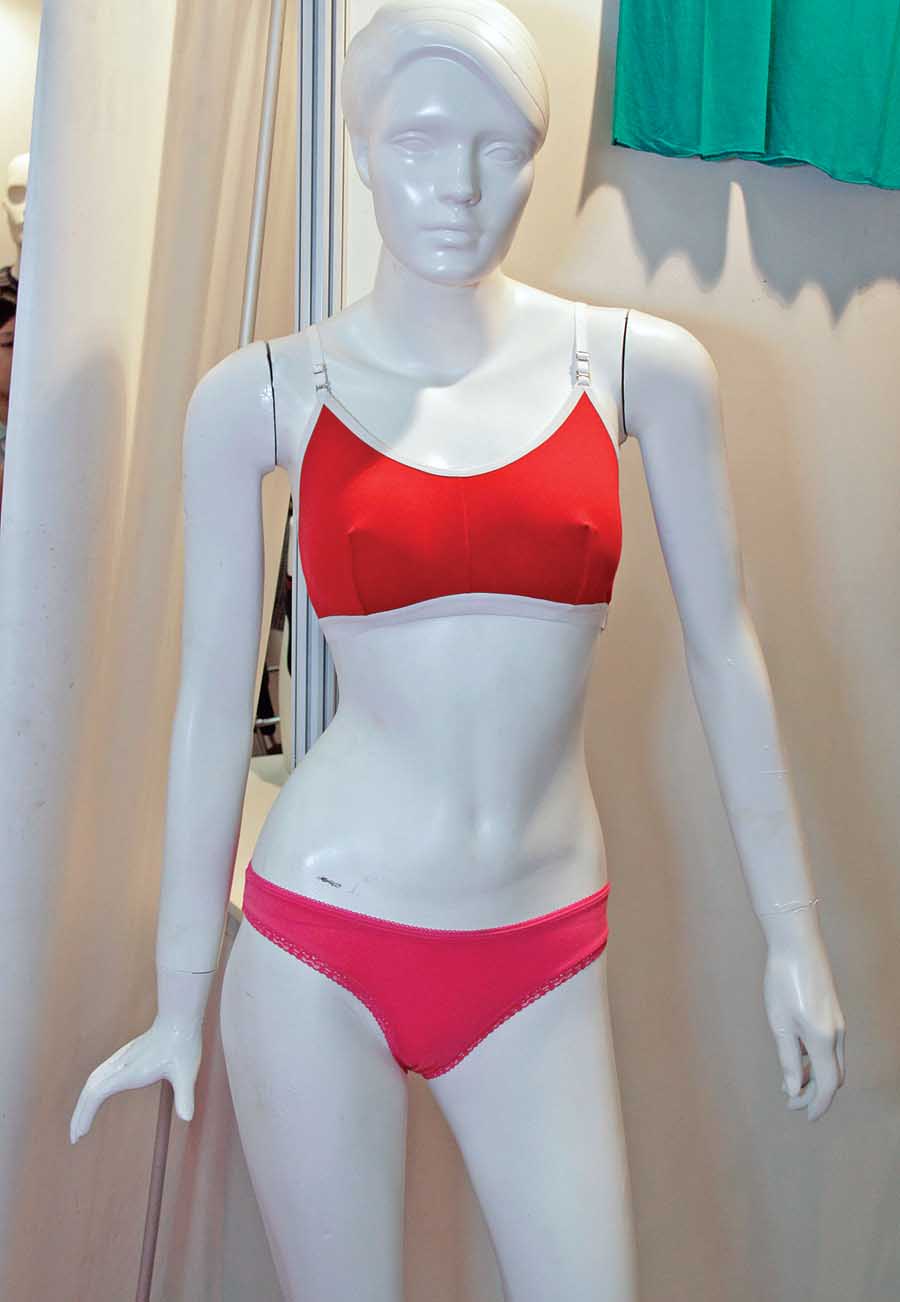
JKME Craft, Gurgaon is another company following a similar track, but they are very specific about product category and priority market. Producing 30 tonne fabric and having capacity to produce 40,000 pieces per month the company run by an engineer Jainendra Kumar Singh is targeting the US market with its ladies intimate apparels although it offers kidswear and Tees in the domestic market. “To the best of my knowledge, the US is a less complicated market than the EU, and it offers volumes; moreover the market is improving so targeting US seems to be logical. As far as the product is concerned we have expertise in ladies undergarments and it has less competition, so that is the product we are marketing,” says Jainendra. The company with its “Queen Beauty” brand has already got good feedback from its samples.
Interestingly, many well known players of the domestic market are also now targeting exports as an expansion strategy. Known for “Crimsoune Club” brand in menswear, Delhi based Mangla Apparels India is actively participating in many international fairs and organizing its own shows in different overseas market to promote their brand. “Rather than entry into export market we are taking it as our brand expansion so we will only work for any other label if they offer a very lucrative order. The initial response in Nepal and Dubai has inspired us to spread into other markets so we are now targeting South European countries and participating in various fairs in Nigeria, Spain and many other countries,” informs Vivek Aggarwal, MD, Mangla Apparels India, which has just started a new state-of-the-art factory in Noida especially for overseas supply with the total capacity of 3,000 pieces per day.
[bleft]I don’t see any reason to explore new markets as the concept of “emerging market” is just hype and currency fluctuation has also affected these markets.” – Arminder Channa, Partner, Zephyr Apparels[/bleft]
Not only the big or mid size companies, but even small level firms are also exploring opportunities in the export segment and they are reasonably happy with the starting response. Silver Line Export, Meerut has a small setup and depends on jobwork, yet they have ventured overseas. Vishal Dublish, Proprietor of the company claims that his designs were appreciated all over the world during his tenure of seven years in various export companies and that inspired him to start his own export unit and in the last few months he has been able to export some orders to the US, Brazil and Japan where most of the buyers are boutique buyers. As it offers mostly hand work on silk, its average FOB starts from US $ 20.
[bleft]If any buyer wants an Indian touch and traditional/vintage style, we are the best option. Croatia in Europe is a good market for these products.” – Jacky, Proprietor, Monaco Import Export[/bleft]
All these new players are brimming with confidence; they have their own logics and believes which is why they will succeed in a competitive market. While Gagandeep says they have the image and credibility to work with world class brands, Vivek feels they are cost-effective and can expand capacity any time, which adds to their flexibility. “We are quite successful in India and our designs, fabric selection and over all approach is quite impressive, so I don’t see any reason that our brand can’t be successful elsewhere,” concludes Vivek.




 Bharat Tex Special Report 2026