Earning the title of ‘A new generation of value retailers’ in the past decade, the brand has successfully managed to put pressure on even the biggest high street names like Peacocks, New Look and TK Maxx with its ‘chip chic formula’ of delivering catwalk designs at a decimal point of the prices. In order to make sure that this business module is always up to the mark, buying and merchandising teams in Dublin (Republic of Ireland) and Reading (UK) travel internationally to source and buy up-to-the-minute fashion items that best reflect each season’s key fashion trends, in a range of departments from womenswear, lingerie, childrenswear, menswear, footwear, accessories, hosiery to homeware.

A strong Christmas trading period in 2011, combined with relatively robust sales since the New Year, had already put the company as one of the high flyers on the downbeat UK and European retail scene. Sailing calmly through the crisis, even though there were clear signs that EU consumers are reining in their spending, Primark’s low price points and fashion forward ranges appealed to the price sensitivity of consumers, offering financially pressed young shoppers a way to be able to keep up with the latest trends.
Absorbing increased cost pressures caused by higher cotton prices and the increase in VAT in the UK, by lowering internal profit margins and not passing on the same to the customer, proved to be a significant strategy that helped the company in maintaining its position as catering the best value on the high street. In fact, the company chose to forfeit profitability in the last financial year which led to 8% adjusted operating profit, but in return provided support to its loyal customer base. The company now expects to reap rewards as cotton prices have since fallen back which will reflect in a ‘substantial’ increase in profitability for the full year, based on the repeated emphasis by the company on the fact that it has now sold through the inventory bought when cotton prices were at their highest point.
A fresh wave of newer store openings and increased selling space is also fetching the company profits from varied markets. In the first half of 2012 alone, the retailer opened 10 new stores, including three each in Spain and Germany, and two in the UK, following which the company claims that it no longer fears of a long recession in the euro zone as new stores have exceeded their expectations. In Spain, many consumers have deserted other low-price clothing stores in favour of Primark, which provides all the clothing needs of the family at a low cost. “Despite the difficult economic circumstances, we continue to open stores [in Spain] profitably. People are switching to Primark either to save money or because they have never seen anything like it before,” said George Weston, Chief Executive of parent Associated British Foods. Having 156 out of a total of 233 stores in the UK, future plans include a further six stores in the second half, with four in Spain, and one each in Germany and in the UK.

What is particularly interesting is that one of its biggest competitor in the UK – ‘Peacocks’ has registered massive losses with a similar strategy, even as Primark continues to grow. Reckoning the biggest difference between the two chains, Clive Black, Retail Analyst at Shore Capital says, “Primark offers good value, good products and stores that are very well located, which are bright, contemporary in locations that are convenient for women shoppers. Peacocks, on the other hand, is a load of cheap clobber. It doesn’t help that Peacocks is burdened by big debts, either.” Losing their way by moving too far in the “high fashion” direction, which in turn pushed the prices up for Peacocks, the company failed to understand the difference between ‘value’ fashion and ‘high’ fashion, and became a cheap version of the value fashion powerhouse. Realizing this mistake, Philip Day, Owner of Edinburgh Woollen Mill, who recently bought Peacocks clarified, “Primark fills a particular function and does it very well. The problem has been that we are looking too much like them, so we need product that is different. We’re about collections. We need to be able to stand on our own two feet.”
India Perspective…
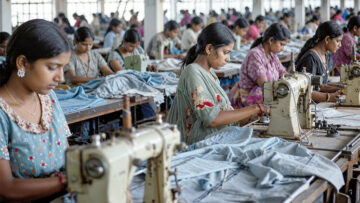
Primark has been accused in the past of violating basic compliance when working with Indian factories to get cheap products, but last year the BBC had to apologize for one of its reports as the footage could not be proved to be authentic. The low-priced value retailer sources around $ 200 million worth of products from India including home furnishing, mostly from the south of the country. While knitted garments are primarily sourced from Tirupur, shirts and bottoms are sourced from Bangalore and Chennai. The range of products primarily in cotton includes garments for infants, kids, women and men. The retailer is sourcing from over 58 factories in India through many channels including agents and wholesalers and buying, which was earlier done only by ‘buyers’ who directly came from the UK to source four times a year is now more agent-driven with agents travelling to the UK with samples.





 Bharat Tex Special Report 2026