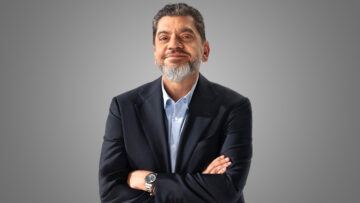
Having joined the family business purely because of family pressures in 1994, Mascot Group’s T.M. Enamul Haque, takes pride today in the company’s booming US $ 40 million business that covers a wide arena of garments including woven shirts and pants, polo shirts and other knitted garments. Serving as the Managing Director of Mascot Knit, the knit division of Mascot Group, Haque boasts of a strong production base that promises quality along with quantity, keeping him ahead of competition. Steady growth with emphasis on robust bottom line is the focus of the company, resulting in a contribution of over US $ 7 million to the Group’s turnover. The Group has two more divisions handled by the other brothers of Haque, manufacturing woven shirts and bottoms, part of the multi-storey Mascot plaza in Ashulia.
Working with Canadian and European buyers, chiefly Italian giant Terranova and Walmart Canada, Mascot Knits has built a daily capacity of 7,500 pieces of polo shirts and 15,000 pieces of T-shirts. “Since the beginning, we have never looked at competing with other knit manufacturers based in Narayanganj area as they are more into the low value and high volume products, which is not my target,” points out Enamul. But still the company accepts a minimum order quantity of 30,000 pieces to maintain its profitability. “In recent times, the wages have gone up by 70% and the buyers are not willing to share the burden so, as a manufacturer, I have to move up the value chain while keeping a perennial flow of orders for running the factory,” accepts Enamul. Moreover, the buyers who deal with Mascot are assured of the workplace safety with complete adherence to social, structural and environmental compliances. Recently, the complete manufacturing facility, aka ‘Mascot Plaza’, including Mascot Knits, has been cleared by Alliance and Accord. The woven units of Mascot Group work with companies like Walmart, GAP and JCPenney. “The surprise visits from these companies keep us on our toes,” adds Enamul.

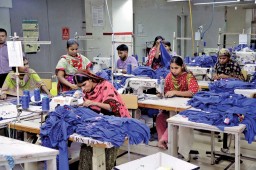
Another reason behind the company being a preferred supplier to its buyers is due to its backward linkages in terms of knit fabric manufacturing and dyeing. The company has 14 knitting machines manufacturing 4 tonnes of knit fabric every day and 8 dyeing machines. “Having backward linkages not only help in having better control over the quality of the fabric and pricing, but it even enables us to have total control over on-time deliveries of our products,” shares Enamul. The only raw materials outsourced by the knits division of the company are the accessories, labels and sewing threads. “The fact that we have never ‘aired’ any shipment, says a lot about not only our commitment but performance as an apparel manufacturer,” avers Enamul, who is himself involved in the day-to-day merchandising, production planning, negotiations and quality-related activities. Moreover, since the company deals with a very limited set of buyers and that too directly, the delays in communications and approvals are minimized, and in some cases the company gets approvals within a day.
With no expansion plans as of now, Enamul wishes to maintain his company’s niche in the segment, remaining committed to his existing buyers, managing their yearly increase in sourcing through efficient utilization of the existing set of people and machinery; keeping the size of operations manageable for his team and himself. “Since I have not added any new buyers, and assured the existing ones of top notch service, the buyers are willing to pay me a premium price,” concludes Enamul.