Although housing the biggest domestic brands and workwear export companies, Kolkata still remains relatively less industrialized compared to other apparel and textile hubs of India. Despite the fact that the region has relatively lower operating overheads and cumulative wages compared to rest of India, reason being the relatively low cost of living, it has not reached its potential as an apparel manufacturing hub. Team StitchWorld spoke to Mallcom (India), JPM Exports and Rama Overseas – all looking to break the conventional manufacturing mindset of Kolkata and consolidate their manufacturing operations, for being more efficient and growth-oriented.
Catering majorly to the European market, Kolkata-based workwear manufacturers work through a network of importers and distributors, supplying to a wide range of industries and retailers. Among many of the workwear manufacturers here, Mallcom India is a dynamic and the most progressive workwear manufacturer based in Kolkata. Established in 1983 as a glove manufacturer, Mallcom started workwear in 1990 and the company has today grown to become a complete workwear solution provider with annual revenues upwards of US $ 45 million (Rs. 300 crore). The company has registered a steady growth of 20% YOY in all the categories, in the recent years. An ISO 9001:2008 and SA 8000 company, Mallcom has 6 production facilities in Kolkata and one in Uttarakhand, with 2 units each for apparels and safety shoes, and one unit each for leather gloves, Nitrile dipped gloves, seamless knitted gloves with PV dotting for imparting a firm grip to the wearer. Producing 1.08 million units of workwear apparels, 1.2 million pairs of protective footwear and 8 million pairs of workwear gloves annually, the company generates 55% of its revenues from workwear clothing and gloves, the latter contributing a larger chunk of the share. Sharing his experience pertaining to the sector, Ajay Mall, Managing Director, Mallcom (India) states, “The export of workwear apparels from Kolkata would be nothing more than US $ 30 million (Rs. 200 crore),” and adds, “We have supplied our products to companies such as BMW, Audi and other such end users through a third company.”

The overall market for workwear is good, despite slowdown in the European market, as other relatively smaller destinations such as South America, Australia and South Africa are becoming lucrative. Another Kolkata based workwear manufacturer, Pankaj Madhogaria, Director, JPM Exports, conveys his thoughts on the stagnant workwear business environment in the west. “The demand of workwear is not growing in the western world because newer manufacturing industries are coming up majorly in Asia, which has become the world’s manufacturing hub and these companies are becoming more sensitive about the workwear safety,” points out Pankaj. As a result of this, JPM Exports has started working with buyers based in Canada and Australia. Established in the year 2009 when its Founder Dilip Madhogaria parted ways from Amrit Exports, another leading workwear manufacturer, the company has grown at the rate of 100% since its inception and plans to surpass the turnover mark of US $ 15 million (Rs. 100 crore) this fiscal year. Unlike Mallcom, which started with gloves and then ventured into workwear clothing, JPM Exports started with workwear and is now producing sportswear and casualwear for diversified growth. For the exports, JPM is working with Dickies, F Angel Denmark and Wruth for workwear, and Italian companies Diadora for sportswear. In the domestic market, the company has started with Pantaloons, Mahindra Retail and Decathlon for their stores in India. With a total of 600 sewing machines divided in a centralized unit and smaller satellite units, JPM produces 200,000 units of workwear, 200,000 units of outerwear and woven casual, and 400,000 units of knit sportswear and casualwear every month.

In the same segment, but with greater dependence on workwear gloves for revenue generation, Rama Overseas ventured into workwear clothing around 15 years ago and presently the category generates 20% of its annual revenues, which stand at US $ 18 million (Rs. 120 crore). Working majorly with importers and distributors, which are in turn working with wholesalers, retailers and industries such as oil, gas, construction and automobiles, Rama Overseas produces all kinds of workwear except uniforms. “As a business strategy, we are working with buyers based in Europe, USA, Australia and South America, and not much dependence is on one single market to avoid risks,” unfolds Saurav Soni, CEO, Rama Overseas. Manufacturing one million gloves and 100,000 pieces of workwear every month, the company also has a leather tannery in the Kolkata Leather Complex, for supporting its glove manufacturing operations. “Although workwear is a more lucrative business, it is not as easy as gloves because every workwear buyer requires a different type of product with different standards, unlike gloves wherein every buyer demands for a standard product,” highlights Saurav.
Business of Workwear
China, the biggest manufacturer and exporter of workwear items, is far ahead of India in workwear despite the rise in the labour wages. “The reason being the companies buying such clothing are into heavy industries such as steel or automobiles manufacturing, so they don’t mind paying a bit higher for the uniforms,” elaborates Ajay. Partially agreeing to it, Pankaj highlights, “Based on my interaction with our European buyers, everyone wants to move out of China because of the increasing labour wages in the country. Hence their immediate strategy is to create a base outside of China, where they can relocate the production if the labour wages shoot up further. Although India is being looked at as the next option, buyers are sceptical about the ability of the hub to handle large order quantities because of its decentralized and unorganized style of manufacturing.”
Mallcom Group, in reality, is eyeing the protective workwear business, which is presently being done by China and is the most lucrative in terms of the pricing but is equally difficult to produce because of the stringent requirement of EN and ISO standards to which the garments have to adhere. “The FOB of basic industrial workwear starts from US $ 6 but in case of protective clothing, the same starts from US $ 20 and can go up to US $ 50. The product has to conform to all different tests defined by the buyers based on the diverse activities performed by the wearer,” explains Ajay.

The most common finishes given to workwear clothing are that of Fire Retardant (FR) and Water Repellent (WR). Only 10% to 15% of all the workwear apparels made by JPM Exports require such finishes, but can increase the FOB of workwear apparel manifolds.“Even though the fabrics with specialized finishes are available with Indian mills like Arvind, Alok and JCT, the asking price of such fabrics is 80% more than that of China, which makes us less competitive,” shares Pankaj. India also faces delay in custom clearances of the imported fabric and raw materials, due to which JPM Exports established its sourcing operations in Bangladesh for sourcing workwear and sportswear products made of imported fabrics. He further adds, “Since we have established sourcing operations in Bangladesh, we get the raw materials from China directly in Bangladesh and ship the goods to buyers. This helped us expand the range of workwear we were doing.”Ajay is in consensus with this. He states, “Being a recognized company with a unit in the SEZ, we do not face as much delays as other companies but still it takes 10 to 15 days to get the goods from the Haldia Port to the factory. Geographically and logistically, Bangladesh is as badly located as Kolkata but they have the advantage in terms of the timely release of the cargos, as the apparel industry for Bangladesh is a matter of national importance, unlike India.” For keeping a tight control on the prices and quality of raw material, JPM Exports has setup offices in China, and Rajasthan, India for procuring fabrics. JPM Exports sees an increasing demand of water proof and water resistant workwear from Europe, for which the company has recently added the necessary equipment for seam sealing and ultrasonic welding.
Consolidating Manufacturing for Systematic Production Processes
With order quantities ranging from 15,000 to 20,000 pieces per style, workwear is manufactured in a Make Through system wherein a single operator has to make a complete garment and adhere to the daily targets. “We are not working on assembly lines as we are an order-driven company, the product variation in workwear is so high that it is difficult to standardize the operations and automate the same. Our process of operating is good enough for handling small orders, but not for bulk production. Given that, we have to go for a large setup and systematic manufacturing operations,” accepts Ajay. Having two sewing units with 340 machines, the company has invested in automatic cutting machines and spreaders, and claims to record an operator efficiency of 70%, even with the high style changeover.
 Having a typical Kolkatastyled manufacturing setup, Rama Overseas has more than 700 sewing machines, but spread out in 15 smaller units, out of which 300 machines have been allocated to the workwear division while the rest have been allocated to gloves. The cutting of both workwear and gloves is centralized in the company’s oldest unit in Tiljala Road, from where the cut parts are sent to the sewing units and these sewing units send the finished goods back to the centralized unit. “Only 110 sewing machines are running in units owned by us and rest of them are financed by us as we do not believe in maintaining huge sewing facilities because of the high infrastructure costs and overheads. Moreover, with the fluctuating demand, we are not faced with losses due to idle capacities,” says Saurav.
 The need to have centralized manufacturing operations has been realized by all three companies – Mallcom (India), JPM Exports and Rama Overseas, with reasons ranging from reducing manufacturing costs, doing large order quantities and to accommodate the workwear business coming out of China. When visiting a casual bottoms factory in Bangladesh, Pankaj realized the need to have such a setup for workwear manufacturing looking at the quality of the product and efficient operators. He shares, “In our present system, every operator makes a single garment due to which there is low uniformity in the quality of the total output. Even the cost of manufacturing is higher because every unit has a unit head and a lot of transportation is involved within these units. Moreover, it takes five times the effort and time to produce a certain order in this system compared to assembly line system.”
With 350 sewing machines and an area of 40,000 sq. ft., located in the RDB Apparel Park in North 24 Parganas, JPM Exports’ first centralized unit will have 5 sewing lines for workwear and 4 lines for knit casualwear. As of now 2 sewing lines are operational and the complete unit would be operational by November 2015.
JPM Exports established its first centralized apparel unit in April 2015, with 350 sewing machines and an area of 40,000 sq. ft. Located in the RDB Apparel Park in North 24 Parganas, the unit plans to have 5 sewing lines there for workwear and 4 lines for knit casualwear. As of now 2 sewing lines are operational and the complete unit would be operational by November 2015. Touted as the largest workwear manufacturing facility in Kolkata, JPM Exports will add another unit in the same park, with 350 sewing machines, once this much capacity reaches 100% utilization.
“But everything would not be as easy as it looks,” asserts Pankaj. He further adds, “It is difficult to re-train the people who are used to working as per their comfort level. They are now supposed to sit in a place for 8 hours and do only one operation. We have previously tried establishing a unit comprising 40 to 50 sewing machines but failed twice. What led us to failure was the financial aspect and not the quality or the output.” With this learning, JPM Exports has hired experienced people from established apparel manufacturing companies, for helping the company establish assembly line systems, to ensure success this time.
Mallcom, on the other hand, has purchased land for a Greenfield facility 60 km from Kolkata city and plans to train 1,000 unskilled people for its upcoming unit. “It would not be possible with the already trained or skilled people because it is hard to mould already trained manpower as per our requirements. Moreover, we would have to train people continuously and if we train 1,000, then only 300 will stay, enough for the initial scale of the project,” avers Ajay.
Like JPM Exports, Mallcom will also centralize its many small sewing units scattered in Kolkata city and this unit would be dedicated to workwear apparels only. “We hope that in the future, this unit will become the biggest unit. We might seek intervention of a foreign consultant for this project,” foresees Ajay. Similar is the story of Rama Overseas which plans to relocate its unit in Tiljala Road, which serves as the head office, centralized cutting unit and leather sewing unit, to the leather complex because of the rising wages in the area and scarcity of labour.
Workwear Market Trends
Global Personal Protective Equipment (PPE) market was valued at US $ 36 billion in 2014 and is expected to reach US $ 62.5 billion by 2022, growing at a CAGR of 7.2%. Hand protection equipment such as gloves accounted for 29% of the market and protective clothing claimed for 22% of the market, followed by protective footwear securing 20% of the market.
Accounting for 41.2% of total workwear revenue, North America is the biggest market for such products and is expected to dominate till 2022. Undergoing rapid industrialisation, Asia Pacific is expected to witness the highest growth of 7.9% from 2015 to 2022, surpassing North America.
Frost & Sullivan’s report on workwear showed that the Western Europe market is set to rise to € 7.4 billion (US $ 8.1 billion) by 2017. In UK alone, the sector’s value is fast approaching £ 1 billion per annum.
Being a mature market, the North America as a consumer of workwear clothing is growing at a CAGR of 2.2% and is expected to touch US $ 10.5 billion by 2017, according to Frost & Sullivan. The biggest retailers and distributors in the region – Williamsons Dickies, VF Imagewear and Carhartt, have occupied approximately 38% of the market.
The domestic workwear market is currently estimated to be around US $ 357 million and is projected to reach US $ 1.1 billion by the year 2021 growing at a CAGR of 12%. It is estimated that jackets and trousers will witness highest growth of 15% and 14%, respectively.
Workwear Leather Glove Exports – Scales Decisive to Margins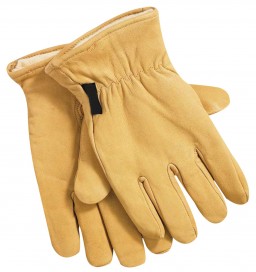

Traditionally, Kolkata has been the producer of leather gloves and till date 85% of India’s export of leather gloves is from Kolkata. This started way back in 1980s, but nothing much changed in terms of the nature of the industry, except the scales that registered an increase. According to Ajay Mall of Mallcom (India), “There are 80 companies exporting leather gloves from Kolkata, out of which 10 are having a turnover in excess of US $ 7.5 million (Rs. 50 crore) and controlling 80% of the trade, while the remaining companies generate US $150,000 to US $ 1.5 million (Rs. 1 to 10 crore) turnover.” Detailing it further, he comments, “The fact that majority of the industry could not develop itself into an organized market, is very sad because the glove consumption of the world is about US $ 10 billion, an ever-increasing number, to which India contributes hardly 5% to 6%. Whereas, on the other hand, majority of the market in the segment has been acquired by China, converting the leather from Brazil and Argentina into gloves.”
Being a commodity product due to its ‘use and throw’ nature, leather gloves fetch a FOB price between US $ 1 to US $ 3. A pair of leather gloves consumes almost 3 square feet of cow hide leather, which is almost 90% of a pair’s FOB and the rest being the wages, overheads and infrastructure costs, leaving a margin that of less than 1% for the manufacturer. But the margins inflate due to the subsidy of 7.6% along with an incentive of 3% on the amount of leather gloves exported. Highlighting the nuances of the trade, Saurav Soni of Rama Overseas states, “The business is very volatile because of the fluctuating leather prices, which determines the demand – the lower the price of leather, the higher the demand of gloves in the international market.” Rama Overseas has around 400 sewing machines for leather gloves, of which 110 are placed in two units owned by the company and the rest in financially backed smaller facilities.
For safeguarding its business from the volatile nature of the glove business, Rama Overseas has setup a tannery in the leather complex, enabling the company to keep a tight control on the leather prices and the quality of the leather itself. “Although when the market is low, we dominate the suppliers, but since the market has been on a high for the last 5-6 years, the suppliers started increasing the minimum prices, increasing the overall price of finished leather,” explains Saurav, who feels that India is more competitive in producing grain leather gloves because leather is more readily available here than in China, which is largely dependent on imports of leather hides from South America. Yet in a little contrast to this, Ajay reveals some others aspects associated to it. He says, “Despite the local availability of high-quality leather, no one was able to make the supply chain perform according to its potential. Initially we were fighting for the price because of the tiff competitiveness coming from China (whose prices was very low), but when today the Chinese prices have escalated, we still lag behind China when it comes to offer quality and quantity. Buyers are looking at sourcing two 40 feet containers in a single order, equivalent to 150,000 pairs of gloves, which no one is capable of providing in Kolkata. Most of the companies are still supplying sparse quantities to companies in Europe.”
Process Documentation Decisive to Product Performance
The importance of testing workwear apparels is universally understood and accepted. Every company has either established an in-house testing lab or outsourced the testing from third-party agencies. JPM Exports followed both such practices and has gone a step ahead and documented every process that happens during the manufacturing of workwear apparel, through a UTN (Unique Traceability Number) code given to every garment produced by the company. This code stores information about the fabric manufacturer, fabric lot number, trims manufacturers, trims lot number, names of fabric cutters, sewing operators, quality checkers and test parameters such as centre to selvedge quality check results, fabric GSM, pantone colour and colour continuity, etc. “In case a product fails in some test which was not communicated to us in the Techpack, we can defend ourselves,” adds Pankaj. The company also keeps samples of all the raw materials – right from fabrics to zippers and threads, they have used for handling future claims or incidents and the buyers can get the raw materials inspected via third-party agencies. Also a part of the UTN code is the DRE (Drawing Registry Entry) number, which records the roll number of the fabric along with the layer number. Going a step ahead, Pankaj explains, “Since the UTN also has the name of the operators who have made the garment, the payment of an operator, depending on his daily output, is released as per this UTN code. Even the payment of the fabric companies is linked to the fabric inspection reports of the fabrics delivered by them.
The company implemented the UTN system in 2013 and claims that it can give records of each garment produced as long as 5 years ago. It took Pankaj 6 months to implement and streamline the system, subsequent to which the company was able to reduce the fabric in-house to shipment time from 50 days to 30 days along with a significant dip in the quality rejections and manufacturing time because the delay areas were recognized due to tracking of all the operations and the sewing operators. “Earlier this system was maintained manually in registers but now we are keeping a record of the same in the ERP system from WFX,” points out Pankaj.
BASIC APPARELS – Cues for Efficient Workwear Manufacturing

Dhaka-based casual bottom manufacturer with 1,000 sewing machines, Basic Apparels has successfully converted its factory into a specialized workwear manufacturing unit. “We are manufacturing industrial workwear for heavy engineering and automobile industries, carpenters, boiler suits and other such areas of mechanical works. In a workwear, above all, the safety of the wearer is top priority,” points out Ajay Agal, CEO, Basic Apparels, a subsidiary of Merchantex Co. BD. Ltd. – a 27-yearold buying & sourcing organization based in Bangladesh. Most of the products made by the company are retailed at stores and are also sold directly to industries, for a FOB varying between US $ 10 to US $ 25, based on fabrication, style and volume. The SAM value of such industrial workwear apparels starts from 35 minutes for a basic dungaree and can go up to 120 minutes, in case of a boiler suit.
The 1,000 sewing machines in the factory of Basic Apparels has been divided into 12 sewing lines inclusive of part preparation and final assembly lines, along with finishing and final packing at the end of the line. “With the help of online packing, we do not get surprises at the time of shipment in terms of the quantity. There are no missing pieces and even the extra 1% fabric which is cut, is converted into garment and offered to the buyers, enabling us to have nearly 100% cut to ship ratio,” explains Ajay. With the use of automated sewing machines and working on the principle of industrial engineering for improving methodology and using innovative work aids, the need for helper employment is zero.

Basic Apparels has gone for suitable automation that reduces the cycle time of sewing operations while keeping the flexibility of the sewing operators intact. For double-needle sewing, a double-needle lockstitch machine with a split-needle bar was used – a feature which is useful in turning the garment at pocket corners and can even be used for single-needle operations. Due to continuous high needle work, all the sewing machines are equipped with large capacity bobbins and automatic bobbin winders.
Some of the critical sewing operations have been deskilled with the use of work aids and attachments developed by the company. One such intervention was done to optimize the operation in which a reflective tape was to be sewn inbetween the side seam. Previously done in three steps, the operation is now been done in a single go wherein the panels with the tape in-between are joined together through an overlock machine and the tape is fed through a simple attachment. The CEO of the company says, “Due to such interventions, we have reduced the pool of sewing operations that require specialized training. Hence, we multi-skill a set of operators in very specific operations, while rest of the sewing operators require no formal training.” Ajay claims that due to such deskilling initiatives, some helpers were successfully upgraded to sewing operators. The present operator-efficiency is between 65% and 70%.

There are 16 QCs in one line – from inline to packing, because final packing is also a part of the sewing line. 7 QCs are placed within and at the end of the sewing line, 7 are placed within and at the end of the finishing line and the remaining two are the roaming QCs, who randomly check the output of sewing operators. The inline QCs are responsible for checking the sewing defects whereas the end-line QCs check the overall look and getup of the garment. The most stringent aspect of the quality checking is sewing margins and there is no negative tolerance in this case. Thus after the sewing of every patch-pocket, a QC is there to check the same as the whole garment can be rejected because of this, and Basic Apparels claims to have maintained a rejection rate of almost 0.5%. The company has defined its KPI for DHU for every operation at 8%, which is updated on an hourly basis in order to keep a check on the quality performance.