The quote aptly describes the sustainable efforts at KG Fabriks, led by Founder Director, Sri Hari Balakrishanan, who believes that sustainability is about one’s own commitment to the society and does not necessarily have to translate proportionately into business gains. With the dawn of the 21st century jeans has outgrown its tag as a fad of pop culture and become a fashion statement for all age groups and social strata. Manufacturers of denim, both fabric and garments, optimized the opportunities with innovative designs, new colours, crazy washes, value adds and what not. The next challenge is to do everything to be innovative, but in a sustainable way… Taking the challenge head-on, KG Fabriks is fast emerging as a market leader in sustainable denims.
94% Conversion average of fibre to yarn that KG Fabriks is maintaining
With a growing market for denim, which doesn’t look seem slowing down in the near future, as the craze of denim penetrates deeper into consumer segments, continuously adding many new loyalists across the world, denim manufacturers are investing in the product with renewed interest. When KG Fabriks took the decision to go for a sustainable factory about two years ago the inspiration was to build a green business and Sri Hari is happy that today he has created one of the most efficiently successful companies in the country with only 2% wastage. Yet, Sri Hari is candid when he admits that buyers only talk about sustainability, but don’t consider it a priority when placing orders. “Though all buyers are vocal in the need to be sustainable, when it comes to business – price is still the final deciding factor. We did not go for sustainability because of the buyers, so we are not really bothered, but companies who invest with expectations of more business are in for a rude surprise,” says Sri Hari.
2% The wastage that KG Fabriks genarates from its operations
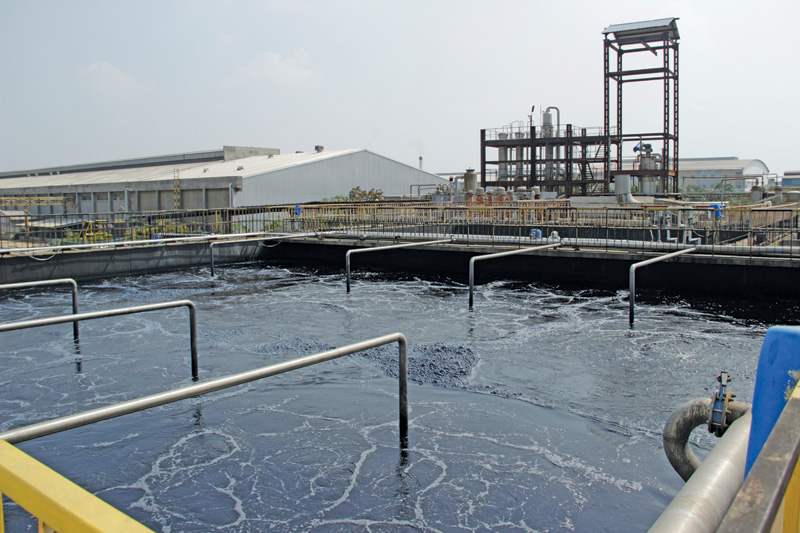
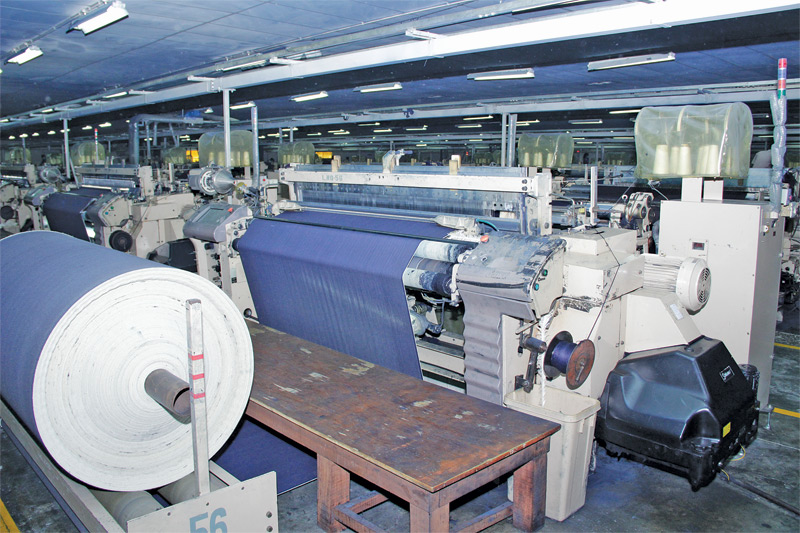
What the company has achieved in measurable terms is savings on energy, dyes, chemical and even yarns. “The HR cost has soared but the people are very efficient and effective. Once people realize that they belong to a sustainable profession where no one is faking and cheating, the engagement will be even more,” avers Sri Hari. Undeterred by routine challenges, Sri Hari feels that for any company “ideas” are the biggest challenge in the era of innovation and competition, but for KG Fabriks ‘team spirit’ is a catalyst and the driving force, he maintains. Taking everything into consideration, by implementing sustainable process, KG Fabriks has ‘upcycled’ its production capabilities to reap tangible profits by saving 10% on overall cost. Racking up the benefits of upcycling, the company is now adding more capacity this October. Current production of the company is 10 million metres of denim fabric annually, but the additions of new machines will double the capacity to 20 million annually.
In fact, though, there is blatant growth of players in the denim business creating competition both within and outside the country, for KG Fabriks ‘Sustainability’ is the big differentiator between good and bad denim. Sri Hari objectively accesses that quality of Indian denim is slightly better than Pakistan, Bangladesh and Vietnam, while China has been better in terms of quantity than quality. For the KG Group, what matters most are the ingredients that go into the making of the denim fabric, rather than the innovation that happen at a later stage. According to Sri Hari, use of good raw materials (yarn) and following sustainable practices are the determinants that differentiate most south Indian mills from north Indian and Bangladeshi mills in denim. “There are a lot of mills that are coming up in the north of India, many without provision of effluent treatment plants or good quality yarn, these new mills are literally ‘killing’ the environment, and ironically are availing the incentive of ‘cheating’ which comes with no investment on treatment plants,” argues Sri Hari critically.
‘Once we believe in ourselves, we can risk curiosity, wonder, spontaneous delight, or any experience that reveals the human spirit.’ – E.E. Cummings
A truly sustainable company, the process of manufacturing at KG Fabriks is divided in five stages, where on every stage there is a reduction of waste to a level which is utilized in an effective manner; by feeding the cows and soil reclamation process locally, thereby saving on transportation cost. The process of creating yarn from fibre is very effective, and while industry conversion average is around 80%, KG Fabriks is maintaining conversation ratio of 93.57%. The trick of achieving such high conversion ratio is that after the first grade yarn is produced, the remaining waste is made into second grade yarn and from the waste created at this stage, 3rd grade yarn is produced. This way they can feed three market segments with varied graded yarn, produced in their own factory. The final waste which is not usable in yarn production is sold as cow feed!
10% Tangible profits by saving on overall cost
Though companies like KG Fabriks are very committed to being sustainable, many other companies are using the ‘sustainable’ word as a marketing tool, which is a contention point. Sri Hari emphasizes on the need for a resolute and honest auditing mechanism, setting parameters on the usage of natural resource, for instance water. “Sustainability should not just be a marketing technique, but it should be the part of the whole process,” he concludes.




 Bharat Tex Special Report 2026