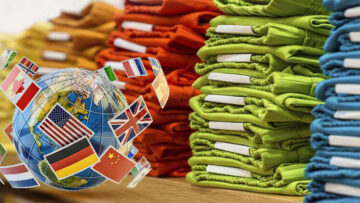
From being competitors to business partners…, trade relations between India and Bangladesh have taken a 360 degree turn. While Indian textile mills have increased their focus on Bangladesh to export fabric, Bangladeshi companies are increasingly looking at Indian domestic market as potential future growth drivers. Each country has something that the other can use to its advantage and with PM Narendra Modi pressing the fast track button on future collaborations at his first official visit to the country in June, the spirits on both sides of the fence is high.
Indeed Narendra Modi’s Dhaka visit can be considered as a landmark in Indo-Bangla relations with many in Bangladesh openly admitting that they were floored by Modi’s straight approach and directness to discuss and resolve issues. The obvious connect between the two countries besides political and economic ties, is the vibrant textile industry in both countries. While Bangladesh has captured a huge market share in global apparel exports, India is a traditional base for yarn and fabrics. In a meeting with industry delegate, the PM committed to look into the request for 50 acres of land either free of cost or at a nominal price in Gujarat. “We told him that we want to set up warehouses and retail shops, and for that we will invest US $ 25 million. The purpose is to sell and distribute our garments products directly… If we get this facility, then our sales will rise to US $ 1 billion from the present US $ 300 million in the next three years,” shared a member of the delegation. Garment exports to India were increasing due to high demands for Bangladeshi products like trousers, shirts, blouses, skirts, kidswear, cotton nightwear and jeans.
Though India presents a huge market and many Indian buyers are interested to place orders in Bangladesh, but there are reservations on both sides.
Former BGMEA Vice-President Faruque Hassan said there were two reasons for the negative growth in India. One was devaluation of the rupee against the US dollar and another was non-payment of the export proceeds by Indian importers. In 2011, a total of 22 small and medium exporters of Bangladesh supplied garment products worth US $ 5 million to Lilliput of India, but the company is yet to make full payments. Aldi, an Indian retailer, has been dilly-dallying in paying US $ 1.2 million against export proceeds of the Bangladeshi exporters for the last couple of months. According to the Export Promotion Bureau, Bangladesh, RMG export earnings from India in the first month of the FY 2015-16 (which starts from June) decreased to US $ 10.38 million from US $ 14.28 million in the same month of the FY 2014-15 because of such concerns. These irritant matters were also brought up with the Indian delegation and the Government officials present have committed to look into the matter.
Get Access to more Market Analysis articles from APPARELRESOURCES.COM.
SUBSCRIBE TODAY
From the Indian side, Indian mills are gearing up to better service the growing garment manufacturing industry in Bangladesh. As per industry estimates, the existing dependency of Bangladesh garment industry on imported woven fabrics is approximately 40 per cent and the same is expected to remain at about the same level or might even increase over the next five years. As of now, the largest portion of imported fabrics from India to Bangladesh is in denim fabric followed by shirting and suiting which includes non denim bottom wear fabrics. Out of India’s 28 denim mills, the top 10 mills are exporting their denim fabric to Bangladesh as they have been nominated by buyers. 60 per cent of Arvind Mill’s per annum production capacity in denim of about 110 million metres (nearly 3.5 million metres), is exported to Bangladesh every month.
However, the potential growth of textiles exported into Bangladesh from India is hampered by a lopsided trade policy. While 48 types of textile products including finished garments from Bangladesh are being sold in India without any duty following the free-trade agreement signed between the two countries, yarn and fabrics exported from India are attracting duties in Bangladesh. This disparity will certainly affect the domestic garment producers/suppliers, as China too is using the trade route through Bangladesh to dump their products. Many mill owners strongly feel that the Government of India should use the diplomatic route to convince Bangladesh to reduce the duty on yarn and fabrics sourced on large scale from India. Bangladesh should ensure that a certain minimum quantity of the fabrics and yarn sourced from India was compulsorily used in the garments which are exported to India.
The importance of Bangladesh as a market for yarn manufacturers has heightened as the Indian cotton sector that has been left reeling in the face of low Chinese imports. Indian cotton export is expected to fall to a six-year low as China continues to cut imports. According to Government estimates, lesser cotton imports by China may lead to as high as 41 per cent drop in shipments from India this year. Although there is a huge difference in the volume of cotton imports between China and Bangladesh, India is pinning its hopes on Dhaka to import more of its cotton to arrest the slump after the Chinese slowdown. Much of Bangladesh’s apparel export is fuelled by cotton sourced from India. Now, the Cotton Corporation of India (CCI) has decided to scale up its exports to Bangladesh and has started issuing advertisements inviting global parties to directly get registered with the agency for purchase of cotton for the Bangladesh market, the response from Bangladesh so far had been good. Currently, Bangladesh buys around 55-60 lakh bales from India.