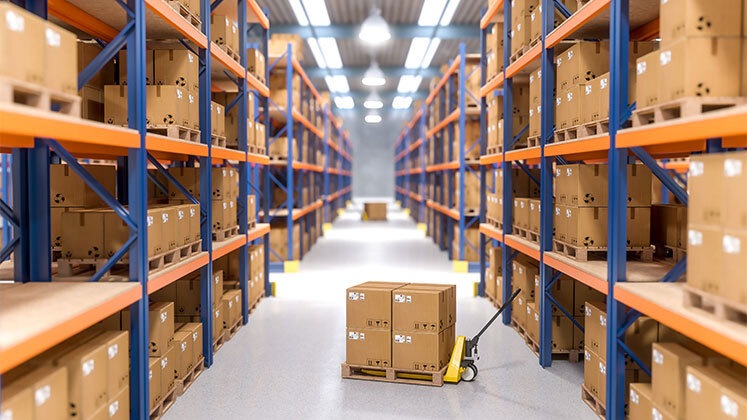
About a third of India’s quick-commerce dark stores are now located in Tier-2 cities and smaller towns, signalling a strategic shift by retailers beyond the country’s major metropolitan areas. The total number of dark stores is projected to almost triple to around 7,500 by 2030, up from roughly 2,525 as of October, according to data from property consultancy Savills India.
In a recent report, Savills said Tier-1 and Tier-2 cities would drive the next phase of expansion, while Tier-3 cities were expected to emerge as high-potential markets. Secondary and suburban micro-markets were also seen as critical in balancing operational costs with accessibility.
The rapid increase in dark stores mirrors the broader surge in India’s quick-commerce sector, which has expanded at an unprecedented pace in recent years. In terms of total operational area, the market is expected to grow nearly threefold to 38 million sq.ft. from about 13 million sq.ft., as companies race to meet rising demand for ultra-fast delivery.
India’s leadership in the segment is reflected in wider trends across the Asia-Pacific region, which remains the world’s largest and fastest-growing quick-commerce market. China and India are at the forefront of this growth, supported by vast consumer bases, increasingly sophisticated delivery networks and rising smartphone adoption.
Eternal, the parent company of Blinkit, added approximately 1,200 dark stores last year alone. During a recent investor call, the company’s chief financial officer Akshant Goyal said that more than 70–75% of new store additions continued to be concentrated in the top 10 cities. While the number of cities with a presence was expanding, he noted that store density in long-tail cities remained relatively low, meaning business performance was still closely tied to execution in the top eight to 10 urban centres.
Savills said demand for dark store space continued to outstrip supply, with an estimated 50% gap between required and operational facilities. The consultancy added that this imbalance presented a significant opportunity for property developers and investors seeking exposure to the fast-growing sector.
Earlier this year, Unilever’s global chief executive Fernando Fernandez said quick commerce in India could contribute 10–15% of the company’s sales in the next three to four years, up from 2–3% currently. He described India as a unique market where affluent and lower-income consumers lived in close proximity, creating both demand and labour supply that made quick commerce a logical growth channel. He also said the product mix on quick-commerce platforms was improving, supporting better margins.
Reliance Retail’s chief financial officer Dinesh Taluja said during the company’s September earnings call that dark stores were typically concentrated in larger cities, where traffic congestion and delivery-time constraints limited traditional store-based distribution. In dense urban locations, he said, delivery distances were often limited to one or two kilometres, making dark stores essential for meeting high consumer expectations.
The National Capital Region, encompassing Delhi, Gurugram, Ghaziabad, Noida and Faridabad, has the highest concentration of dark stores at around 400. Bengaluru follows with about 360 stores, Mumbai with 250, and Chennai with 190. Bengaluru, which has among the highest levels of e-commerce penetration in the country, leads in density with roughly 150 sq.ft. of dark store space per 1,000 people.




 Bharat Tex Special Report 2026