Handicrafts exports from India in 2017-18 clocked Rs. 22,916.03 crores, witnessing a significant decline of 6.05 per cent when compared to the year earlier which fetched Rs. 24,392.39 crores.
However, in an exclusive conversation with Apparel Resources, O. P. Prahladka, Chairman, Export Promotions Council for Handicrafts (EPCH) claimed that the dip in exports was ‘temporary’ and the industry will bounce back soon.
“India went through some revolutionary changes (GST and Demonetisation) that impacted every industry and although we did saw a 6 per cent decline in the exports but it is important to understand that the steps taken by Government affected everything from raw materials to production and hence the sudden change in prices is the main reason behind this temporary issue,” he apprised us.
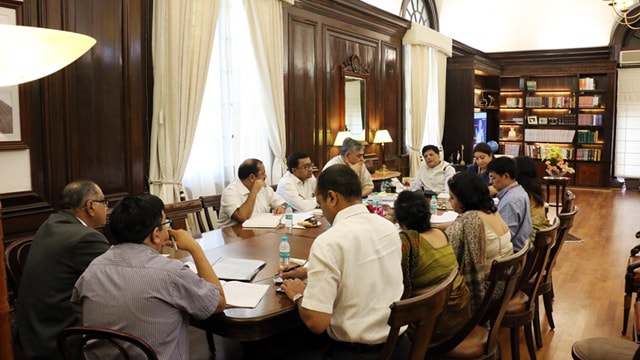
To discuss and address the present issues quickly, EPCH met acting Finance Minister, Piyush Goyal and Union Textile Minister, Smriti Zubin Irani in New Delhi on 27 May 2018.
Interestingly, the meeting took place on a Sunday which has never happened before and showed the Government’s urgency to resolve the issues faced by the industry. However, a concrete outcome is still uncertain.
Prahladka, Chairman EPCH urged the Government to make sure that the handicraft weavers should be exempted from paying duties on imported tools.
Currently, the Interest Equalisation Scheme does not include merchant exporters and the EPCH suggested the Government to include them in the scheme as well.
Prahladka further mentioned that if a bank does not issue the essential Electronic Bank Realisation Certificate (eBRC) then the bank itself should be liable to pay the penalty to the exporters. eBRC is issued by Banks based on the realisation of payment against export by an exporter.
Furthermore, EPCH demanded the Rebate of State Levies (ROSL) for handicraft exporters, as they are at present exempted from this scheme.
Markedly, ROSL is a scheme which is run by the Central Government that provides a rebate of a State’s value-added taxes on packaging, fuel electricity generation duty, etc.
Additionally, EPCH apprised the ministerial panel on the issue of participation of foreign designers in the Indian handicrafts sector, as they have to pay a large amount of duty fee to sell their products in the country. The body demands a reduction in the present cap for foreign designers.
Enhancement of funds allocation under the Market Access Initiative (MAI) and relaxation in Operational Guidelines (currently, not more than two buyers from a single company are allowed to invest) for funding under the MAI Scheme was also brought up to the attention of the Government by EPCH.
Mr. Prahladka affirmed that both the ministers have set a deadline of 15 days to take action on every issue that has been discussed at the meet for the handicrafts sector.
Markedly, Export Promotions Council for Handicrafts or EPCH has been making efforts to promote Indian handicrafts overseas by hosting and participating in textile events across the globe.
Speaking to us, Prahladka said that the Indian handicraft weavers are benefitted from the fairs conducted by the body in other countries as it gives them exposure.
“The exporters who are willing to innovate and invest in their business gained from the fairs and got direct customers that has enhanced their businesses,” he told Apparel Resources




 Bharat Tex Special Report 2026