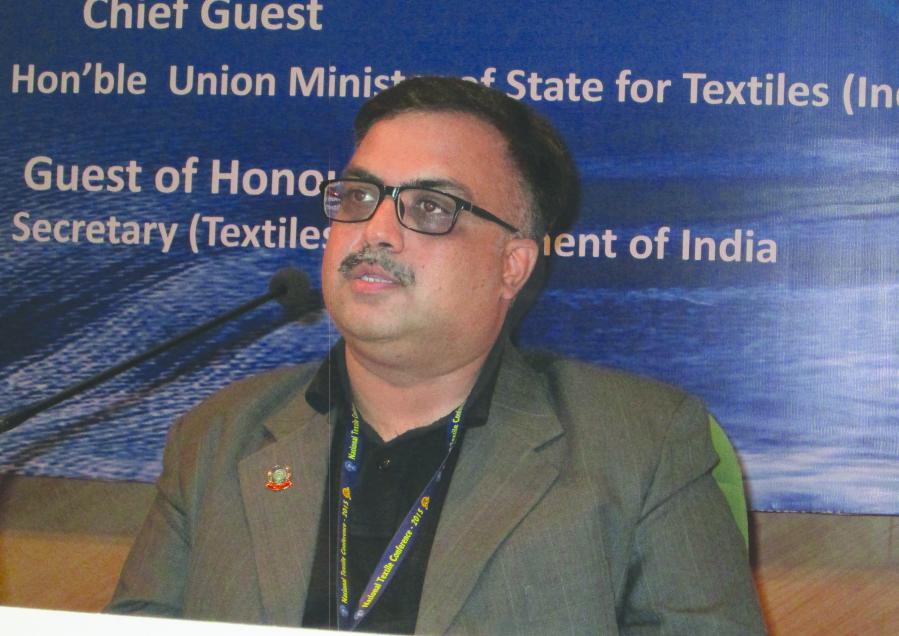
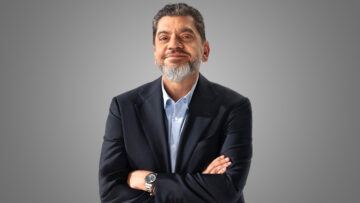
Ikea, perhaps the only retailer in the world who has never closed any of its store, is known for many of its qualities and one of them is to develop so many product categories after a lot of homework, so that sales is really high in all its categories. Sourcing from India since the last 3 decades, Ikea picks up a lot of home textile products and has almost 48 suppliers in the country. As of now, the company buying from 53 countries sees South Asia as one of the major buying destinations. Undeterred by slow market, in last fiscal Ikea registered growth of 12 per cent, which is phenomenal as it was in single digit from the last many years. As of now the company has a turnover of 30 billion Euros and by 2020 it will touch 50 billion Euros as it is adding 12 to 15 stores every year. With 23 years of industry experience and working with Ikea since 2007, Kamal Gaba, B Tech, Textiles from Maharshi Dayanand University shared his views and interesting observations about the industry on various issues, at a recently held conference. As a Business Development Manager – Textile Products, Furniture Fabrics & Covers, Purchasing Operations Areas South Asia, Kamal is basically a sourcing expert.
Excerpts of some key thoughts…
What makes Ikea a success story…
We call ourselves productionoriented retailers, so we take a lot of interest in the manufacturing processes and production; our business model is like a diamond where at top of the diamond is the customer and at the bottom are the suppliers. Our role is to close this distance between the customer and supplier. All the designs that we create are our own and are conceived to be adaptable to the production setups. It’s a very exhaustive process to become an Ikea supplier as one should have a long-term vision because Ikea doesn’t like short-term arrangements and shortcuts as well. In fact, long-term thinking and long-term relations are two of the reasons for Ikea’s success. Some of the products are being sourced from India from day 1 that means same product is being sold in stores over the decades, which is phenomenal. In such products, basic construction remains the same, only colour and few other minor changes are made. ‘Indira’ bed spread is one such example.
“As the company is entering into the Indian retail sector, over the last 3½ years, a lot of research to understand the market is going on and the core team is meeting several customers and visiting their homes as a major part of this research to offer right product at the right price and the way people want it.” – Kamal Gaba, Business Development Manager – Textile Products, Furniture Fabrics & Covers, Purchasing Operations Areas South Asia
Ikea helps suppliers to understand the products in very detailed manners. When we develop any product we look for five elements, call it democratic design and it covers – Form: How it looks to the customer; Functionality – How it functions; Quality, Sustainability and the Right price. We do lot of product improvements too but make sure that from a customer’s perspective it looks the same, like functionality/form doesn’t change.We keep on reducing price of our products which surprises the customer, this is the beauty of our success story.
Challenge of developing new products from India…
Till now whatever we are sourcing from India, is mostly cotton-based and going forward we are moving towards some synthetic products as well. This is one of the main areas to explore further. But I strongly feel that there are a lot of constraints when it comes to synthetic textiles in India. The availability of right setups, PD knowledge about synthetic textile really don’t exist in the country and India is not competitive in this segment. Ikea is also exploring India for those product categories which are comparatively new or different for India. Like a product storage basket made out of filament yarns like nylon or poly propylene, it is huge buy for Ikea today but these products don’t exist in India. We are sourcing huge quantities of storage solutions from countries like Indonesia and Vietnam. The solution as of now we see is to import fabric from overseas and have a stitching factory here, to ask our suppliers to put up a different unit for storage solutions. The other potential big ticket product is the mattress cover as we do have a huge requirement of the same. And we have demand for both – knitted and woven options in this product but as of now there is no readymade solution for this in India. When it comes to India, there are either garments or home textile factories, and when it comes to home textiles factories, it is all about traditional products. So the industry doesn’t have preparedness for new categories.
There is one more such example; Ikea offers changeable covers of sofas. So a customer buying a sofa can buy 3-4 different sofa covers which actually fit into the sofa like a skin and the customer can change it at home to give a new look to the sofa. We started exploring it from India 5 years back, but the knowledge about stitching these covers actually doesn’t exist in India, so we were having so many constraints in getting the right quality of covers. Surprisingly, the knowledge/ skill of tailors is limited and we actually asked for some expats from different countries working for Ikea to help us out. In this way we provided training/ industrial engineering support to our vendors, to develop them. In the process we created three customized setups in India with the help of our suppliers for sofa covers. One will not find a single factory dedicated for these covers as a regular product like a garment in India while internationally we have many such kinds of factories.
Compliance in home segments still a concern…
Apart from the challenge of upgrading the Indian manufacturer from traditional products, the biggest challenge we face today in sourcing is regarding the compliance aspect. Industry has to really work on this aspect, as it just talks on it but when it comes to implementation, industry is not there. So our choice of factories is very limited in India, because as a Swedish company we are really committed to compliance, people and environment. Secondly, I feel that even in the organized segment, industry’s thinking is still fragmented. One may have a vertically integrated unit but he still thinks of each segment as a different profit centre as he wants to take profits on spinning and weaving as a separate identity and ultimately the cost is loaded onto the product. Industry’s expectation is that buyer should pay on all these things and that’s why most of the vendors shift loyalty to other buyers for small amounts, but ultimately they have to understand that the product has to sell.
Industry has never gone deep into this value chain aspect of the whole product. They don’t know, which are the processes that are generating more waste for them, and where they can add value and eliminate the waste. Indian textile industry is still a very traditional industry. How many examples are there of a home furnishing company working on the Lean manufacturing system… Our industry has to go back into the value chain much more now to become more competitive, still maintaining profit from value chain, but not to expect everything from consumer because income of customer is shrinking. Industry needs to do lot of introspection. Though we are among the strongest textile countries in the world, we are still very-very fragmented even in the organized sector.



 Bharat Tex Special Report 2026