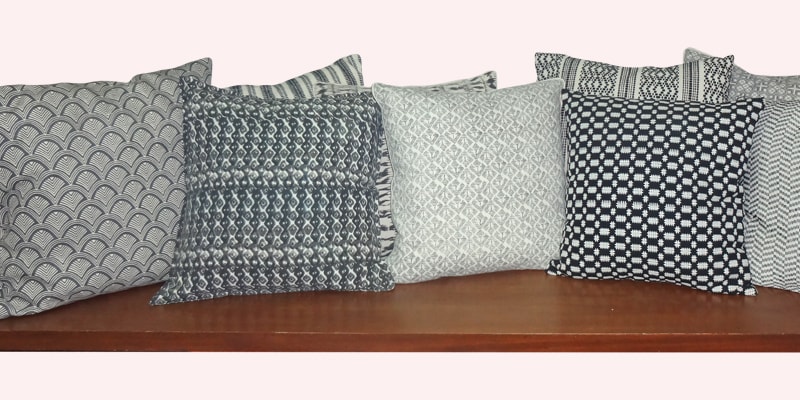
 Growing from a small cabin of 300 square feet area to having 3 factories and 1 administrative head office today, the success story of East India Company, Mumbai is indeed a motivation in the business of home furnishings. A candid discussion with Manish Shah, a second-generation Director of the company, makes us really believe that ‘fair’ business can be a great amalgamation of multiple working centres, exclusive hand-crafted patterns and eco-friendly factories. “There are tremendous possibilities in India and this is what gets me excited to be a part of this venture,” says Manish passionately.
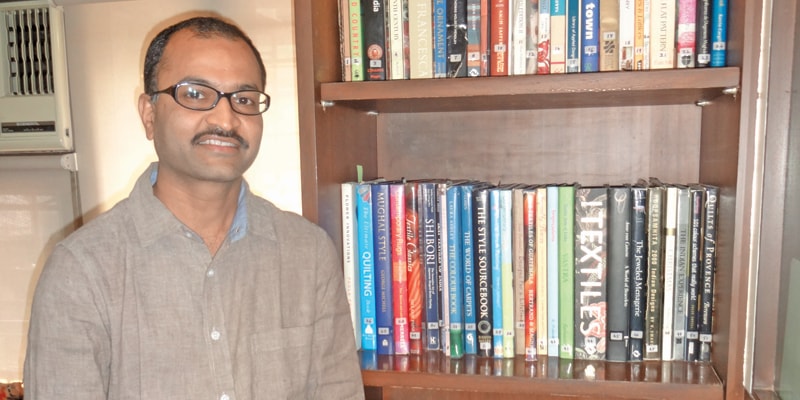
With a long journey encompassing 45 years (25 years for Manish alone) and a strong confluence of artisans from every corner of the country being associated with them, the company’s objective was, is and will always remain to bring the best out of India’s rich traditional heritage and present it to the world in the form of phenomenal designs representing high quality collections in home furnishings such as cushion covers, bed linens, duvet covers, sheet sets, comforters, and rugs and carpet. The company’s buyers span from small retailers within the country to some of the top brands in the US and Europe, which source from the company because of their handwoven fabrics and design coordination which are the endowments of artisans from small clusters in Rajasthan, Gujarat, UP and West Bengal. “Brands look forward to our collection and their designers pick up our designs which are indeed a matter of great pride for us,” avers Manish.
“About 90% of our buyers are working with us for last 15 to 20 years, through thick and thin, which is an achievement for us.”
Apart from outsourcing of fabric, the company has 28 powerlooms and equal number of handlooms’ installations with an overall staff of 200 people in all its units. Having certificates like GOTS and BSCI, it follows AQL of 2 and 1.
It is also their strong product development strategy that sets them apart from other regular home furnishing companies. Manish himself travels around the world for almost six months in a year visiting retail outlets and buyers in different countries to conduct intensive research on their cultural requirements and conceptualises products envisioning meeting such diverse customers’ demands. They also do not depend on the services of any permanent designers in-house as it leads to a routine look after some time. Rather they prefer working with young designers from outside who can always come up with fresh ideas.
Having separate weaving units at Karur and Kannur and their primary stitching unit at Mumbai, East India Company presents a fine example of adept networking of core strengths. In fact, having weaving units at Karur and Kannur gives them the competitive edge over others. The weaving unit at Karur is hardcore commercial because of cheap labour cost apart from the low rate of yarn procurement. But Kannur, on the other hand, is extremely high-end on quality and is suitable for smaller buyers demanding less quantity. Coordination between the three units is maintained tightly with the help of a structured time and action plan formulated right from the time the orders are placed till the final execution of the fabric. Manish further shares, “Among these various processes, if we find some loophole(s), they are immediately addressed to, since rectifying them after the order is done would be increasingly difficult.”
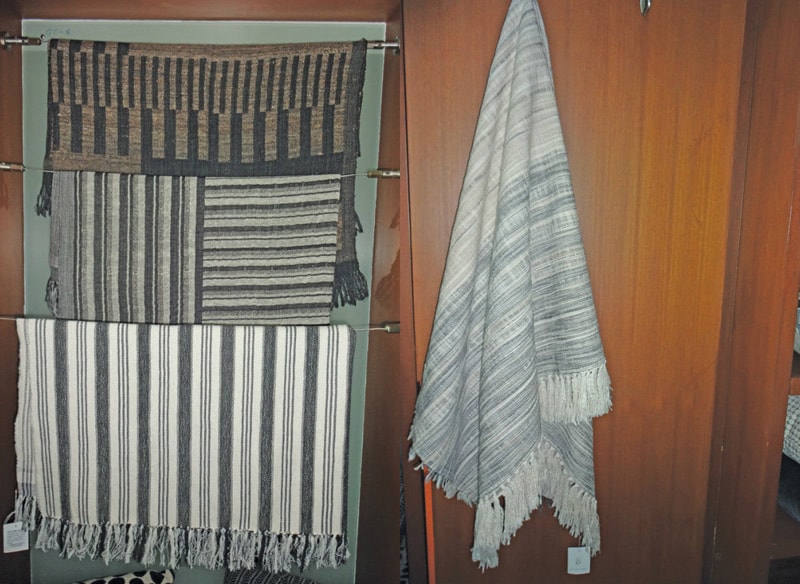
However, amidst such spectacular management, lies the challenge of building a business on handlooms for larger quantities, as handmade items lack the speed of delivery of huge orders that’s possible by machines. Additionally, they are loaded with several unforeseen snags faced by weavers themselves, but he claims that a capacity to foresee such probable problems can reduce the chances of unexpected crisis. Moreover, their company targets a niche market for tailor-made products where quality rules over quantity and hence, issues related to massive production can be averted.
“We see that the future is of tailor-made products as niche market is growing very well around the world. They prefer very good quality and demand small quantities of 100 to 200 pieces, which suits us well.”
Undeterred by the obstacles coming their way, East India Company’s forte has been natural textiles with a target on sustainability. The company uses 100% cotton, linen and silk but no polyester. Their weaving units are completely natural, including dyeing processes with zero discharge of water, waste management and recycling of fertilizers. As Manish proudly states, “About 25% of our business is carbon without any footprint. (The weaving unit of the company is carbon-free; it uses a lot of recycled material for various purposes). We desire to make our processes completely organic by 2020. At present, we implement sustainability only in few of our segments so that price is not impacted and buyers are not hesitant to buy our products.”
Their social comitments can be seen through their practise of donating a portion of their turnover to charitable trust and supply of interest-free loans to their employees as and when required. Besides sustainability, they aspire to accomplish their long-cherished dream of launching project ‘NIMMIT’ (connecting point) to promote their artisans on a global platform and also expand in handicrafts domain related to textiles such as fabrication of lamps.




 Bharat Tex Special Report 2026