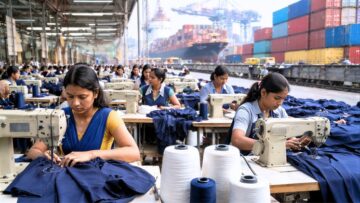
Though Bangladesh has grown business substantially over the years, an area which still remains a concern for international buyers is ‘compliance’ of sustainable environment and ethical working practices. Owing largely to poor enforcement of existing laws and inadequate pressure from the civil society and interest groups – labour right practices, environmental management and transparency in corporate governance is one of the most common problems in the country.
Abuse of basic labour laws pertaining to long hours, low or no wages, poor food, isolation and hazards in the work environment, water and air pollution which is harmful for children, child labour, racial discrimination, mistreatment and sexual harassment have time and again made headlines. Even though proper laws are in place and the industry is aware of the consequences of nonconformity, manufacturing happening in small factories and workshops on the street, in home based business and domestic employment is making the enforcement of labour laws virtually impossible. However, recent reports indicate that the bigger exporters are compliant to all international standards.
A recent study by Swedwatch, an independent research organization, found that women workers, who are the backbone of the industry accounting for 80% of the workforce, earned an average of $ 48 a month that includes 2 to 4 dollars overtime pay per day. The price they pay is long working hours and separation from their children and family. Slowly, the bigger buyers are waking up to their social responsibility. Walmart on 5th April 2012 launched its ‘Women in factories’ program, a five-year initiative that will empower 60,000 women working in factories that will supply products to Walmart and other retailers in India. The project entails increase in sourcing from women owned business, empowerment of women
through training and education, increase gender diversity among major suppliers band make significant philanthropic efforts towards women’s economic empowerment.
Buyers have neglected to curb inhumane conditions at Chinese owned supplier factories of Rosita and Megatex in Bangladesh. The 5000 workers here face brutality, mass firings, imprisonment under false charges and are cheated of their wages, being paid as little as 16 cents an hour. Sadly, Bangladeshi workers producing sportswear for brands such as Adidas, Nike and Puma for the upcoming Olympics were yet again physically abused, tortured and sexually harassed recently, bringing bad publicity to the brands, forcing them to react. Adidas clarified that its suppliers in Bangladesh were subject to regular audits, adding that it had identified “critical issues” relating to working hours and wages at one of the factories last year and thereafter the underpayment of minimum wages had been then resolved at the factory. Yet, buyers are still reluctant to acknowledge the additional price burden on account of living wages, which is in fact the only way to resolve the issue.
Besides social concerns, the World Bank’s International Financial Corporation (IFC) declares that textiles and garment manufacturing in Bangladesh has a huge environmental footprint, annually discharging as much as 56 million tonnes of waste water, 5 million tonnes of sludge and consumes tremendous amount of energy. Lately, pollution incidents involving Bangladesh textile sector is a matter of grave seriousness, creating lack of clean water for 31 million people.
As concerns mount leading global brands and retailers including H&M, Levi Strauss, Carrefour and Tesco have backed a three year program to clean up production in the Bangladeshi garment industry. The project will help local garment washing; dyeing and finishing units adopt cleaner and safer production methods including technologies to reduce water consumption and effluents, and also is designed to help the sector to enhance its long-term competitiveness and sustainability.
Taking a proactive stance the Leather Goods and Footwear Manufacturers and Exporters Association of Bangladesh (LFMEAB) has inked a new memorandum of understanding with WRAP (Worldwide Responsible Accredited Production) to jointly promote socially responsible manufacturing in the Bangladeshi leather sector. Alongside, the commerce ministry realizing the graveness of the situation has committed to train fresh garment workers to build skilled workforce and to counsel them on working environment in factories.