The shortage of labour continued to hound the garment manufacturing industry this year and the industry has been cornered into re-strategizing to retain workers at one end and recruit fresh workers at the other. It is slowly but surely coming to a point where the industry can no longer depend on migratory labour, which made them explore options to take factories to the heartland where there is labour… that is relocation to remote areas, but how remote? Because this requires to address many issues besides availability of infrastructure and support industry… even if we mitigate the impact of these factors the first of the three main challenges would be the logistics of opening a factory in a faraway place, which may be convenient for the workers, but a challenge for the management. Secondly, is the availability of skilled workers, which can produce consistently and productively, and thirdly the lead time and finance required to train the required workforce.
In the past two years, the major sources from where labour was coming have seen a change in the economic scenario leading to a reduced interest in moving out to search for employment. According to a study by the Bihar Institute of Economic Studies, Bihar, a major source of workers has seen 25-30% less migration, as many are finding jobs in Bihar, either in State Government projects or in NREGA schemes. The states of Punjab and Delhi-NCR in particular have been dependent on migrant labour from Bihar for many years. However, with increased opportunities nearer home and increasing cost of living in metros has encouraged them to stay in Bihar.
While in a State like Tamil Nadu, a large number of people have been taken away from the labour force because of the so-called welfare measure of the Government of Tamil Nadu – like free food items, free clothing, free shelter, free schooling, etc. besides free medical treatment which is compulsory. Because of the freebies, a person needs to work only for 4-5days in a month to earn for his requirements. In fact the labour crisis has led to many garment export companies in Chennai to take their factories deeper into the outskirts. And now the latest Food Bill that will ensure legal right to cheaper food grains to 63.5% of India’s population. The bill seeks to provide 7 kg of rice, wheat and coarse grains per person per month to priority households at Rs. 3, Rs. 2 and Re. 1 per kg, respectively. General category would get at least 3 kg of grains at a rate not exceeding 50 per cent of the minimum support price. This will add to the woes of the industry in major cities.
Indeed taking factories to where the work resides in a definite trend to counter the shortage of labour in metro cities, factories in Delhi-NCR are moving to neighbouring states of Rajasthan, UP and Himachal Pradesh, while those in Bangalore are going towards, Hasan, Tumkur Kannakpura, Shimoga and Mysore in Karnataka itself. For Chennai, the expansion is going towards the Kerala border. Mumbai has seen an exodus long time back and most factories are now in the south. Rising real estate costs in metros and increasing wage rates are also reasons to seek new manufacturing bases.
According to a StitchWorld Survey conducted this year that compares 113 locations in India on 50 different key performance indicators to settle on the best apparel manufacturing locations, Mahindra city SEZ, near Chennai in Tamil Nadu and Bhubaneswar in Khordha district of Orissa are considered to be the best locations in India for making apparel as they offer a good infrastructure and logistics are also taken care of.
Whereas the industry is seriously contemplating moving to Bihar as an immediate goal and the AEPC is making efforts to convince the Bihar Government to give incentives to set up industry. The State’s economy grew by 14 per cent in 2010-11 and sensing an opportunity to attract investment, the Bihar Government has recently announced the Bihar Industrial Incentive Policy-2011 for accelerated Industrial Development of the State. Preparation for industrial growth includes creation of necessary basic infrastructure such as roads, water, uninterrupted power supply and provision of Common Effluent Treatment in industrial areas/Estates. The policy, which came into effect from 1st July 2011, will remain in operation till 5 years.
However, taking the factories to rural and newly developed areas is not a complete solution, and among the biggest hurdles is the availability of skilled manpower that too in one place. No doubt the Government is taking skill development as a priority both in its budget allocations and in the recently announced Manufacturing Policy. The National Skill Development Policy (NSDP) under which a target was set to train 100 million persons by the year 2022 for the Textile and apparel industry is already in place. The Apparel Training and Design Centres (ATDC) has setup the SMART (Skills for Manufacturing of Apparel through Research & Training) program through which already 14,000 workers have been trained. IL&FS under its SEAM has trained around 1 lakh candidates till date of which 87,000 have been already placed, and Technopak is also actively involved in training for the industry.
Adding further weight to efforts for training the National Manufacturing Policy passed by Cabinet in October 2011, aims to increase the share of manufacturing in India’s GDP to 25 per cent by 2022, from 16 per cent now and also train workers for the proposed growth.
But it has been an uphill task for training agencies, as with increasing opportunities in IT, infrastructure, automobile and retail industries it is becoming really hard to convince the new trainees, even in remote villages to enter the garment trade, which is considered a tough and less rewarding option by the fresh labour force looking to move away from agriculture.
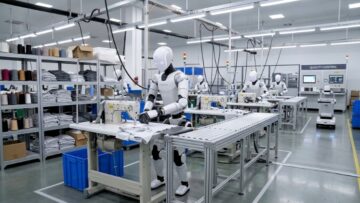
In the meanwhile, the industry has come to terms with the shortage of labour and with the dual impact of shortage and rising wages the thrust is on labour saving technology to cut down on the dependency of labour. In 2012, companies will continue to search for solutions and the migration of factories to places like Bihar could be a reality with many leading exporters already investing in the State. From the Government perspective it is important the infrastructures like schools, hospitals, shopping facilities, etc. are put in place before the factories come in so that the reallocation is smoother and yields good results for future growth…