The year 2020 was the year of uncertainty, a year of crisis, if we may call it, with nationwide lockdown for months altogether, businesses shut completely, people confined within their homes. The COVID-19 pandemic that led to the lockdown had sent the overall retail and other industries into a tailspin for the entire year and while the industry was looking at 2021 for revival of the business, the second wave gave another blow to it.
One of the worst hit, the apparel retail industry lived through one of the toughest years in 2020 and is still on the road to recovery. However, the pandemic surely accelerated the digital transformation of the industry, made it more consumer-centric and even brought more focus on sustainability side of the business. COVID-19 has presented the apparel industry with an opportunity to pause, reflect and rethink its future and the industry is now shifting to more circular business models with sustainable and earth-friendly supply chain and fabric usage.
Today, it seems like for a global industry worth almost US $ 2.5 trillion on per year basis, being smarter and more sustainable might just be the way to recover from the pandemic. Sustainable fashion is a huge trend among today’s generation and be it celebrities or influencers, everyone is promoting sustainable fashion.
Sustainability is not a Covid-induced trend; the fashion industry had begun to make amends in its ways even before the pandemic. Innovation and restrategising have always proved to help businesses reinvigorate in the challenging times. The ongoing pandemic has brought the overall fashion supply chain into focus and has highlighted key areas of innovation opportunities. While established fashion brands have already started going sustainable, there is a surfeit of new brands being launched as sustainable start-ups, offering organic, vegan, sustainably sourced and manufactured clothing options. Apparel Resources (AR) interacted with few such sustainable, earth-friendly start-ups in the segment to find out what drew them towards sustainability, among other things.
Doodlage

Upcycling is not a new concept in India and has been part of desi Indian households since forever. Doodlage is one such brand that upcycles factory waste into limited edition collections. The brand’s leftover materials are converted into smaller products such as accessories, soft furnishing products and paper to make its packaging or stationery products.
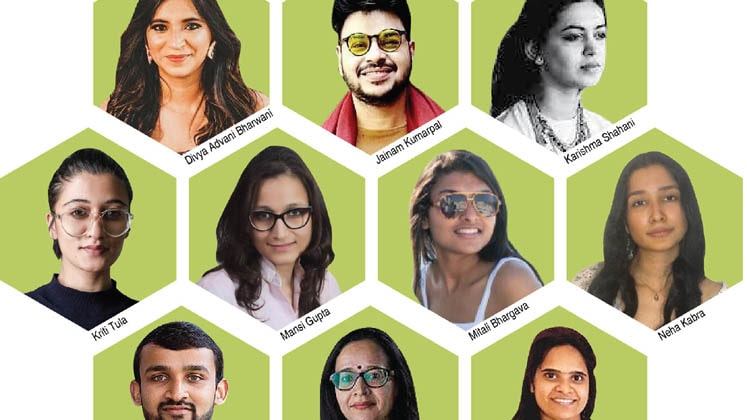
Kriti Tula, Founder, Doodlage, apprises, “All our pieces and fabrics are made with ethical production units and our packaging is designed to be plastic-free. I have been working in the fashion industry for more than 10 years now and was always appalled with the idea of a linear fashion industry. Take-make-waste is not going to work for us or our future generations. Consumers too have changed a lot in the last 5 years and we are seeing how aware and conscious they have become towards using ethical fashion. While the pandemic impacted logistics, supply chain and order flow, we worked hard to keep the brand afloat. We have collaborated and launched several new collections during this time. We have also been working on several B2B orders during the time of pandemic as more businesses turn towards green initiatives.” Doodlage sells its accessories range starting at Rs.350 and clothing category is retailed at an average price of Rs.4500.
Bhu:sattva

Bhu:sattva, a brand which has ‘started green’ instead of ‘going green’, is based on strong ethos of sustainable living promoted by the organic fabrics and herbal dyes, social empowerment promoted by projects, revival of ancient and languishing art forms promoted by bringing artisans and craftsmen to national and international platforms.
Jainam Kumarpal, Promoter & Director of the brand, believes in conserving the beauty of nature and uses fabric featuring natural fibres in order to exude a calm aura that soothes the senses. “At Bhu:sattva, our USP is the textiles and different blends that we use and hand embroideries done by local artisans. Also, we do a lot of upcycling of our waste into different products which adds value. Our main target audience is high disposable income groups and prominence is given to improving holistic lifestyle rather than meagre and entertainment wardrobe for fashion enthusiasts. Our prêt line starts from Rs.15,000 and goes up to Rs.45,000 for womenswear line. With Bhu:sattva, we believe every ensemble is a souvenir that signifies the cause which it stands for with incomparable quality (in terms of textiles and value addition we do). Consumers in India are more design-centric rather than textile centric. But the times are changing and we feel that in coming years, people will buy more conscious and ethically sourced clothing in India,” maintains Jainam Kumarpal.
Also Read: Fashion Brands Realign Customer Acquisition Strategies To Navigate Through The Pandemic Year
Tjori
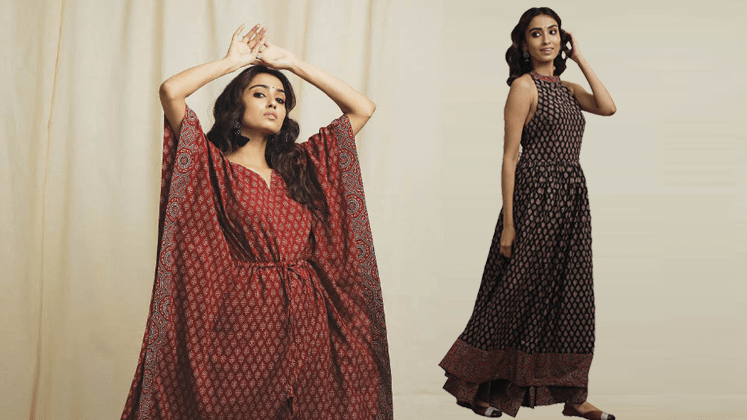
Tjori is a multi-category, online-first artisanal ethnic brand that offers apparel, wellness, home, mother and child products, and caters to 195 countries across the globe. The company was started with the founder’s personal savings of Rs.10 lakh and now clocks an annual turnover of Rs.50 crore. It later raised funding of approximately Rs 1.5 crore from friends and family in 2016-17 and pre-Series A capital in 2019 to expand the brand into an omnichannel brand.
Mansi Gupta, Founder & CEO, Tjori, maintains, “The brand believes in the idea of sustainability as the only key to the future. We love to explore all sorts of sustainable fabrics available in the market while ensuring the Indian art and craft is still the main highlight for the collection. A lot of fabric dyeing and block printing is done with eco-friendly colours and sustainable methods. We have a few exclusive collections that use GOTS certified fabric and a few ISOTS that take care of the cotton and silk fabrics used. The sustainability factor is an edge over the regular brands but in today’s changing times, we all are ethically bound to help the environment. The use of bamboo fabric for kids’ clothing really gave us a very easy space in people’s hearts as they saw their kids enjoy the outfit. Sustainable fashion is an emerging standard that designers in India are embracing given the obvious urgency to switch to more eco-friendly, ethical and conscious fashion especially during the pandemic. A huge shift has been seen in the consumption patterns and adoption of a more sustainable lifestyle. Not only this, customers have begun to question the sustainable standards. India has witnessed rapid strides of development at sustained growth rates and has seen a huge spurt in sustainable consumption.” While the pandemic did affect the brand and the entire apparel industry, Tjori was quick to go into the survival mode.
According to Manshi, “Good pre-planned production cycles and trustworthy suppliers with a very hardworking artisan community and a dedicated team helped us through these difficult times. Every day is a new battle but the sheer will to get going keeps the business afloat.”
Greensole
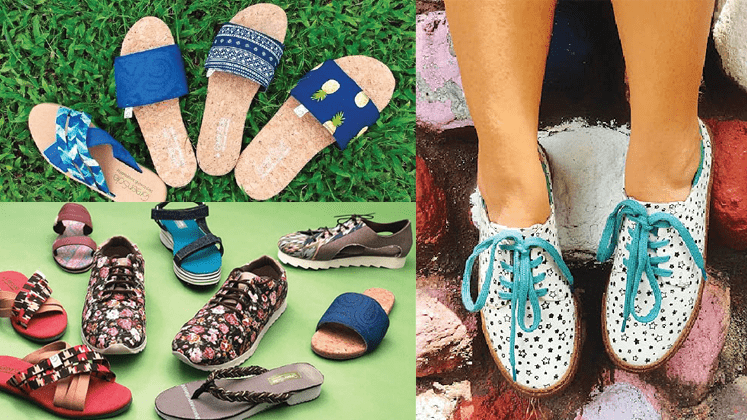
When it comes to upcycling, it’s not just limited to apparel. Brands – both established as well as start-ups – are offering upcycled footwear and consumers are loving it. As athletes, Shriyans Bhandari and Ramesh Dhami thought of using their torn sports shoes (with good soles) by refurbishing them into trendy slippers. That brainwave eventually spawned a vegan and sustainable footwear brand that reuses shoe soles and is appropriately named Greensole.
Shriyans Bhandari asserts, “We use remelted and moulded soles in our shoes to avoid wastage by using new materials. Apart from this sustainable designerwear, we are upcycling shoes to promote social welfare, as we donate those good quality upcycled shoes. We are giving opportunities to new skills by making them a part of our business. So, we are doing ecological, social and economical goods simultaneously. And when customers make sustainable choice by buying our products, they automatically become a part of our journey of making this world more liveable. Even as the pandemic affected business, we still have had a good revenue generation. As we are into CSR and recycling solutions, the overall revenue didn’t get impacted as much as the details say, it is also slowly picking up. Because our core is recycling solutions like upcycling, unique materials, etc., this brand will definitely have an edge over other brands.” Greensole products are priced between Rs.900- Rs.3500.
Litleens

Litleens is a sustainable kidswear brand that works with the ultimate goal to have a system that works without leaving a negative footprint by using as many natural, organic and recycled materials as possible. In practice, it is continuously working to improve all stages of kids’ lifestyle products, from design, raw material production, manufacturing, transport, storage, marketing and final sale, to use, reuse, repair, remake and recycling of the product and its components.
“We use plant-based fibres, milk-made fabrics, orange fabric made from the peels of the orange fruit, rose-petals based clothing, jackets made with recycled suede, vegan leather belts made from the coconut industry waste, and many more like fabrics made from Soya, Banana, Aloevera, Lotus, Bamboo, Eri Silk, Kala Cotton Denim, Organic Cotton, Recycled Suede and Recycled Cotton. We work with the concept of greenwashing. While this has not been an easy time as the pandemic continues to accelerate, we strategised to tap the market. We recently launched our first ever loungewear collection titled ‘Yesteryear Worlde’ designed for staying home this summer and is manufactured from plant-based textiles. Our latest research shows that the demand for sustainable fashion is going to become bigger than ever. As a conscious brand, we’re always making sure that our creations are both ethically made and economically feasible,” says Mitali Bhargava, Founder, Litleens. The fashion industry is a significant contributor to environmental and human damage and it is fortunate that consumers have now become aware and conscious about eco-friendly clothing and are even using sustainable options for their kids. Litleens offers sustainable clothing for kids in between 4-12 years of age at a price range that varies from Rs.2500 to Rs.20,000.
MAATI

Maati is an ethical fashion brand, based out of Udaipur. Maati takes in a lot of local flavour and is inspired by the people and tries to adapt to all body types and sizes. The clothes produced are adjustable, skin-friendly and ecologically responsible. The label also has a zero waste policy where they upcycle yarns, use natural dyes and work with local craftsmen from different parts of the country. “I come from a joint family where sharing was the major learning along with keeping needs over wants and that is what translated into my basic idea of sustainability. When I had started out 3-4 years back, I didn’t think people were aware, but now I think Indians are becoming more and more aware of conscious consumerism. Sustainable fashion has become more inclusive in terms of affordability, design silhouette, sizing and variety. I think now Indian consumers are ready and willing to pay the premium attached to sustainable or eco-friendly clothing,” Neha Kabra, Founder, MAATI, maintains.
While talking about the pandemic and its impact, she adds, “Navigating through the pandemic has not been easy but has definitely added to the brand growth as well as personal mindful choices. During the lockdown, the business took a hit but then holding grounds and being patient was the only solution knowing that this is not going to last forever. Our artisans who were already living a very sustainable lifestyle in their respective villages also held their grounds and supported us and each other as a community.” MAATI is working with the agenda of making sustainable fashion affordable. It sells dresses priced between Rs.3000- Rs.5500 and pants at around Rs.2500 and tops are priced at Rs.2450.
Nandni Studio
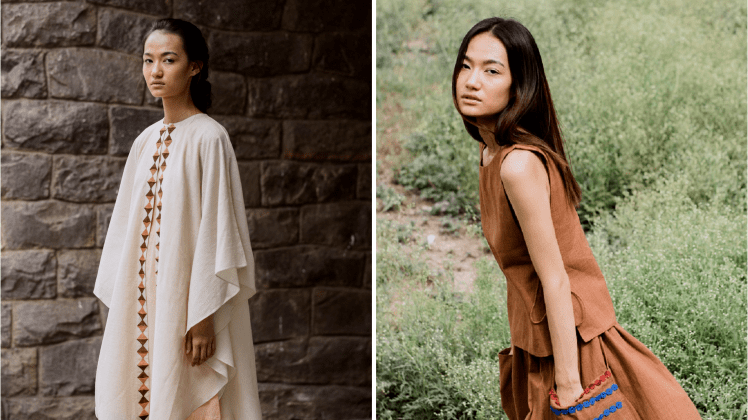
Nandni Studio is a sustainable ethnicwear brand that embraces the essential Indian-ness, simplicity, comfort and finesse in its fabrics and designs while also mixing the contemporary in its collection. The USP of the collection at Nandni Studio is breathable fabric that brings out unique prints with every collection.
Soojata Gupta, Founder, Nandni Studio, asserts, “There have been a lot of brands that have started promoting sustainability. The Indian consumer is a little wary to pay the premium associated with slow fashion. Hence it is imperative for the brands to explain the process of making products to the customers and also why sustainable fashion is a bit expensive. But I also think that if products are unique, customers do not mind spending. Sustainability is a journey and no one can claim to be 100 per cent sustainable. We try our best to take small steps in the direction. Being sustainable gives you an edge over other brands only for customers who understand and appreciate the idea and benefits of slow fashion. In India, the proportion of such population is very less but we are moving in the direction. The bloggers and influencers are playing a major role in spreading awareness. I feel the pandemic has also helped people understand the importance of mindful spending. Furthermore, even as the pandemic has and is affecting in-store and online sales very badly in India, we have been able to sustain due to our international presence.” The average ticket size at Nandni Studio varies between Rs.7000- Rs.9000, while the products are priced starting at Rs.3500 and go upto Rs.13,000.
SajKe

SajKe is a women-driven homegrown brand that thrives to be the one-stop destination for sustainable apparel, decor, gifts, accessories and more. The brand ensures that it gives due credit to its artisans, while trying to introduce the 21st century with treasured crafts of Indian culture like ajrakh and kalamkaari, block-printing, etc. SajKe’s every move is towards making a gradual shift to slow fashion and towards supporting and promoting sustainable products.
The start-up uses organic cotton and khadi fabrics which are feather light and breathable. Divya Advani Bharwani, Founder, SajKe, maintains, “SajKe not only wants one to look beautiful but also feel beautiful. We truly believe in showcasing the art and skills of artisans as they are an integral part of our family. Our artisans are from Kutchh, Gujarat and Bagru, Jaipur. Sustainability is the new cool. Apart from it being like a blessing to the environment, it has become a status symbol and a conscious decision at the same time. The new India is very visionary and creative. We feel the future will be growth in different types of sustainable fashion consumption – it could be recycled materials, or it could be non-synthetic material such as organic cotton instead of regular cotton. It is astonishing as well as exciting as a large number of people who know about the concept of sustainability are quite conscious when it comes to their contribution in carbon footprints. Sustainability factor gives us an edge over fast fashion only with regard to people who acknowledge and understand their role in the eco system.”
SajKe offer a variety of products from clothing, to jewellery, to essential products, to home decor maintaining the sustainable factor in every section and the average price range of products is Rs.3000.
Keebee Organics
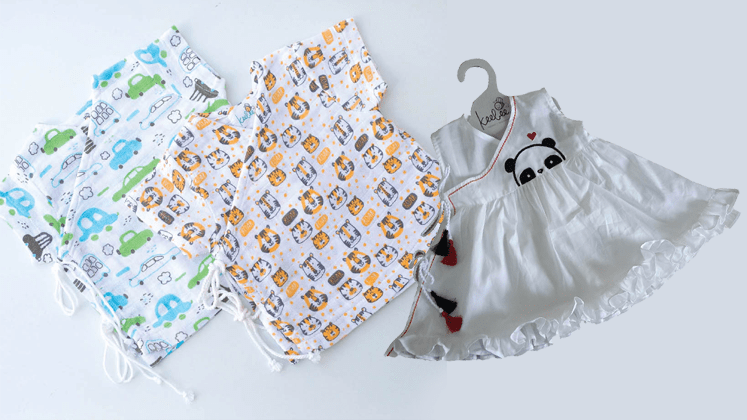
Founded in 2016 by Vandana Kalagara from Hyderabad after seeing that there were no baby skin-friendly organic clothing brands in India, with 10 products, Keebee Organics later expanded the collection and the brand with Smruti Rao. Keebee Organics is a sustainable, ethical and organic clothing brand for children in the age group of 0-10 years. It offers 100 per cent organic clothing certified by GOTS. Devoid of harmful chemicals, the brand products are hypoallergenic and safe for kids as also the environment.
Vandana Kalagara, Founder, Keebee Organics, points out, “Customer behaviour needs to be changed for a sustainable future. Through Keebee organics, we aim to provide customers with options to help them ease into sustainable practices. Our 100 per cent organic clothing supports fairer and safer working conditions; saves natural resources and reduces the carbon footprint on the earth. Customers should also be aware of the product they are buying and thus, we provide complete transparency in our production process. This is a small effort undertaken by us to promote minimalism.”
The brand retails through its own website and other e-commerce portals like Firstcry, Myntra, LittleMuffet, Amazon, and more. Keebee Organics offers casualwear, ethnicwear, undergarments and a range of other kidswear products for both boys and girls up to the age of 10 at a price range of Rs.350- Rs.4000.
Ka-Sha

Pune-based sustainable , or rather conscious brand, Ka-Sha focuses on clothing as a medium for storytelling to celebrate multi-layered cultures and ever-changing social conversations. The brand has been working towards a holistic integration of sustainability right from the materials, designing, and production to distribution.
“At Ka-Sha, clothing is our medium to celebrate handcrafts. We are always revisiting artisanal techniques, new and old to translate in to our work. People, journeys and stories are at the core of our inspirations. Our clothing prides itself in its quality and processes, mindful of the maker and the wearer as we continue to craft each piece with love from India since 2012. Our need to be a label that adapted its waste in a functional system led us to Heart To Haat, our sisterhood, inspired by the indigenous ideology of reusing, repurposing and reclaiming. Here we upcycle, recycle and mend clothing and textiles of all shapes and sizes to give them new meaning, drawing from techniques of craft through innovation,” tells Karishma Shahani Khan, Founder, Ka-Sha.