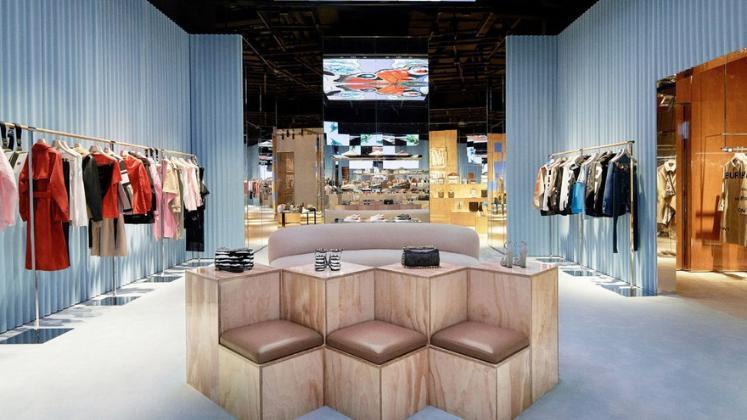
Early holiday shopping season discounts from high-end fashion retailers like Bergdorf Goodman on New York’s Fifth Avenue raised concern that a lacklustre Christmas could lead to inventory gluts – potentially dragging labels into a discounting spiral that would cheapen their image.
According to the most recent US credit card statistics from Barclays, luxury goods consumption decreased by 15 per cent year over year in November, following a 14 per cent reduction in October.
This performance “doesn’t bring much optimism” for the fourth quarter, with the dismal US trends providing cause for concern on the performance of luxury brands during that time, said Barclays analysts.
Citi credit card data revealed that purchases of luxury clothes fell 9.6 per cent year over year in November following a 11.4 per cent fall in October. Declines were much more pronounced at department shops and online, where they fell 13 per cent year over year.
According to Olivier Abtan, a consultant with Alix Partners, retailers had too much inventory going into the season. He pointed out that last year’s purchase orders were placed before the industry started to slow down following a months-long post-pandemic spending spree.
“Compared to normal levels, they’ve already started the season with overstock,” stated Abtan.
The Middle East conflict compounded the inflation and geopolitical uncertainty already plaguing the luxury industry outlook, as consumers in the U.S. and Europe tightened their spending while the property crisis in China disrupted hopes for a robust post-pandemic resurgence.
Less money is spent during the crucial end-of-year season, which accounts for 25 per cent of yearly sales in November and December.
Prominent international labels, such as Hermes, the privately held Chanel, and LVMH’s Louis Vuitton and Dior, keep a firm hold on retail operations. They mostly sell through their own stores, which enables them to avoid markdowns and maintain complete control over their brand image.
Labels have used artificial intelligence to forecast sales quantities and modify production since the last crisis. They have also optimised the ratio of seasonal to more permanent trends.