The holiday season has started and the retailers, especially those in apparels and fashion, couldn’t have asked for a better beginning. The extended weekend starting from Thanksgiving Day through Black Friday and Cyber Monday has brought some smile on the face of US clothing retailers. And with Christmas just few weeks away, it is only going to get better.
The Black Friday and Cyber Monday saw customers spend money on apparels and electronics as they returned to stores, while many even continued to buy clothes and fashion accessories online. That’s even-stevens to start with! In fact, sales on Black Friday increased by 29.8 per cent from the previous year, as per Mastercard. Notably, apparel sales led the growth on Black Friday, increasing by 86.4 per cent on Black Friday last year.
Not many times one gets to witness long extended weekends, and that’s the reason the holiday season this year has been better – so far. Yes numbers may vary, as nearly 180 million Americans shopped during the five-day holiday weekend in 2021 compared to about 186 million shoppers in 2020. But considering 2021 has been marked by unavoidable challenges like port congestion, fast-increasing cost of raw materials (almost by 30 per cent), shortage of labour force and other supply chain concerns, the numbers are still very good.
Here one must say that the October to December quarter has always been good as that’s the time when American buyers fill the factories with orders for festive seasons. 2021 has been no different, as many factories across apparel manufacturing destinations, including India and Bangladesh, got large number of orders from the US market. In fact the numbers were better than the fourth quarter of 2020 and even 2019. As per a recent forecast by Apparel Resources, the US could end up importing US $ 19.08 billion worth of apparel items in in the October-December quarter – and if that happens, it will be an impressive year-over-year rise of 12.04 per cent. That says it all! Even compared to Q4 of 2019, the rise will be 4.78 per cent.
As it happened with Thanksgiving Day, Black Friday and Cyber Monday weekend, Christmas too comes on a weekend (a Saturday). Now that hasn’t happened in over a decade. This will now prompt earlier than normal holiday shopping and a greater surge of day after Christmas sales on Sunday (26 December). The retailers are now expecting shopping carnival in the Christmas week too, which could extend up to New Year.
So, what are the experts forecasting!
If one goes by what National Retail Federation (NRF) predicts, the retail sales in the US rose in October as many consumers began holiday shopping early to avoid any shortages amidst pandemic-driven supply chain disruptions that have been dominating businesses and shoppers this year. In fact, sales at clothing and clothing accessory stores, in particular, have been down by 0.7 per cent month-over-month seasonally adjusted, but up by 22.7 per cent unadjusted year-over-year (Y-o-Y).
Similarly, Mastercard SpendingPulse, the SpendingPulse next generation platform, says that apparel sales — both in stores and online — are expected to grow 46 per cent from 1 November to 24 December compared to the year-ago holiday period. Conforming to what Mastercard SpendingPulse says, Ray Wimer, Assistant Professor of Retail Practice, Syracuse University, says, “Retailers should see healthy gains in holiday revenue this year, as the missing category last year, apparel, makes a comeback. Consumers were more hesitant last year on buying apparel items as they did not know when they could be worn out or show their individual style.”
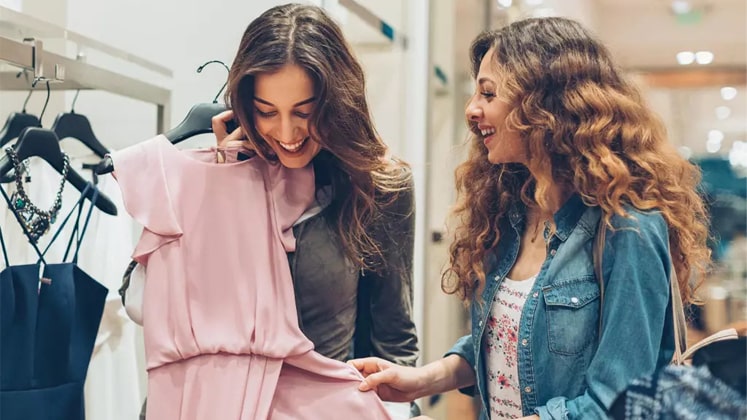
The same is justified by the increased purchasing of jeans (over last year’s sweatpants) this spring and summer, which is expected to continue into the fall and holiday season as well, believes Ray.
How’s the US import been this season!
The fast-increasing demand for apparels has been constantly straining supply chains, leaving both retailers and customers concerned they might not secure the products they want, and that was the reason early imports were being done. So, while Black Friday weekend was a fairly successful one, it also saw the onset of Christmas fever.
If an Accenture report is anything to go by, then several retailers (big and small ones) imported apparel and apparel items much earlier this year. These factors are all set to contribute in surging apparel imports and, according to the analysis done by Apparel Resources, USA will be ending 2021 with US $ 77.67 billion worth of apparels, noting a Y-o-Y jump of 21.17 per cent. However, the combined value imported in 2021 will still remain below the 2019 figures when US imported US $ 83.28 billion worth of garments.
Talking of timely US import of apparels, one cannot undermine the contribution of India and Bangladesh in this regard, which helped US with enough inventories to fulfil customer needs during the extended Black Friday weekend. In fact, India exported apparels worth US $ 3,369 million in Jan.-Sept. 2021, which is a 38.95 per cent growth from the same period in 2020 (US $ 3,959.30 million), while the growth is just 0.40 per cent from what it was during the same period in 2019 (US $ 4,563 million).
Bangladesh, on the other hand, performed better by exporting apparels worth US $ 5003.27 million in Jan.-Sept. 2021, which is a 26.37 per cent growth from the same period in 2020 (US $ 3,959.30 million). Compared to the same period in 2019 (US $ 4,563 million), the growth is a good 9.65 per cent.
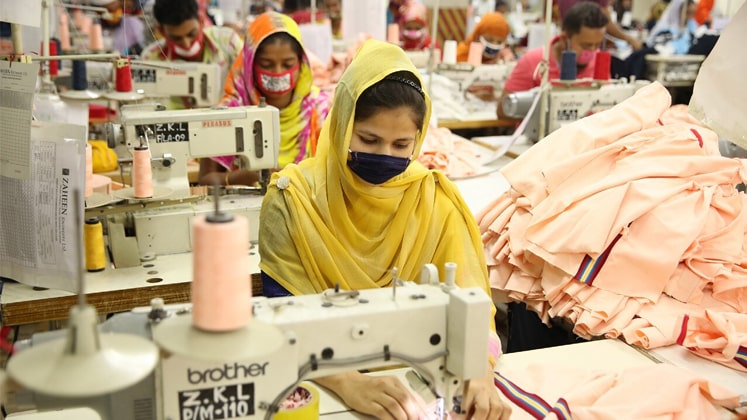
To ensure Christmas weekend too turns out to be as fruitful as the Thanksgiving Day/Black Friday weekend, the US import of apparels has been timely. Notably, apparel imports of US in Q4 ’21 have been US $ 19.08 billion, which is a jump of 12.04 per cent from Q4 ’20 (US $ 17.03 billion). In 2019, it was US $ 18.21. Consequently, there’s enough inventory of apparel items for Christmas and, importantly, there’s enough stimulus funds for consumers to spend on holiday shopping.
And what apparel products are in demand this season….
Apparel, which has long been the top gifting item each Black Friday and Christmas, hasn’t had its ranking affected significantly because of the pandemic. According to an NPD Group report, the loungewear is still expected to continue its popularity from last year with the category making up 31 per cent of total US apparel spending this holiday season.
Though loungewear still marks its presence, some experts at the NPD Group are predicting customers to move more towards dressier apparel options again. Seasonal apparels such as winter coats, gloves and hats might see huge markdowns this holiday season, which is expected to lure good crowd. Jackets too could be in demand.
“Look for holiday things like outerwear, cold weather products and anything that is seasonal in nature,” says an expert at NPD. In fact, out-of-stocks were common amongst hard home goods and basic apparel items, such as denim and underwear.
How’s it been for clothing retailers so far…
According to a survey by NRF, clothing continues to top the list with 53 per cent and that’s some number. Many fashion biggies have started offering sales discounts. Select designer pieces will be up to 75 per cent off at Saks Fifth Avenue, while Mytheresa offered up to 40 per cent off sale styles during Black Friday and surely has some plans for Christmas.
Bed Bath & Beyond is offering 25 per cent off this year versus last year when it offered 25 per cent off in-store and curbside pickup and 20 per cent off online last year. Kohl’s too is offering customers US $ 5 off on orders when consumers pick them up in stores. It will be interesting to see if it continues till Christmas. Similarly, US fashion retailer Randa Apparel & Accessories, which sells brands such as Levi’s, Tommy Hilfiger and others, has been directing more of its inventory to stores than e-commerce. David Katz, Chief Marketing Officer, Randa, says “When inventory is limited, we prefer to drive consumers to in-store purchases over online purchases.”
Big apparel retailers have been preparing for the holiday season, trying to find workarounds to supply chain hold-ups. Some of the biggest US retailers rerouted goods to less congested ports, even chartering their own vessels.
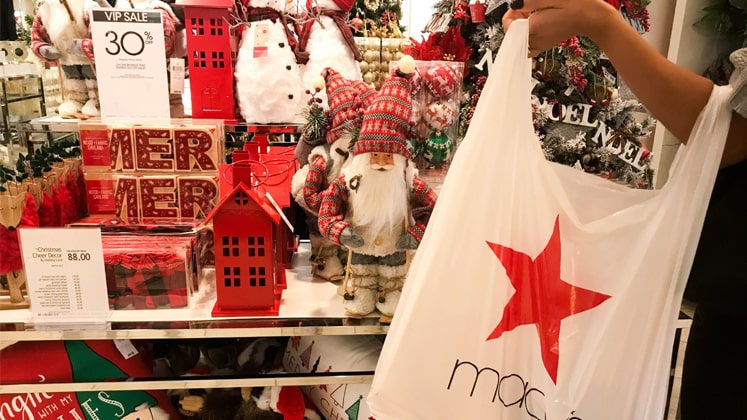
The inventory shortage, therefore, hasn’t been as bad as one might have assumed initially. The clothing shelves are full in advance in many cases. “We are deep and we are ready,” avers Jeff Gennette, CEO, Macy’s, noting inventory levels are up by 20 per cent compared to what it was in 2020. “We are in good shape. Crowds at Macy’s were higher in the first few hours of their 6 am opening on Black Friday compared to 2020, while online sales were strong,” adds Jeff. Hopefully it’s going to be as good for Christmas.
Then there are retailers like Target and Walmart who announced early holiday sales events and even dangled exclusive access for loyal customers or encouraged shoppers to buy desired items as soon as they see them, which worked for them to some extent.
It’s bricks-and mortar season, but e-commerce is very much there — especially for clothes
Despite all the fears, it’s been a fairly decent season for bricks-and mortar stores so far. One needs to understand that consumers have got themselves vaccinated for COVID-19, and, importantly, are having extra funds because of stimulus dollars and more time at home. That’s made 2021 a smoother year for retailers than 2020. Some retailers have also started offering omnichannel promotions – especially in apparel and fashion sectors. The trends mark a reversal from 2020, when retailers limited their deals to stop overcrowding in stores and forced shoppers to buy clothes and footwear, in particular, online.
Notably, technologies such as contactless and buy online, pick up in store continue to be embraced by consumers and retailers who desire a quick and seamless experience. So, while people have been returning to in-store browsing, e-commerce shopping too continues to leave its mark.
Online sales on Black Friday surged by 85 per cent in 2020 from the year prior, while this year, e-commerce sales have grown by 10.6 per cent Y-o-Y. For the extended holiday season, e-commerce sales are expected to grow 7.5 per cent Y-o-Y and 59.3 per cent (from 2 years back) – a record high for the channel.
But lately there are some concerns! The new Coronavirus variant — labelled omicron by the World Health Organization — might just keep few consumers away from stores. It was marginally evident for some retailers even during the Black Friday weekend. While Calvin Klein owner PVH ended the opening Black Friday down by 7 per cent, Dillard’s was down by 6 per cent. It wasn’t, reportedly, a great opening for Under Armour and Ralph Lauren either. Even though holiday sales still would end up fairly decent for bricks-and-mortar stores, the margins will surely be hit – thanks to inflation as well.
For November and December, online sales are estimated to hit a record US $ 207 billion, up by 10 per cent Y-o-Y, according to Adobe Digital Economy Index. Online and other non-store sales, included in NRF’s total, are expected to increase between 11 per cent and 15 per cent to a total of between US $ 218.3 billion and US $ 226.2 billion – now that’s a good jump from US $ 196.7 billion in 2020. Exact numbers are yet to come! Meanwhile, Shopify, the Canadian fashion e-commerce firm, has seen its Black Friday sales touch an impressive US $ 2.9 billion, at a Y-o-Y increase of 21 per cent, and hopes to have a merrier Christmas too.
Also Read: Canadian e-tailer Shopify sees its Black Friday sales touch around US $ 2.9 billion
Secondhand apparels too hold an edge
It’s not just bricks-and-mortar and e-commerce. Even secondhand apparel retailers are hopeful of having good holiday sales! The fast-growing secondhand apparel retailers ThredUp and Poshmark have said that they are now expecting robust end-of-year sales as shortage of new apparels at stores pushes shoppers to consider thrifting as an option to fill their holiday shopping bags. Notably, apparel had the highest online out-of-stock levels amongst American retail sectors in the run-up to the holiday season.
So, when there’s shortage, one can expect people to move towards secondhand clothing firms such as Poshmark Inc., ThredUp Inc. and ReaReal, which are not as affected by global supply chain issues as they get their stock mainly from the closets of US households. More on this, some experts believe that inventory is scarce right now, and consumers are going to shop where they find inventory to ensure they get everything in time for the holidays.
According to IBES data from Refinitiv, the American-British global provider of financial market data and infrastructure, the holiday-quarter sales are expected to jump by 22.9 per cent for Poshmark and 53.3 per cent for RealReal. Some believe the Q4 consumer spending to rise by 7 per cent Y-o-Y, and by 9 per cent when compared to the same period two years back.
It’s been a good start, especially with regard to apparel sales, but it will be interesting to see if the same momentum is maintained till Christmas and New Year – amidst all the ongoing challenges including the growing scare of the new variant of Coronavirus. Let’s wait and watch!






 Bharat Tex Special Report 2026