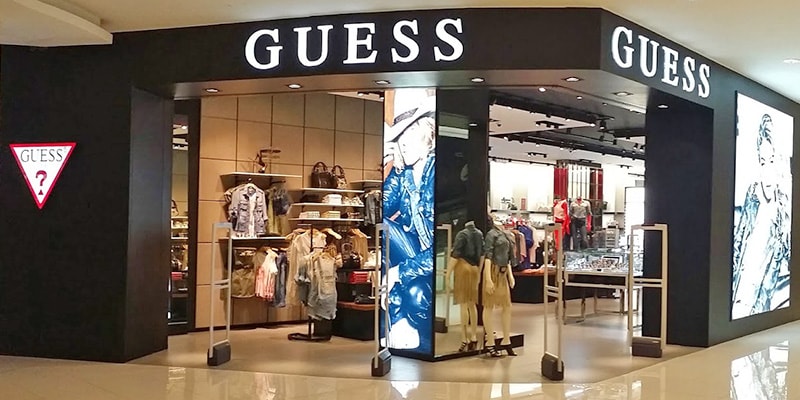
Fashion brand Guess has announced to close 60 under-performing stores in the USA this fiscal year, with more than 100 stores on the chopping block during the 2018 fiscal year to focus on profitability improvements. The closure announcement is made as Guess’ fourth-quarter results fell short of what the company projected.
Victor Herrero, CEO, Guess commented, “We are seeing in the US market a significant drop on traffic, which is leading us on the fourth quarter to a more promotional environment,” adding, “And at the same time, this is basically, as a consequence, declining our margins.” Though he expressed his optimism that Guess will improve its operating income by US $ 16 million annually through the new round of closures once they are complete later this year.
The brand has acquired a revenue up with a 3 per cent gain to US $ 679.3 million, slightly less than the 4 per cent growth rate that investors had expected. In the USA and Canada, Guess’ same-store sales (including e-commerce) fell 7 per cent in US dollars and 7.4 per cent in constant currency terms.
Also Read – Guess taps increase in net revenue
Herrero and CFO Sandeep Reddy outlined an aggressive strategy to renovate profits in the brand’s US operations through a store rationalization approach involving rent re-negotiation and closures. According to Reddy, it’s quite different scenario for the brand’s stores outside of North America, however. This year, Guess will open 60 stores in Europe, where nearly half of its sales come from wholesale, and another 35 locations in Asia following surge in the revenue.
It’s worth mentioning here Guess operates 945 retail stores in the Americas, Europe and Asia out of which around 400 stores are located in the USA.
“Basically what we are trying to do is to become very profitable in the US and trying to grow anywhere else. For example: For the last six quarters, we’ve been seeing positive trend in Europe; for the last two quarters we’ve been seeing very positive trend in Asia. So, what we are trying to do is rebalance a little bit our business between the international and the domestic,” concluded Herrero.






 Bharat Tex Special Report 2026