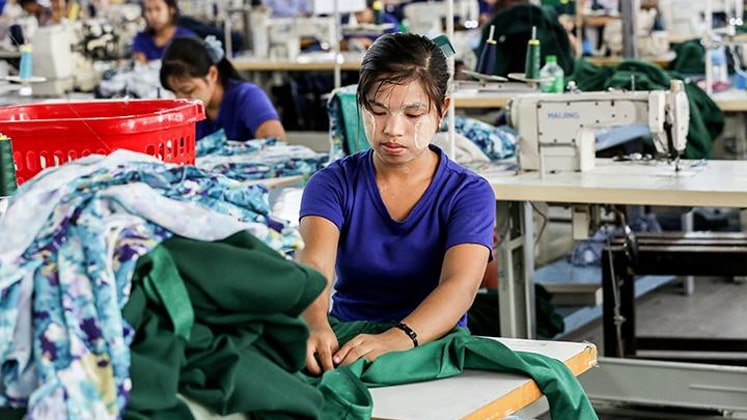
Major apparel retailers are ceasing their outsourced production in Myanmar due to issues with labour and human rights as well as logistical challenges, including Japan’s Fast Retailing and the UK’s enormous Marks & Spencer.
Foreign businesses left Myanmar after the military took over in February 2021, especially those that had joint enterprises with militarily connected local partners. The dictatorship is accused of widespread human rights violations and has put down protests against its takeover.
Clothes companies stood out because they continued to outsource production to small factories in the region of Southeast Asia, creating low-wage jobs. Yet, some of these businesses are departing the nation as a result of their failure to alter the local system’s rock-bottom pay and severance benefits.
By the end of August, Ryohin Keikaku, the Japanese company that runs Muji home goods stores, also intends to stop obtaining down jackets and other products from Myanmar.
In a statement from last year, Marks & Spencer stated that it would leave by the end of March because it “does not tolerate any human rights abuses inside any section of our supply chain.”
Irish fast fashion brand Primark has recently announced its departure from Myanmar. The business stated that given the deteriorating circumstances, “we believe our only alternative is to start working towards a prudent exit from the nation.”
Since 2019, the minimum pay for factory employees has remained at 4,800 kyat (US $ 1.68 at the market currency rate). Trade unionists cannot securely negotiate with employers, according to a report by the U.K.’s Ethical Trading Initiative, a coalition of corporations, labour unions, and nongovernmental organisations.
Increasing power outages and logistics breakdowns also pose risks to management of product deliveries.
“Myanmar’s large population makes it easier to recruit workers, but the unsteady electricity infrastructure is a problem,” said an official from a Japanese apparel company. Tighter fuel supplies, most of which are imported, are also becoming an urgent issue.
Most businesses aim to remain in Myanmar and, to the greatest extent possible, enhance working conditions. A network supporting suitable employment levels has been established by the European Union and the European Chamber of Commerce in Myanmar (EuroCham Myanmar), and it will serve as a platform for monitoring working conditions.
Fashion retailers such as Inditex, the Spanish player behind Zara, and Sweden’s H&M continue to source from Myanmar.