Italian baby care brand Chicco is sharpening its focus on India as both a high-growth consumer market and an emerging manufacturing and export hub, with plans to open 10–12 new stores annually while expanding exports across multiple product categories, including apparel
The Artsana Group-owned brand has already begun exporting toys and toothbrushes manufactured in India, with additional categories like apparel, under evaluation as part of a broader strategy to develop the country as a production base for global markets. Rajesh Vohra, CEO of Artsana India, stated that the company was actively positioning India as a hub within its international supply chain.
Chicco reported growth of over 35% in the last financial year and is sustaining momentum well above the 20% range in the current year. The company is targeting a network of 40–50 stores across Tier-1 and Tier-2 cities, operating through a mix of company-owned outlets and franchise partners, following its recent registration as a direct retailer in India.
Quick commerce platforms are playing a growing role in the brand’s expansion, delivering triple-digit growth rates and driving online adoption beyond metropolitan markets. While offline retail continues to dominate overall sales, Vohra indicated that online channels could overtake physical retail if current growth trajectories are maintained. Chicco currently operates more than 50 shop-in-shop formats and also distributes select categories through pharmacies and supermarkets.
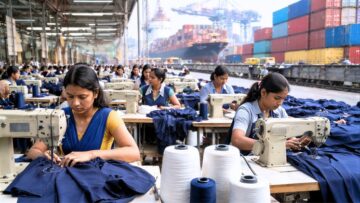
On the manufacturing front, margin pressure has emerged as a challenge, particularly in apparel, where imports from Chicco’s global range are required to maintain brand consistency. Vohra noted that this had limited the pace of fashion expansion in India. To counterbalance this, the company is exporting substantial volumes of apparel produced at its South India facilities to international markets.
Chicco continues to reinvest the majority of its profits into expansion and product development. Capital expenditure in the previous year matched or exceeded annual profits, covering the rollout of 10 new stores and investments across multiple product categories.
The Indian baby care market has evolved rapidly over the past decade, shifting from a space dominated by three or four players to a highly competitive landscape that includes multinational corporations, national retail chains and direct-to-consumer start-ups. Chicco competes with different players across categories, ranging from apparel chains in clothing to Indian and international brands in strollers, and a mix of MNCs and start-ups in nursing and feeding products.
The company is also broadening its product portfolio from the 0–2 years segment to cover children up to six years, with longer-term plans to extend into the pre-teen category. Positioning varies by product line, with a pure premium approach for strollers and fashion, and an “accessible premium” strategy for mass-distributed items such as cosmetics and feeding bottles.
Following a recent reduction in GST, Chicco has passed on the full benefit to consumers, along with additional discounts on apparel. Vohra stated that the company expected higher volume growth as a result, aiming to offset margin pressures through scale.
Although India currently accounts for a relatively small share of Artsana’s global revenues, the company sees significant headroom for expansion. Vohra noted that the market offered substantial growth potential, with ambitions to achieve leadership positions similar to those Chicco holds in countries such as Italy and Portugal.