A report from Cornell University and Schroders warns of a looming threat to the apparel industry in four Asian countries – Bangladesh, Cambodia, Pakistan, and Vietnam. Extreme weather conditions, including heat-waves and flooding, could potentially jeopardize US $ 65 billion in apparel export earnings by the year 2030. The study examined the supply chains of six undisclosed global apparel brands operating within these nations. Workers in these regions are grappling with challenging climatic conditions, including scorching temperatures and recurrent flooding, leading to factory closures.
Jason Judd, the executive director of the Cornell Labor Institute engaged with suppliers and buyers in these countries and discovered that hardly anyone cared about the potential risks posed by extreme heat and flooding. In fact, many apparel companies were unwilling to disclose the locations of their suppliers. Understanding the physical risks associated with climate change is crucial, yet this awareness is still in its early stages, with few businesses providing sufficient information and only a limited number of investors conducting thorough assessments.
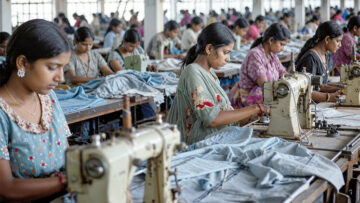
The researchers used future climate projections to assess two scenarios: a ‘climate adaptive’ and a ‘high heat and flooding’ scenario. Under the latter scenario, workers could be distressed under ‘heat stress,’ resulting in a decline in productivity as temperatures and humidity levels rise. Additionally, flooding could force the closure of factories in these four countries, which collectively contribute to 18 per cent of global apparel exports and employ 10.6 million workers in apparel production.
The overall decrease in productivity could lead to a staggering US $ 65 billion deficit in projected earnings between 2025 and 2030, representing a 22 per cent decline, according to the study’s findings. Looking further ahead to 2050, lost export earnings could soar to 68.6 per cent, and there could be a staggering 8.64 million fewer jobs.





 Bharat Tex Special Report 2026