 Undeniably, Hong Kong Fashion Week (HKFW) is one of the best organized global fashion trade fairs in Asia with tremendous participation of manufacturers from the region. The recently concluded 20th edition of HKFW for Spring/Summer ’14 attracted over 17,000 buyers from 76 countries and regions, and was up 3% over the previous year, claims HKTDC, the organizers of the show. Visitor attendance from many markets also recorded significant growth vis-à-vis last year, including Canada (46%), India (18%), the Philippines (22%), Singapore (12%), Taiwan (24%) and Thailand (22%). Team Apparel Online brings a first-hand account live from Hong Kong.
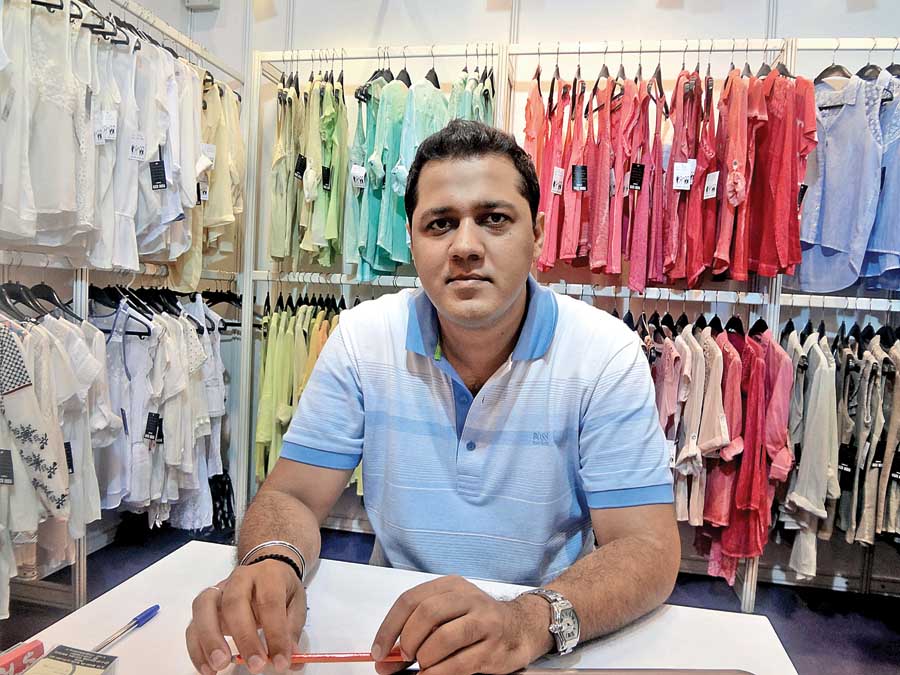
It goes without saying that the biggest exhibitor representation at the HKFW was from China and Hong Kong and they had a very wide variety of products and many appealing developments in men’s, ladies and kidswear. There was newness in designs be in casual jackets, lingerie, bridal wear, knits, structured garments or fashion accessories. The FOB rates were very competitive and their booth presentation was extremely attractive. In contrast, the Indian displays were very routine, giving rise to the age-old debate on why Indian participants are not paying attention to visual appeal, one of the main reasons for slow footfalls at the Indian pavilion. “This is the fourth time we are participating and we have received better response as compared to last year. It’s not just about participating and getting orders, it’s also about learning,” says Ashish Kabra, Vice President (Garment-Division), Shrijee Lifestyle Pvt. Ltd., a Mumbai based export house manufacturing men’s yarn dyed shirt and ladies top.
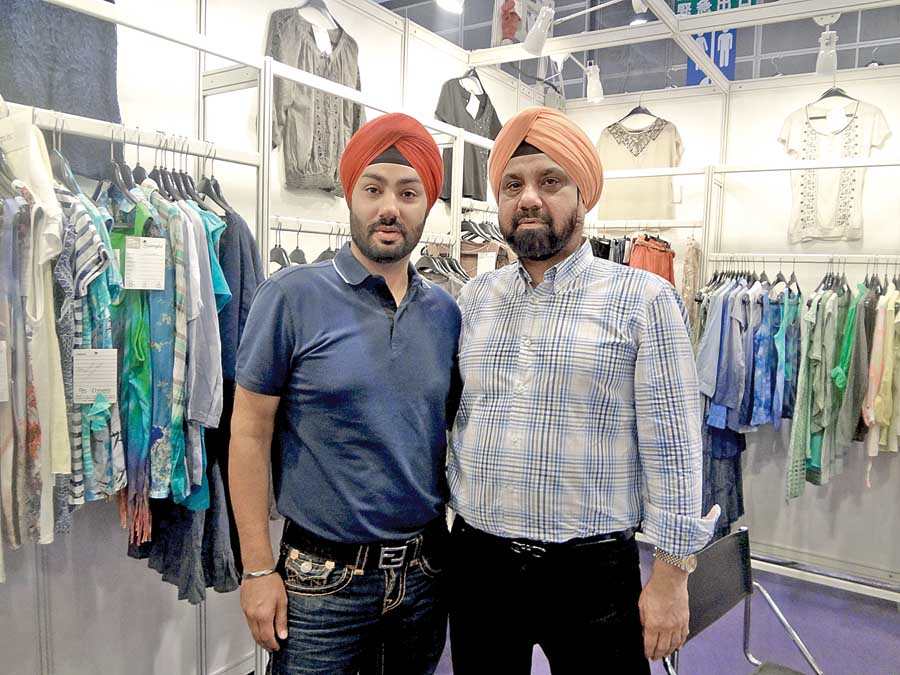
There were 58 exporters from Delhi, Mumbai, Jaipur, and some from Kolkata and Varanasi who displayed predominantly ladies garments; a few had men’s collection and fashion accessories mostly shawls and stoles. Surprisingly, the southern part of India having major manufacturing hubs like Tirupur, Bangalore and Chennai were totally unrepresented. The slow turnout of buyers is also attributed to the fact that there were many fairs happening around the same time like the one in Paris, Tokyo and the IIGF in New Delhi, so the buyers who want to buy Indian products prefer coming to Delhi than going to Hong Kong.
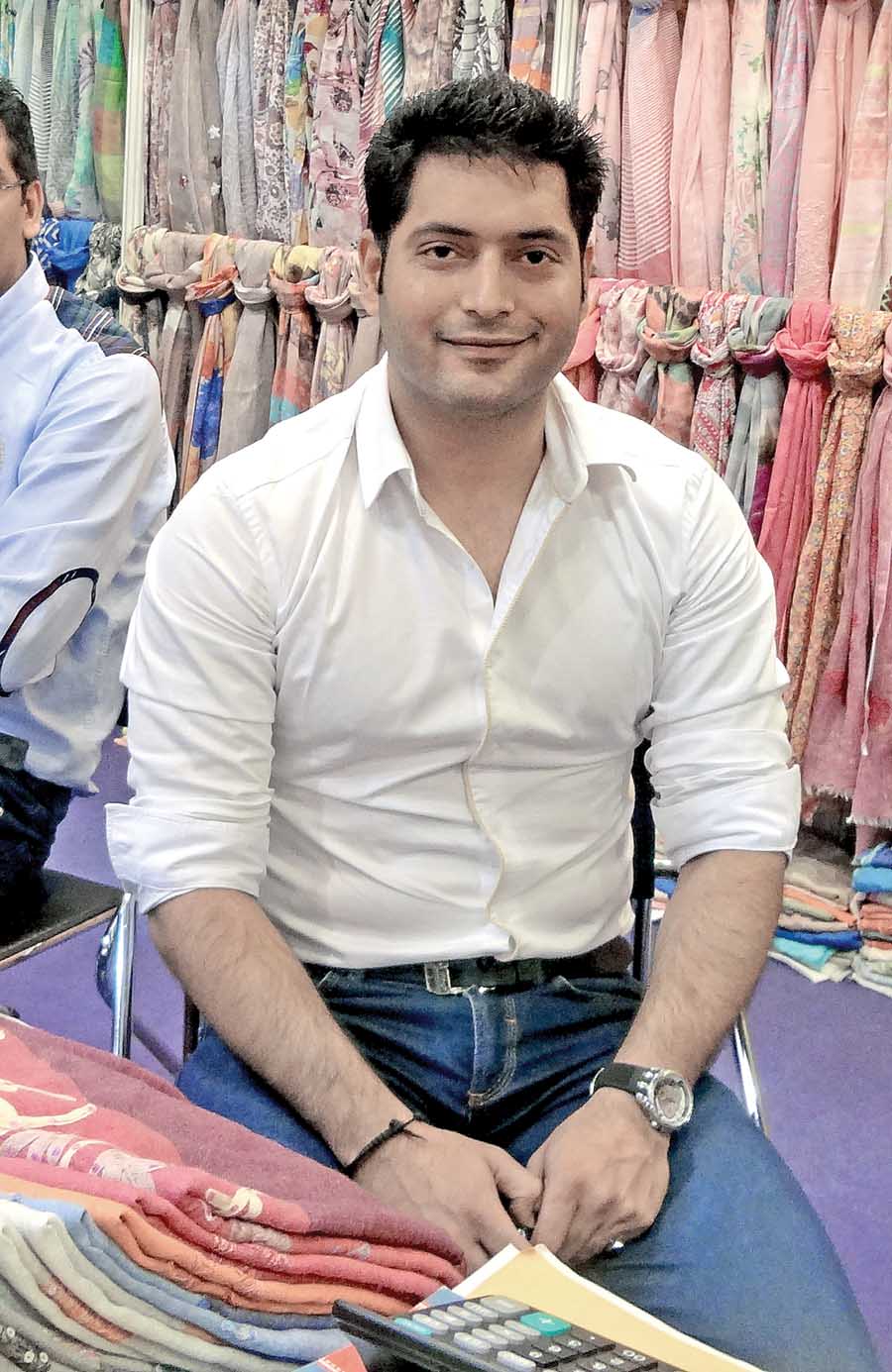
Candidly speaking, the Indian exhibits especially the women’s wear were very regular, apt for boutique buyers and small retail chains. Yet, many of the exhibitors were found cribbing that very small order buyers approached them, which they were not interested to cater to. “There were very few genuine buyers and in the name of buyers a lot of Chinese people are here who have come as buyers. If at all I got some enquiries, they are asking for 300 pieces,” averred Pankaj Kumar, Owner, Arvind Kumar & Co, Noida having a 200 machines setup in Noida, manufacturing high fashion garments and scarves, with FOB prices ranging from US $ 8 to 20.
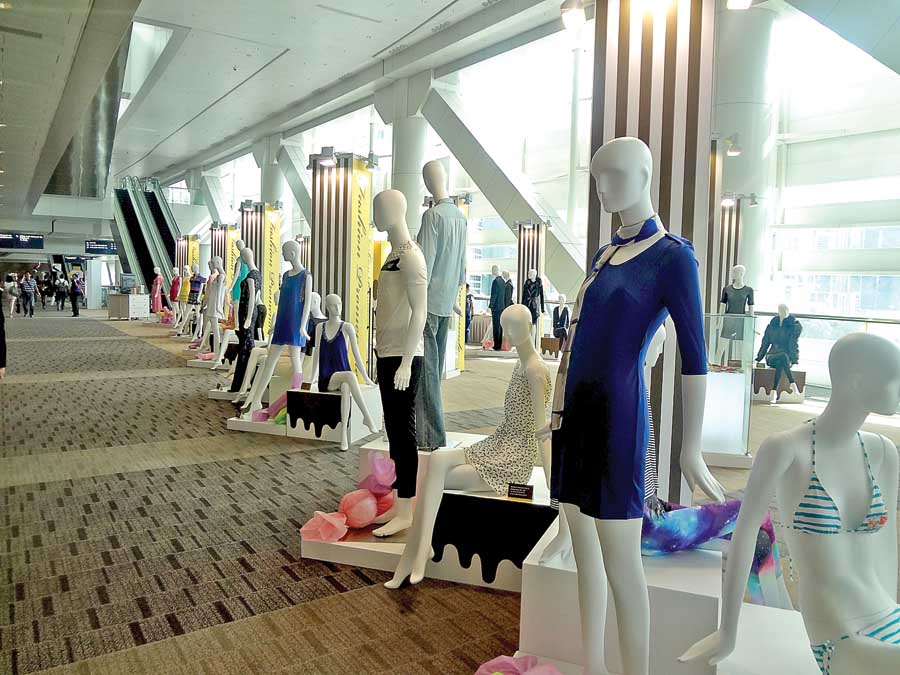
[bleft]Following this year’s fashion trends, HKTDC adopted ‘Sweet Fashionland’ as the theme and turned the exhibition venue into a colourful world of fashion. The fair had a good ambience and both exhibitors and buyers were pleased.[/bleft]
While interacting with Apparel Online, R.P.S Negi, Asst. Director, AEPC shared, “First day there was a good footfall but second day onwards it was not too good, yet some exporters did get good orders.” Kapil Mago, 360 Clothing who has been participating for the last 15 years was nostalgic about old times. “This time the show is going quite slow; I remember when we used to participate earlier, we never used to get time to have lunch even. This time we can see small and medium buyers placing orders between 300 to 500 pieces per style. We have received a few enquiries from Israel, Japan and Latin America,” said Kapil. Based out of Noida, the company specializes in different kinds of washes in garments and the FOB rates starts from US $ 5 to 10 depending on the style.
Another regular participant for the past seven years, Hardeep Singh, Director, Dynamic Designs Inc. was disappointed that very few buyers from Europe visited the fair. “We have met our regular buyers and got few enquiries from the new ones, but the buzz is missing,” averred Hardeep. The company has 6 units in Gurgaon and Manesar and produces both woven and knitted garments. It is now planning to come up with a new unit for denim bottoms in about 8 months’ time.
While Ahujasons, Shawl Wale (P) Ltd. received enquiries from Australian and Japanese buyers, Dee Man International, received a few enquiries from boutique buyers from Japan, Australia and Middle East for their handwork garments. First time participant Avinash Wanwari, of Khushi Tex, was happy with the response. “We are basically here to study what kinds of buyers come here as we want to expand our market. Right now we are just catering to Middle East market, here we have received some enquiries from Sri Lanka and Kuwait and we hope that it would materialize into virtual business,” said Avinash. The company is Mumbai based and outsources its manufacturing, offering shirts at FOB US $ 55 to 80 per dozen.
Gulam Bawa of Casa Bawa Fashion, an importing company based out of Montreal, Canada who has been coming to Hong Kong Fashion Week since 1992, felt that though the facilities and fair layout of the exhibition is getting better each year, the exhibition is now going more in the direction of catering to the needs of boutique buyers. “I can see a lot of emerging buying countries like Brazil, Turkey, Japan, Philippines, Dubai to mention a few who have increased visitation here, especially the small retail chains and boutiques. The big department stores from the US and Europe cannot be spotted. But the reality is that boutique business is closing each day as the department stores are eating them up and the minimum orders for these average sized department stores range from 25,000 to 30,000 pieces. Most of these chains are going to Bangladesh. Earlier I used to buy goods worth US $ 12 million from India but now it is just worth US $ 2 million; I have shifted all my orders to Bangladesh as in India very few manufacturers can handle such huge orders and they are not competitive,” avers Gulam Bawa.
New Initiative to Provide Buyers Small Order Purchases
Responding to market demand, the organizers of HKFW introduced a new platform called “Small Order Zone”. The zone sported an inviting look where buyers could browse through products in a boutique setting. Close to 150 showcases and garment racks displayed fine fashion products and accessories available for order in small quantities, with the MOQ ranging from 20 to 1,000 pieces. “This initiative of ours was very well received by those buyers who were looking for very small quantities. Over 7,600 buyers visited the zone during the four-day period, generating over 12,000 business connections. The products on display carry detailed information about the unit price, minimum order quantity, lead time, product specification along with supplier’s contact details,” shared Shirley Chan, Chairman, HKTDC Garment Advisory Committee and Chief Executive Officer, YGM Trading Ltd., Hong Kong.
The exhibits in this area were by both those who were having their booths at HKFW and also those who were not participating, but just showing at the zone. The exhibits were carrying booth and hall numbers and if a buyer was interested, he or she could visit the booth and place orders immediately. For others, the company details were mentioned for follow-up at a later stage. “I want variety and new products every month; buying in small quantity also gives better control over inventory. If I have a large stock and the season gets over, then who is going to buy these leftovers from me. To me the introduction of this new zone is like a boon in disguise,” said Sam Naimian of High Secret, USA sharing his views about Small Order Zone.

Corroborating Sam’s views, Alberto Hiar, President, Cavalera, Brazil, who is dealing in garments and accessories for men from 30 shops in Brazil and also supplying to around 800 retailers in the country shares, “We made our first visit to HKFW for S/S’13 last July and since then our sourcing from Hong Kong has grown 30%. This time Small Order Zone has really attracted my attention as many garments and fashion accessories are being bought in small volumes and going to each booth and talking about small order is not feasible. Here, when there is a special zone and each detailing is there, we just need to pick the product and place orders.” Besides exhibits at the Small Order Zone, Alberto on the very first day identified 15 prospective suppliers from the Chinese Mainland, Hong Kong and India.
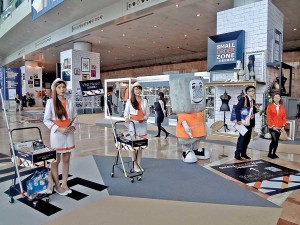
Another buyer who was keenly scouting the Small Order Zone was Katrina Zulueta, President & Managing Director, Zoo Fashion International Inc., Philippines. “It is my first visit to this show, since we add new collections every month and also plan to open three more stores by the end of this year, we are looking for more new suppliers who can offer trendy designs and good quality at affordable prices. We are particularly interested in Small Order Zone as it meets our buying patterns,” averred Katrina. Founded in 2009, Zoo International is a fast growing fashion retailer which now runs an online shop and three shops in leading department stores in Philippines. It retails trendy clothes, shoes and accessories for young ladies aged 18-30.
India Absent from Small Order Zone!
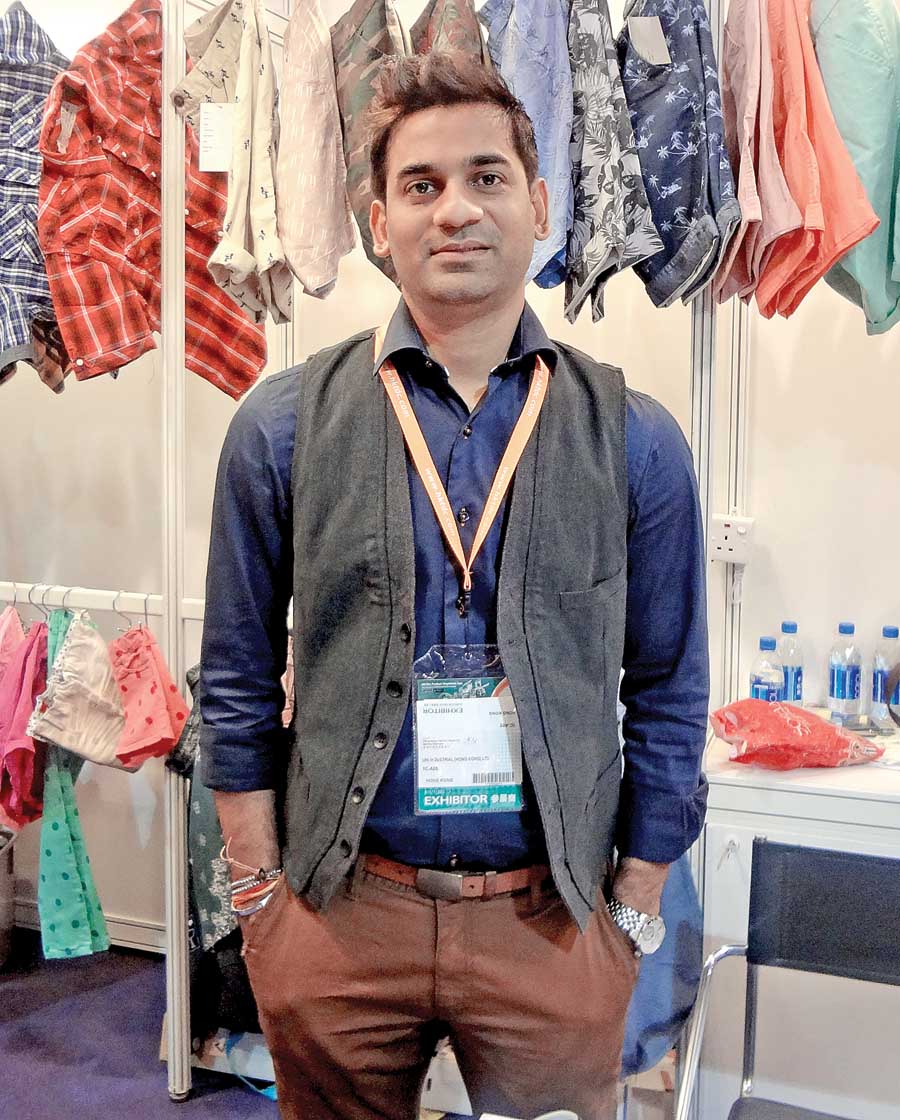
To our utter surprise a majority of the companies in Small Order Zone were from Hong Kong, followed by Mainland China. Not a single exhibit was from India. It seems to be a total myth that India is a country which is extremely flexible in terms of small quantity orders, and China and Hong Kong are the countries who are just geared up to take volume orders. As an observer, we strongly feel that if India would have had representation in this area, they would have benefited a lot. In individual interviews to Apparel Online a few exhibitors did mention their MOQs which were actually matching to the exhibit profile of Small Order Zone but still they were not present in the zone! Apeego Marketing Ltd., Mumbai, exhibiting its knitted and woven garments and catering to buyers in Canada, UK, Sweden and the US, is taking minimum order of 600 pieces. Giving his reasons for the same, Anthony Mathew representing the company says, “Market is picking up but we have fierce competition from China and Bangladesh so we have fixed our minimum as 600 pieces and above. The new buyers cannot give orders for 3,000 or 4,000 pieces initially, so we start with smaller quantities, but that is not our regular practice.”
[bleft]From India, there were around 56 exhibitors under the aegis of AEPC showcasing women’s fashion wear and fashion accessories like stoles and men’s woven shirts and T-shirts.[/bleft]
India really needs to wake up now and decide where it belongs! Our products, especially the companies which participate in such fairs, are very typically for boutique buyers and small retailers, but then why India is ready to position and invite very small minimum orders? When it comes to larger quantities they can raise their hands and say that no we are doing value added garments with a lot of handwork, as such we cannot give more than 200 pieces…!! Where are we standing today?