In this scenario some pundits are advising manufacturers to calculate air freight into their wholesale prices, so that if the retailer sees their business increasing in this last half of 2010, be prepared to fill in.
I question this logic, as the lead time from Mill level to cut and sew to shipping; will not be any shorter, than normal, if at all! Unless the importer has taken the necessary position on greige goods, and supply chain logistics, you will never make on time delivery, and instead just create charge backs, for yourself, and lost gross margins.
Since the retailer is not raising prices as of yet, and forcing the manufacturer, to hold prices and absorb lower gross margins…, I question the future course of shipments… when orders are filled, and the manufacturer finds out they are losing money, the lack of non filled orders will start hitting the retailer.
The suppliers of blanks, (Like Hanes, Alstyle, Next Level, Delta, Russell, Fruit of the Loom Cotton Heritage that support many brands in different active wear, and sportswear areas, such as Adidas, Reebok, Ed Hardy, Liz Claiborne, Arizona Jeans, Polo), from children’s, women’s, and men’s, are narrowing their SKU’s by quite a large percentage, as now receiving huge increases in the cost of raw materials, such as yarn, are narrowing their selection of stocking of their core items, and will not be able to support some of their customers that sells to the retailer… These lost sales in most cases can never be recovered, and the total supply chain suffers, until the retailer raises their prices to the consumer, and this is not going to happen in the near future, due to a slow recovery of our economy.
 There are reports the luxury segment is showing signs of growing, but this customer is looking for more value, and being selective in what they purchase. I do think the retailer from their private label programs, at the department store level, down to the so-called box stores, will start raising prices, for spring of 2011, but only analyzing, that they are losing business for the non-deliveries of product this fall through holiday.
Some are saying there is “light at the end of the tunnel, but really the question is, as to whether the glass is half full or half empty”? It is very difficult to be an optimist, as the domino effect moves at a much faster pace in these times, but the actual production cycles are no faster than they were 20 years ago.
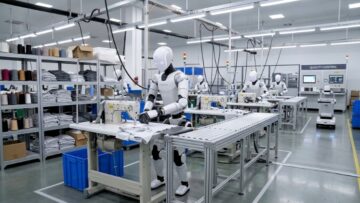
True, investments are being made in higher technology machinery to speed up production, but that is just to better efficiency to maximize operations with less people, and possibly at lower cost of production.
The normal time taken for issuance of orders by the buyer, the pre-production cycles, the financial terms to obtain raw materials, the logistics of receiving these raw materials, the logistics of vessel space, time taken ‘port to port’, the customs clearance, has not moved any faster, and in fact in many countries these cycles have moved backwards in time in the total manufacturing process of an apparel garment.
The Free Trade Agreements, like AGOA, with its inception of 37 Sub Saharan countries, with about only ½ qualified for Free Duty into the USA market, are doing less volume 10 years later as of today, than its inception in 2000.
I question how many youth today in the USA, grow up desiring to work in a sewing factory.
Those factories that have closed are not going to reopen, so increasing domestic production in order to satisfy retailers’ ‘just in time’ needs, will remain only a dream.
The global market that really is not issuing credit in the soft goods manufacturing industries, because of the lack of foresight as to which way our economy is going, and how fast will it work itself out of its slump, is something only time will tell. Therefore, lost sales will continue to take place at every level of manufacturing the apparel product, as well as selling product to the consumer.
We will see an increase of consolidation of manufacturers, financial institutions, and retailers.
Running LEAN and MEAN, is the proper economic position to take, in order to survive, but I hope we find the catalyst that gives all the incentive to grow in these times.
I read about Inditex/ZARA, MANGO, Walmart, and others expanding globally, so therefore there is hope globally we can move forward. We all have to look for new ideas, as how to get this cycle moving, and it is the entrepreneur, not the politicians, that will make us move to get better employment, so our consumers can spend with confidence.
LEAN and MEAN, can keep us going, but we have to take RISK, in order not to lose sales.