Velvet Returns as Fall 2026’s Defining Fabric, With Indian Labels Leading the Charge
Velvet is emerging as one of the season’s most consistent trends, moving beyond its usual festive-wear tag to reposition itself as a modern, all-season fabric for fall and prefall 2026.
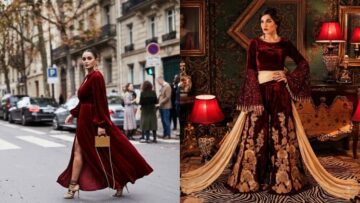
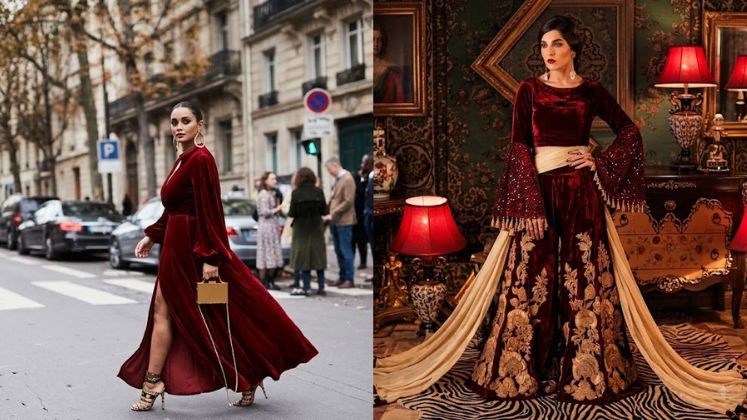
Fashion coverage entering the new season has flagged velvet as a returning material, but with a shift in treatment. Where crushed velvet defined the fabric’s last major moment a decade ago, fall 2026 favours a smoother, sleeker finish. The fabric is showing up in tailored blazers, structured co-ord sets and, notably, footwear; categories where velvet has traditionally had limited play. Colour direction is skewing toward burgundy, forest green and muddy yellow, giving the material an edgier register than its usual associations with formal or occasion wear.
Footwear brands such as Larroudé and Sam Edelman have introduced velvet flats in the space, while platform styles from Flabelus point to velvet’s extension into evening footwear despite the fabric’s known vulnerability to moisture, which keeps it a fair-weather category.
For the Indian market, velvet’s return carries a different weight. Unlike in Western fast fashion cycles, velvet has held a near-constant presence in Indian festive and winter wardrobes, particularly across bridal, sangeet and Diwali-adjacent categories. What is shifting now is its crossover into contemporary silhouettes. Designer platforms are reporting sustained demand for velvet kurta sets, sharara sets and Nehru jackets through the winter wedding season, with mirror-work and zardosi embroidery layered onto the fabric for bridal and festive lines. E-commerce curators focused on winter weddings list velvet trousers, embroidered sharara sets and corset-style velvet pieces as recurring bestsellers, reflecting steady category depth rather than a seasonal spike.
The bigger shift is velvet’s move into fusion and Indowestern formats. Retailers now stock velvet blazers, jackets and pant-sets alongside traditional lehenga and sherwani offerings, mirroring the West’s tailored-velvet direction while retaining Indian construction techniques such as hand embroidery and zari work. This dual positioning as both heritage fabric and contemporary silhouette carrier gives Indian velvet a wider commercial window than a single-season trend typically allows.
India Couture Week 2026 reinforced this trajectory, with designers across the July showcase leaning into richly textured, jewel-toned fabrics as part of a broader move toward opulence after several seasons of pared-back, quiet-luxury dressing. Velvet’s tactile weight and colour depth align closely with that shift, positioning it as a natural fit for both couture and prêt lines heading into the wedding and festive calendar.
For Indian brands, the opportunity lies in bridging velvet’s two markets; the established bridal and festive base, and the emerging demand for tailored, fusion-ready pieces suited to both Indian and export retail. As Western fashion cycles rediscover velvet as a directional trend, Indian labels are positioned to scale a fabric they have never fully retired, adapting silhouette and construction rather than reintroducing the material itself.