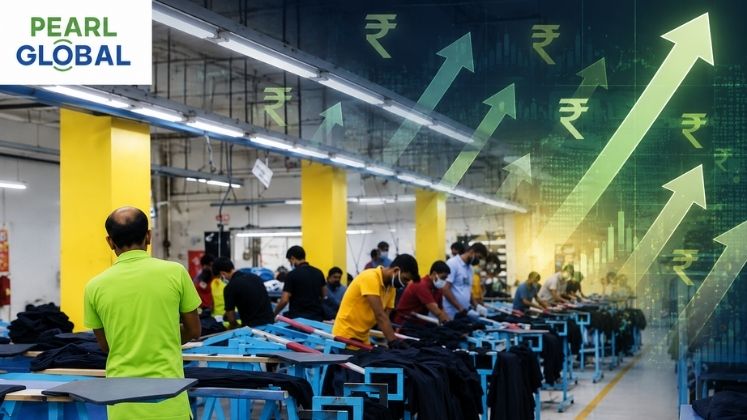
Pearl Global Industries has reported a strong financial performance for FY ’26, with consolidated revenue surpassing the Rs. 5,000 crore (US $521 million) milestone despite geopolitical uncertainties and tariff-related disruptions in key export markets.
The garment exporter, which manufactures across South Asia, South-East Asia and Central America, posted consolidated revenue of Rs. 5,025 crore (US $523 million) for the financial year ended 31st March 2026, marking an 11.5% year-on-year increase. The growth was driven by higher volumes and an increased contribution from value-added products in its overseas operations.
Adjusted EBITDA, excluding ESOP expenses, rose nearly 14% year-on-year to Rs. 468 crore (US $48.79 million), while EBITDA margin improved by 20 basis points to 9.3%. Excluding the impact of reciprocal tariffs and incremental losses in Bihar and Guatemala, the adjusted EBITDA margin stood at 10.3%. Profit after tax for FY ’26 increased 17% year-on-year to Rs. 270 crore (US $28.14 million).
For the fourth quarter of FY ’26, the company recorded its highest-ever quarterly revenue at Rs. 1,314 crore (US $136 million), up 6.9% year-on-year. Adjusted EBITDA for the quarter increased 13.7% to Rs. 135 crore (US $14.07 million), with EBITDA margin reaching a record 10.3%. Quarterly profit after tax rose 24.6% year-on-year to Rs. 81 crore (US $8.44 million).
According to Vice-Chairman and Non-Executive Director Pulkit Seth, the company achieved two significant milestones during the year, including crossing Rs. 5,000 crore (US $521 million) in revenue and surpassing an installed production capacity of 100 million pieces annually. Seth further noted that the company plans to invest between Rs. 200 crore (US $20.85 million) and Rs. 250 crore (US $26.06 million) in FY ’27 to strengthen capabilities and expand capacity across the group.
Managing Director Pallab Banerjee noted that ongoing geopolitical tensions and Gulf conflicts were expected to increase energy costs, which could subsequently impact raw material and logistics expenses. However, he added that retail sales in the United States had remained resilient and continued to outperform market estimates, while the reversal of tariff decisions had also contributed positively to demand conditions. Banerjee stated that the company continued to witness healthy demand trends across multiple markets and would closely monitor developments in the second half of the financial year.