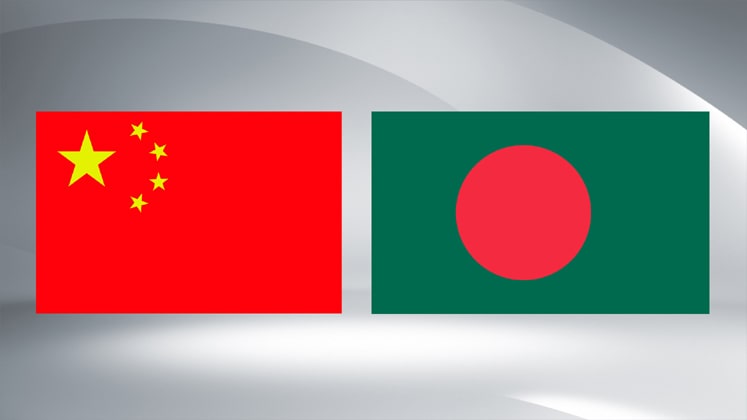
The size of China’s apparel market is approximately around US $ 330 billion (as of 2019), which is second only to that of the USA, with a market size of approximately US $ 345 billion. Add to it, the population of around 140 crore people.
Notwithstanding the market size and opportunities therein, there has been a significant trade imbalance between Bangladesh and China. China accounts for around 47 per cent of Bangladesh’s textile imports. Bangladesh imports around US $ 5 billion worth of fabric annually from China.
Although China is one of the export destinations of Bangladeshi apparel items, mainly cotton-based, the export volume is rather insignificant as compared to that of the European Union (EU) countries and the United States. In 2009, Bangladesh’s total export to Chinese market under the Asia-Pacific Trade Agreement (APTA) preference scheme was US $ 140.72 million, of which apparels accounted for only US $ 19.79 million as against China’s total imports of apparels worth US $ 1,651.75 million. Further data from the country’s Export Promotion Bureau (EPB) shows Bangladesh exported garment items worth US $ 391.60 million to China in fiscal 2016-17, and it remained almost the same in fiscal 2017-18.
Also Read: EU-Bangladesh: Trade relation and beyond!
In the last fiscal year, China exported US $ 12 billion worth of goods to Bangladesh, while Bangladesh’s exports to the former stood at a paltry US $ 831 million.
However, it all seems to change now after the Chinese Government recently decided to offer zero tariff facility to 97 per cent of items imported from Bangladesh. The new announcement will come into effect on 1 July this year, from when 8,256 Bangladeshi products will get zero tariff facility in the Chinese market. Following this, Bangladeshi manufacturers will be able to avail this duty-free and quota-free facility after 40 per cent value addition to these products.
After the decision was approved by the Chinese Government on 16 June, the country has notified the Bangladesh Government about it through the Bangladesh High Commission in China, which many believe has come as a fresh breath of relief for Bangladesh, especially the RMG sector, which has been struggling to keep afloat in face of the global economic downturn, low consumer demand for apparel items, faltering order volumes from global buyers, and not to mention, the large-scale order cancellations.
As per experts and industry insiders, such a move by the Chinese Government is expected to give boost to Bangladesh’s exports to the Chinese market, especially readymade garments apart from leather and leather products, pharmaceuticals, frozen food, vegetables, etc.
Further, it is also expected to bring in Chinese investments into Bangladesh more so when China is undergoing an economic transformation from labour-intensive to high-tech manufacturing amidst the rising labour and production costs, which are expected to lead to factory relocations.
“Due to its industrial policy, China is gradually moving away from lighter industries. The country is producing expensive products instead of cheaper ones. China will get an opportunity to shift these factories to other countries and then import those products under the zero-tariff facility,” explained Khondaker Golam Moazzem, Senior Research Director, Centre for Policy Dialogue (CPD), who maintained that China’s granting this facility to Bangladesh unconditionally will indirectly benefit China also.
Even though Bangladesh has been enjoying zero tariff facility on 60 per cent of export items to China since 1 July 2010 under Asia Pacific Trade Agreement (APTA) for least developed countries (LDCs), according to some economists, Bangladesh was not able to benefit much from the opportunity as the facility was on less important export items rather than on the principal exportable items. But with the new facility coming into force from 1 July, there would be unimpeded access of Bangladeshi products to the Chinese market.
Also Read: Despite import decline, apparel exporters still see hope in Canada
“China used to provide us duty-free access to 60 per cent items of all the tariff lines under its LDC scheme through WTO notification, and I think this has been extended to 98 per cent since the formalities were going on for quite some time,” Dr. Rubana Huq, President, Bangladesh Garment Manufacturers and Exporters Association (BGMEA), told the media, adding, “Though apparently the duty-free and quota-free facility is more beneficial for us at this moment than APTA with respect to product coverage and tariff cut, when we will lose LDC status, we will have to go for APTA.”
Meanwhile, Shahin Ahmed, President of Bangladesh Tanners’ Association, said Bangladesh could previously export over 3,000 products to China – China at present buys 50 per cent of Bangladesh’s tannery products – without facing tariff barriers by adding 35 per cent value to those. However, since the more prominent export items were out of the list of products under the facility, Bangladesh could not get the facility on most of the potential export items. But now after the new facility is implemented, the leather sector of Bangladesh will benefit more.
However, despite the favourable move for Bangladesh, economic researcher Ahsan H. Mansur expressed concern over the lack of diversification of export products.“We have a limitation of products which can survive in the Chinese market. I think there are only three or four products in the export basket which would be benefited from the new trade privilege,” Ahsan underlined.
Bangladesh has 30-35 products in the export basket with Chinese markets including major products of frozen and live fish, leather goods, vegetable, textile fabrics, furniture, agro products, tea, chemical products, raw jute, jute goods, knitwear and garments, according to Bangladesh China Chamber of Commerce and Industries (BCCCI).
Welcoming the Chinese move, Sheikh Fazle Fahim, President, Federation of Bangladesh Chambers of Commerce and Industries (FBCCI), said Bangladesh should focus on value chain sector-based support through fiscal, non-fiscal, tariff and applicable incentives across agriculture, manufacturing and service sectors to maintain export growth strategy.
“Product access in the Chinese market is welcomed in this humanitarian global crisis. We are in consultation with Government, stakeholders of 97 per cent product list to maximise export opportunities of the 5,100 plus products, mitigate any challenges in execution and look into the 3 per cent that still has barriers and will be engaged from FBCCI with our counterparts in China, as we are sure Government-to-Government engagements will continue on policy supports as the new opportunities yielded because of that,” maintained Sheikh Fazle Fahim.
Many believe, of all Bangladesh is set to benefit most in terms of Chinese investment in the country, which would also open up new avenues of employment for people of Bangladesh. As per reports, Bangladesh will soon see more investment and more Chinese industries will invest in a bigger way and shift their business in the country, which would increase the total number of Chinese companies in Bangladesh significantly from the current count of over 100.
In the meantime, China Civil Engineering Construction Corporation (CCECC) has expressed sufficient confidence in Bangladesh’s economic development and said it will invest in Mirsarai Economic Zone. It said Bangladesh is one of the fastest-growing economies in South Asia and China is always willing to work with Bangladesh to lay a good foundation for both sides to expand cooperation in various fields after the pandemic ends.
Being motivated with the expansion of Bangabandhu Sheikh Mujib Shilpanagar, along with competitive incentive packages offered by Bangladesh Economic Zones Authority (BEZA), CCECC has reportedly applied for an industrial plot of 10.45 acres to set up a manufacturing industry in the said Economic Zone.
Experts are also of the opinion that textile and accessory manufacturing – for which Bangladesh depends on China to a large extent – will witness significant Chinese investment in the coming days following the implementation of the new trade policy.
Now, how much Bangladesh is able to benefit from this new move and what would the quantum of Chinese investment in Bangladesh and consequently the employment generation be – still remain matters of conjecture.
Also Read: India-Bangladesh mutual trade poised for substantial growth





 Bharat Tex Special Report 2026