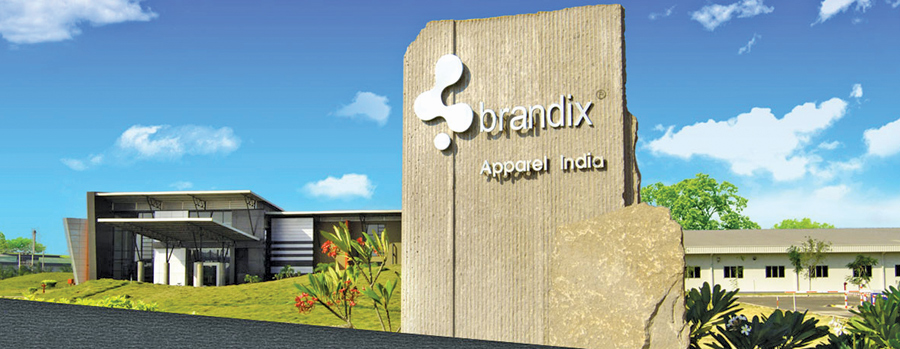
The failure of the SEZs to generate both business and employment is again in the limelight. Recently, P. Vishnu Kumar Raju, BJP floor leader in the Andhra Pradesh Legislative Assembly demanded that the State Government must resume the excess 700 acres of land from Brandix India Apparel City Pvt. Ltd. (BIAC) since it has been able to provide direct employment to only 18,000 persons against the promised 60,000 persons in five years from commencement.
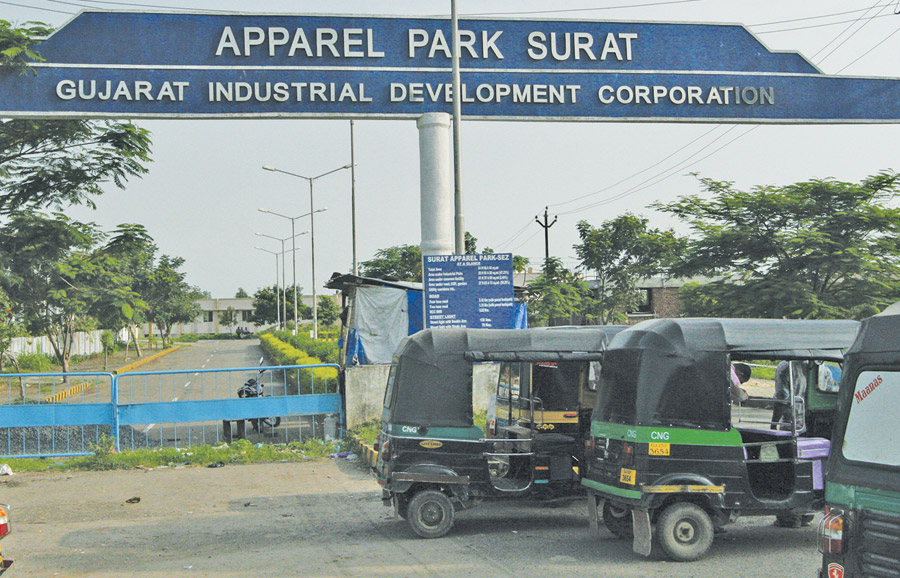
On first thought, Raju’s statement rings true because the Government has provided land at a concessional rate of Re. 1 per acre per year for 25 years and spent US $ 35 million (Rs. 227.69 crore) on building other facilities for the Apparel Park only because there was a promise to provide direct employment to 60,000 persons but is reclaiming the land a solution to the overall problem of SEZs failing to perform through the country, let alone in AP. Be it in AP or even in the most industrial-friendly state of Gujarat, SEZs have not proved successful, especially where the textile and garment factories are concerned. There are seven SEZ in the country dedicated to the textile/apparel sector, but none of them are running to optimal expectations.
On November 28, 2014, a 130-page-long Performance Audit Report on Special Economic Zones was tabled in Parliament. During the audit scrutiny for this report, the Comptroller and Auditor General of India observed a curious trend, wherein developers approached the Government for allotment or purchase of land for an SEZ, and a few years after it was achieved sought de-notification of the same land. The audit reported that in these six states, 52 SEZs involving 5,402.22 hectares of land (14%) got de-notified and the land in question got diverted for other commercial purposes. The actual extent of de-notified land might be higher; as many as 46 SEZs were not produced for audit, while in case of one SEZ, an incomplete file was submitted. In a final masterstroke, the performance review of SEZs by the CAG underlines a moot question: “Considering the huge extent of land that had been de-notified with no economic activity for several years, the big question that remains to be answered is whether this land would be returned to original owners from whom it was purchased invoking ‘public purpose’ clause.”
Get Access to more Market Issues articles from
APPARELRESOURCES.COM. SUBSCRIBE TODAY
In the particular case of Brandix India Apparel City, when Apparel Online contacted the company, it refused to comment officially. But a company sources informed on the condition of anonymity, “It is right that the company is not able to provide employment even less than half compared to the target, but the demand is politically moved. Government policies are responsible for such a situation as initially companies in SEZs get benefit from Income Tax but later Government imposed MAT (Minimum Alternate Tax) and that too with the rate of 18.5%. Secondly, challenging global conditions since 2008 is also an important reason for slow response from the industry. SEZs were meant to incentivize setting up factories, were built to strengthen India’s export market and unfortunately garment export is still not growing as it is expected to.”
There are only Five Functional SEZs for textile and apparel as notified under the SEZ Act, 2005:
1. Brandix India Apparel City Private Limited Duppituru, Doturupalem Maruture and Gurujaplen Villages in Visakhapatnam District, Andhra Pradesh – Textile
2. Mas Fabric Park (India) Pvt. Ltd. Chintavaram village, Chillakru Mandal, Nellore District, Andhra Pradesh – Textile and Apparel
3. Gujarat Industrial Development Corporation Ahmedabad, Gujarat – Apparel
4. Karnataka Industrial Area Development Board (KIADB) Village Perumenahally, Kokkanagatta, Sumudra Vally, Hamumanthapura, Taluk Hassan, Karnataka – Textile
5. IG3 Infra Limited (ETL Infrastructure Services Limited) Vadamugam Kangeyampalayam Village, Perundurai Taluka, Erode District, Tamil Nadu – Textile
The State Government had signed an MoU with Brandix Lanka Ltd. in July 2005 when an SPV was formed with Brandix holding 76% share and the Government 24% share, and gave 1,000 acres land. The Government invested US $ 35 million (Rs. 227.69 crore) towards providing power, water supply pipelines, and laying roads to the Apparel Park. It is also being said that under the lease agreement, the BIAC has to surrender the balance of land in proportion to employment not generated to the APIIC (Andhra Pradesh Industrial Infrastructure Corporation) failing which it has to pay lease rental at market rates.
In pre-Budget discussions with the Finance Ministry, the Commerce Ministry had suggested tax for removal or reduction of MAT on all SEZ developers and units. As part of the budget on February 29, a reduced MAT @ 9% was proposed for the International Financial Services Centre (IFSC) in an SEZ in Gujarat, while retaining 18.5% MAT on all other SEZ developers and units. No doubt the SEZ policy is not realising its vision and that there is a need for comprehensive overhaul. Now, in the wake of the fact that the Indian exports have declined from US $ 314 billion in FY’14 to US $ 310 billion in FY ’15 and exports in FY ’16 are expected to shrink further to nearly US $ 260 billion, the Government is considering several measures, such as offering incentives for small exporters and a package to revive Special Economic Zones (SEZs), to help reverse the trend of a prolonged contraction in merchant exports since December 2014. Labour-intensive export sectors and organic food producers will get concessions and a package is on the anvil for SEZs so that they can utilize large tracts of unused land available with them.





 Bharat Tex Special Report 2026