Maintaining that the Bangladesh Government should urgently remove legal and practical obstacles to unionisation, Human Rights Watch (HRW) recently stated that workers involved in the country’s thriving garment industry are facing ‘daunting challenges to unionisation, and remain at risk of interference and threats by factories three years after the Rana Plaza building collapse’.
Also Read – Human Rights Watch report scrutinizes Cambodian apparel manufacturing sector
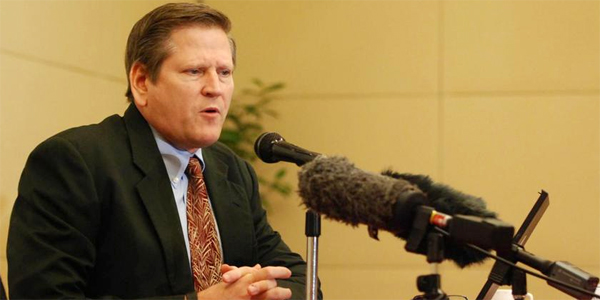
“Let’s remember that none of the factories operating in Rana Plaza had trade unions,” said Deputy Asia Director of HRW Phil Robertson, adding, “If their workers had more of a voice, they might have been able to resist managers who ordered them to work in the doomed building a day after large cracks appeared in it.”
In a meeting between HRW and Bangladesh Labour Minister Mohammed Mujibul Haque in April 2016, Haque reportedly dismissed concerns raised about the difficulty of registering a union, stating, “Most of those who apply for union registration have no idea what a union is.”
There are reportedly only about 10 per cent registered unions in Bangladesh’s 4,500 garment factories. According to the HRW, many factory workers who have tried to form unions met with frequent rejection of applications in this regard by the authorities concerned.
“Thwarting independent garment worker unions is bad for businesses, workers, and Bangladesh’s international reputation,” Robertson reportedly said, adding, “Bangladesh needs to show it has political will to permit workers to exercise their rights by registering unions promptly and punishing factory owners who bust unions or fire their leaders.”
Also Read – Visiting ILO team questions Bangladesh govt on ‘slow growth’ of trade unions
It may be mentioned here that a five-member ILO team that visited Bangladesh recently to assess the labour rights situation in the country, reportedly questioned the slow growth of registration of trade unions in the readymade garment (RMG) sector, besides inquiring about the current state of workers’ right in forming trade unions.
“Discussions focused on improvement of safety standards in factories, and workers’ freedom of association and collective bargaining rights,” Senior Labour Secretary Mikail Shipar said about the meeting with the visiting ILO team, adding, “ILO mission wanted to know about a sudden fall in growth of trade union registration. But there are significant improvements as nearly 400 trade unions have been registered over the last three years.”
Headquartered in New York City, with offices in Amsterdam, Beirut, Berlin, Brussels, Chicago, Geneva, Johannesburg, London, Los Angeles, Moscow, Nairobi, Paris, San Francisco, Sydney, Tokyo, Toronto, Washington DC and Zurich, Human Rights Watch is an international non-governmental organisation that carries out research and advocates human rights issues.




 Bharat Tex Special Report 2026