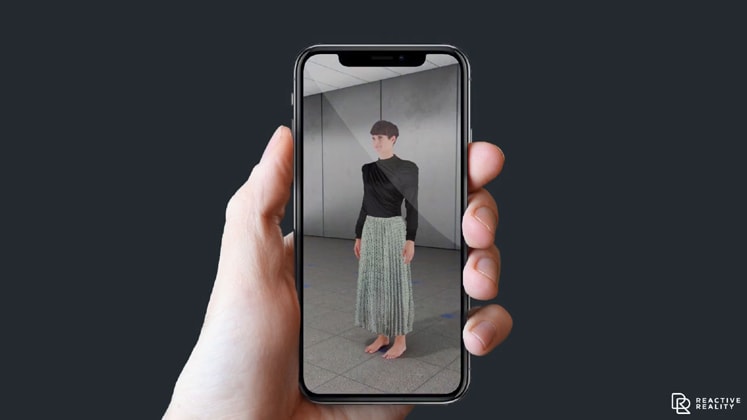
Cornell University conducted a study that reveals that augmented reality (AR) tool increases the chances of a garment being bought online.
The technology assists better evaluation of a garment on factors like fit, size and look increasing the interest of the customers and therefore leading to better conversion rates.
Notably, a team from lowa State University and Virginia Polytechnic Institute has conducted the research. The team included Fatma Baytar, Assistant Professor of Fiber Science and Apparel Design and Director of the Body Scan Research Group.
The AR technology is present in two methods: one allows customers to try on clothes on their size avatar and other uses mirror refection to overlay the garment on their image.
The study implements the latter technology which requires the participants to assess the garment based on factors like size, fit and performance and then does the same when trying the garment physically.
The results were mixed as the participants could find the correct size but had trouble evaluating the fit at bust, waist and hip.
Fatma explained that the photographs were taken on the dress form, yet they were in 2D and the hourglass shape did not meet the actual body shape of the participants.
The other product performance factors like style, fabric, colour, coordination with other items touch and feel, weight, fit, comfort were slightly different in AR versus real life. The only performance factor to show no difference across the two try-on-experience was colour.
Yet with all these limitations, participants responded well to the virtual dress.
“Attitudes to the AR garment and the real garment were really high, which means the participants liked it and their purchase intentions were relatively high, though they were higher for the real garment,” explained Fatma.
The study originally conducted in 2016 holds much significance now, Fatma explained as the offline retail is closed due to the crisis. She further explained that the technology used for the study was limited and needs to be improved with time.
The use of AR allows shoppers to try the clothes on their virtual avatars to have a better view of the garment before making a purchase. Though not as effective as physical trying the AR helps accelerate customer attitude towards the garment while enhancing the experience and efficiency of online shopping.