Yin Science & Technology with very strong R&D Centres in Germany, Romania and Japan, and subsidiaries in countries like USA, has earned the reputation of a cutting room solution provider for the apparel, textile and other flexible materials industry. Claiming to have already established its firm hold on the Chinese market with 80% market share in cutting room solutions, the company is geared along with its Indian agent Studio Next and a handful of successful installations to capture the relatively new market in India with country-specific strategy.
How important is India in Yin’s expansion strategy?
India is a fast growing market, so till now it is not that much big but it is our future for sure. After spending a short time with the industry and seeing how the market is developing, I feel that India is destined to prosper and grow in the coming 10 years.
Along with China, India has such a big population, creating a big demand for consumer products and encouraging many brands to look towards the country with bright prospects. And clubbed with the presence of a large pool of skilled and unskilled labour, this market is bound to flourish and mature. I think for some particular industries like apparels, automobile, accessories and even some home textile products the demand is huge, in turn creating a market for our company, as they will certainly need automated solutions to improve their operational efficiencies and quality of the end product. Among many, the automobile sector is our best bet.
You have been present in many countries and dealing with varied clientele. Is the approach different for different countries?
[bleft]After installing our products, the client realizes that not only the capital investment is cheaper but cost of running and maintaining the machinery is also very low compared to our counterparts, making the whole package cost-effective not only in the initial 4-5 years but even to an extent of 10 years.[/bleft]
The initial step of our policy is to analyze the local market, organizational structure and region-specific economics; for example Bangladesh is famous for knits, so our focus would be on low value and cost-effective solutions as their requirements for accuracy and precision in cutting would not be to that level, instead their focus would be on the quantities the machine can handle. Hence, after recognizing the need of the countries, we create a portfolio of products specific to their demands by picking the right set of solutions from the wide gamut of solutions we already have or at times developing some new solutions totally specific to those countries.
Already many European companies have an established client based in the country with a similar strategy and prospective customer base. What sets apart Yin from them?
I personally feel that the market that we are really fighting for is not yet India, it is more focussed on China and South-East Asia, and trust me the competition is really tough in these regions. After successfully facing and surviving the competition in these regions, we have enough experience to handle the same when India becomes the target.
Moreover, I believe it is our ability to give customized solutions – from a toy manufacturer to a garment or an automotive upholstery manufacturer, which actually sets our organization and solutions apart from the rest. Our R&D centres in Germany, Romania, China and Japan are adequately equipped to support the same.
What kind of service support Yin would put in place to set them apart from others?
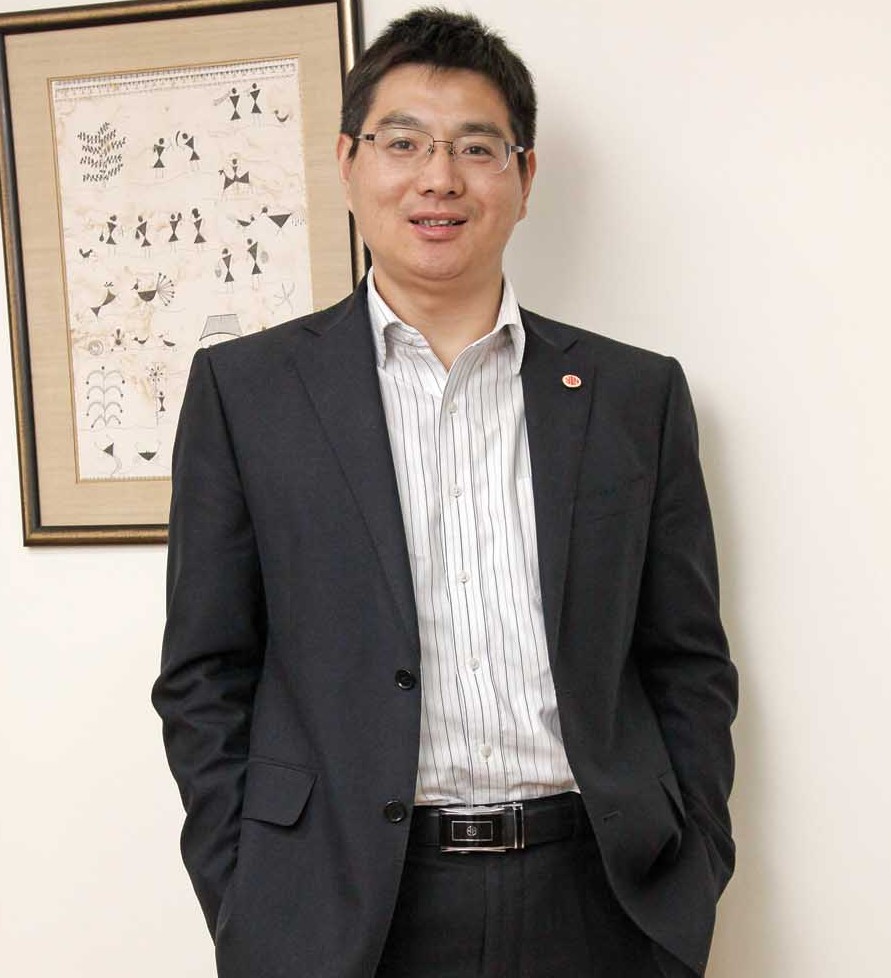
[bleft]India is a potential market for technology providers as after the garment export units, it is now the turn of domestic manufacturers to upgrade production facilities. Significantly, it is not only upgradation of technology that the companies are looking at, but there is increased focus on adding technologies to be more efficient and deliver better quality too. One area that is fast seeing investment is the cutting room with traditional ‘master jee’ giving way to automated solutions. Based out of Japan, Yin Science & Technology with manufacturing facilities in China is looking at India in a big way with its customized cutting room solutions. Jun Ling, GM, Yin Japan shares with Team StitchWorld, the company’s strategy to make a mark in the already saturated Indian market… [/bleft]
Top quality service is actually another reason for Yin’s growth in the competitive world market and was long ago recognized as the key to success in the industry. The quality of our service is irrespective of the location of our clients. We start with building of a local team to increase the turnaround time on all queries and at the same time attain a deeper understanding of the customer’s mind-set and problems associated with the equipment. To make the same possible, we have stationed two engineers from Japan in India for a period of two years to groom a robust team of local engineers and technicians.
Secondly, the servicing side of our business is very systematic and standardized. It starts with the training of the service personnel – they go through a standardized training process and have to achieve certain set of pre-defined standards. Currently the system is fully operational in China, but slowly and steadily we will make this global.
Due to the large size of India, we will open two offices here catering to the north and the south Indian regions. This would not only prove cost-effective to us and reduce cost and time invested in transportation but also increase the speed of our service.
As of now we can be reached through our local agent Studio Next, who is instrumental in getting us our initial clientele in the country. Although most of the sales and service related issues are handled by us only, but with a support of a local agent things happen in a streamlined and swift manner.
How has been the response of the Indian market to solutions offered by Yin?
In just a short time of our entry in India, we have a handful of installations in the country and all have been successful. Moreover, after installing our products, the client realizes that not only the capital investment is cheaper but cost of running and maintaining the machinery is also very low compared to our counterparts, making the whole package cost-effective not only in the initial 4-5 years but even to an extent of 10 years.
What are your projections and targets for the coming 5 years?
Globally our share in the same segment is about 40%, whereas in India we plan to acquire 35-40% of the market initially. Our plans for India are not only about capturing the majority of the industry but rather grow with the market and help increase it in size, volume and value in the coming years. Currently, companies like Banswara Syntex, Sarita Handa and Autoform are among many of our esteemed clients.