The apparel industry can be seen discussing about digitalising the factory processes, and quite often, the decision makers come across a question – how much technology is too much technology to implement? One can always boast about the use of technology in pre-production process, on sewing floor, and in washing and finishing area. But, how about digitalising processes such as the garment measurement process?
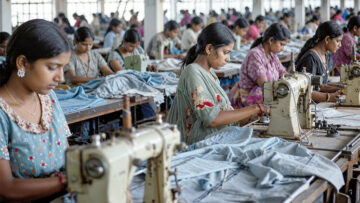
Imagine hundreds of workers spending hundreds of man-hours to measure thousands of garments in a factory on a daily basis. Do you see any ambiguity in this process? If no, there is certainly a huge problem in the factories’ understanding of the areas where reduction in human intervention is an obvious need. The chances of human errors in garment measurement process are massive which ultimately do nothing but deteriorate the overall quality of garments. There are technologies that can be of great help in reducing human intervention and all a factory needs to do is think about the under-utilised available equipment to address pain points of the measurement process.
Also Read: Journey of fabric from anti-bacterial to anti-viral
Before the technology is discussed, let’s see the certain challenges that a traditional apparel factory faces in the garment measurement process. One of these challenges is high time consumption in the manual measurement system. The average time needed to hand-measure a single garment, record the data and enter the data into a computer programme hovers around 5 minutes. And, the time is even more if the product is too complex to measure.
Suppose a factory requires to measure 10,000 pieces, then around 50,000 minutes of the total garment inspectors are dedicatedly required which leads to only two solutions – 1) either increase the number of workers involved in the measuring process or 2) increase the number of days to conduct the process before it goes to the subsequent process. In both cases, the factory needs to take heavy indirect cost into their account while planning for a project. In garment QC process, inspectors spend, on an average, one and a half to 4 hours a day simply keying in inspection data into Excel or PDF files.
Another issue is the high chances of human errors throughout the measurement process, as the traditional method of size measurement and data entry is prone to all kinds of human errors. Quality inspectors often calculate the deviation of actual measurements from its spec size before writing down the difference. This adds to the mental burden and exposes inspectors to the uninvited mistakes.
Access to data is the third major issue as the current method of size measurement and results in analogue data hinders the factory’s business from making correct, real-time decisions across various operations and this adds woes to the already flawed process. All these challenges can be solved with the introduction of the digital transformation of this entire garment measurement process.
Also Read: Embarking on a digital journey: The only way to stay relevant in fashion
A South Korean company – Bagel Labs – introduced Bagel Size Measuring Solution (ALT Smart Tape) sometime ago, and the same is offered by Sakho, a sister concern of the H&H group. The measuring solution utilises Bagel Labs’ proprietary smart tape measure technology to measure size digitally and send data directly to the computer via Bluetooth. The ‘smart’ tape can measure up to 160 cm (63 inches) and has an error range of just ±0.5 mm which makes it the world’s most accurate digital measuring tape, according to the company. Additionally, it is compatible with most of ERPs and PLMs available as well as with Microsoft excel.
This way, errors in calculation and transcription in inspection reports can be eliminated and it just takes 0.5 seconds to send a measurement after another in the computer, allowing users to enormously speed up the measuring process. “At least 60 per cent time can be saved in measurement of a garment using this tape, which means 3 minutes can be saved (at least) in a 5-minute garment measurement process,” claimed Anshuman Dash, Marketing Director, H&H while talking to Apparel Resources.
Additionally, with a vibration motor installed in ALT Tape, the device sends the user measurements with haptics – the science and technology of transmitting and understanding information through touch. Then, the user can check if the measurements are correctly processed.
Simply put, ALT Smart Tape is here to digitalise the way traditional garment measurement process has been followed. This tape is also an improviser (digitally) for product design, sourcing & retailing, e-commerce and Made-to-Measure.




 Bharat Tex Special Report 2026