A quiet shift is underway in the Banarasi weaving belt. As mainstream brocade production leans increasingly on power-loom replication, a small circle of master weavers is doubling down on a technique so labour-intensive that most looms in Varanasi have simply stopped attempting it: the Rangkat sari.
For an industry constantly hunting for genuine differentiation in a saturated ethnic wear market, Rangkat sari, with its inbuilt scarcity, storytelling value and price elasticity, are emerging as a case study in how a near-extinct craft can be repositioned as a commercial asset rather than a museum piece.
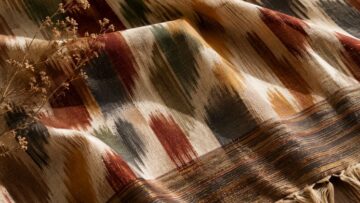
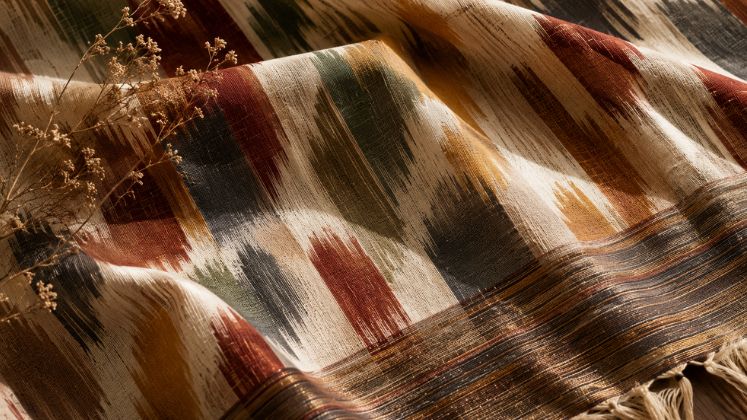
Rangkat is a pure-silk Banarasi weaving technique built on the Kadhwa, a form of hand-loom “embroidery” in which each motif is individually woven into the fabric using a supplementary weft, rather than thrown across the width via a shuttle, as in the more common phekwa style. The result is a reversible fabric: the back of a well-made Kadhwa piece is nearly free of loose threads or floats, meaning the pattern reads cleanly on both faces.
What sets Rangkat apart is its handling of colour. A single motif is rendered in multiple, sharply demarcated base colours within the same weave, an effect achieved by working coloured silk threads alongside zari in the motif zones, echoing the enamel-inlay logic of Meenakari jewellery. Some interpretations of the technique push further into true double-weave territory, where a weaver manages two sets of warp threads simultaneously to produce two mirrored, colour-contrasted fabric faces on one loom; a level of manual coordination that cannot be replicated on a power loom without fundamentally compromising the design.
A Kadhwa/Rangkat sari can take anywhere from 12–14 days to several months to complete, depending on motif density and design Industry estimates suggest fewer than a handful of master-weaver families in Varanasi retain the skill to execute a “true” Rangkat today.
At the artisanal-heritage end, Varanasi-based labels such as Tilfi and Sacred Weaves have built dedicated collections around Kadhwa and Rangkat double-weave, pricing pieces from roughly ₹30,000 to ₹1,00,000-plus and marketing them explicitly as slow-made, Silk Mark-certified, one-weaver-family-sourced heirlooms rather than seasonal stock. Newer direct-to-consumer players including HMR Handlooms, Rasm by Muskaan, Khinkhwab and Zari Banaras have also built Rangkat-specific catalogues, positioning the weave for wedding and festive dressing in the ₹15,000–₹30,000 range.
On the contemporary-luxury side, the technique’s DNA aligns closely with how designer labels such as Raw Mango and Gaurang Shah have approached Banarasi and other endangered handloom weaves: minimal silhouettes, solid or limited colour stories, and heavy documentation of the weaving process as part of the brand narrative. While these labels’ hero pieces are not always marketed under the Rangkat name specifically, the same commercial logic of pairing a rare, hard-to-replicate technique with contemporary cuts and editorial storytelling is what has allowed handloom-forward brands to command accessible-luxury pricing rather than being boxed into “ethnic wear” discounting.
The customer base splits fairly cleanly into two segments. The first is bridal and trousseau buyers; brides, bridal families and close relatives shopping for pieces intended to be worn once and preserved for decades, a segment for which brands like Sacred Weaves explicitly design their Rangkat and Kadhwa editions. The second, smaller but growing, is the collector and connoisseur buyer: heirloom gifters and textile enthusiasts, often NRI or metro-based, who understand the difference between a mass Banarasi and a true handloom weave and are willing to pay a premium for provenance and certification rather than embellishment.
Rangkat’s business relevance is inseparable from its cultural fragility. In the wider Banarasi trade, techniques like Rangkat matter commercially because they are the strongest argument against the price erosion caused by power-loom “Banarasi” imitations flooding the mid-market: a documented, certifiable hand-technique is one of the few remaining ways an authentic product can justify its price gap against a machine-made lookalike.
For brands looking to build on this, the playbook points to a few clear levers: certification and provenance to justify premium pricing; contemporary silhouette translation, in blouses, jackets and draped separates rather than only traditional nine-yard formats, to widen the buyer base beyond bridal; controlled-edition drops that lean into scarcity rather than fighting it with volume; and cross-category extensions such as Rangkat-technique dupattas, stoles and blouse fabric to create accessible price points beneath the ₹15,000-plus sari threshold.
Given how few weaver families retain the skill, the more urgent structural opportunity for brands, government handloom bodies and export promotion councils alike is direct investment in training and loom infrastructure, without which the technique’s commercial upside will remain capped by supply rather than demand.