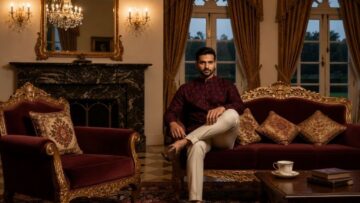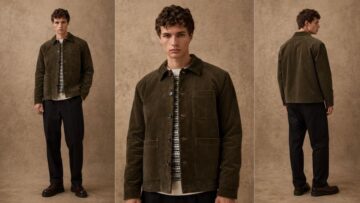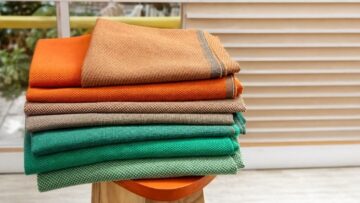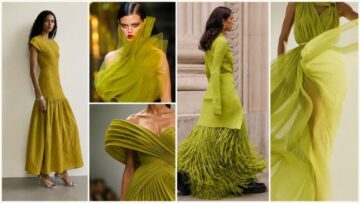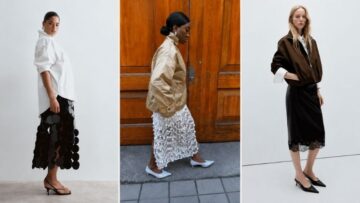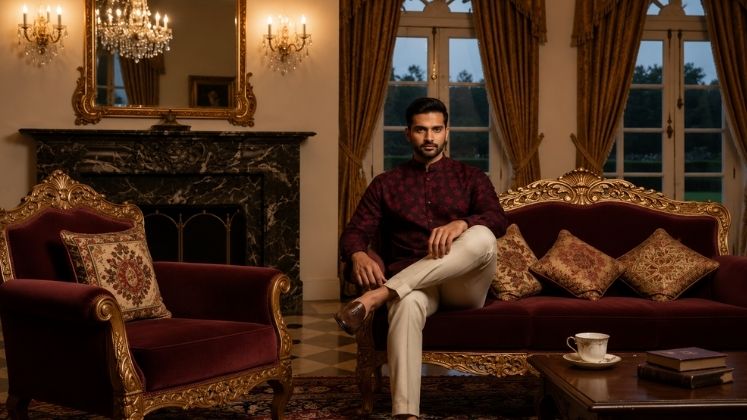
Indian menswear is settling into a quieter register this season, with relaxed tailoring, muted colour palettes and restraint replacing the occasion-driven, embellishment-heavy dressing that has long defined the category. Rather than importing the “quiet luxury” label wholesale, the shift appears to be taking a distinctly Indian shape; visible on domestic runways, in Bollywood’s styling choices and in the positioning of homegrown labels.
The clearest evidence came from Lakmé Fashion Week x FDCI 2026 in Mumbai, where menswear occupied a far larger share of the schedule than in previous seasons. Coverage of the event described a broader move away from spectacle and occasionwear toward clothing designed for everyday use. Menswear label Countrymade, helmed by designer Nikhil Abrol, presented a collection built around industrial textile processes and reworked basics; Abrol has spoken of designing for “a modern man” who is “looking for a point of view” rather than a uniform.
The same edition marked the Indian runway debut of Kartik Research, a label already recognised internationally and by the Fashion Trust Arabia awards, which showed handspun khadi and traditional embroidery techniques in pared-back silhouettes rather than heavy ornamentation.
Designer Payal Pratap introduced her first menswear line at the same show, reinforcing a season-wide pivot toward wearable, lived-in clothing over occasion-first design, a notably Indian route to minimalism, built from indigenous textiles and craft techniques rather than borrowed Western tailoring codes.
Indian menswear brands have been building toward this moment well ahead of the current trend cycle. Bombay Shirt Company, known for made-to-measure shirting, has centred its offering on fabric quality and precise fit rather than branding.
Designer Kunal Rawal’s menswear label has leaned on relaxed layering, tone-on-tone thread work and a muted palette rather than overt embellishment which is an approach rooted in Indian textile sensibility rather than a European minimalist playbook. Newer direct-to-consumer entrants, such as the Mumbai-based label Senses, have positioned themselves around the same idea, offering fitted basics like, polos, T-shirts and shirts built specifically for Indian body types, without graphic branding to signal value.
The trend less as a fixed aesthetic than as a shift in approach: fewer rigid style rules, a smaller rotation of well-made pieces, and clothing built to move between settings without a full outfit change. What distinguishes the Indian version of quiet luxury is its raw material like khadi, tone-on-tone thread work, made-to-measure shirting, rather than a straightforward transplant of an international trend. The alignment between runway debuts, established Bollywood styling and domestic label positioning suggests the shift is being driven from within the Indian fashion ecosystem rather than filtering down from abroad.