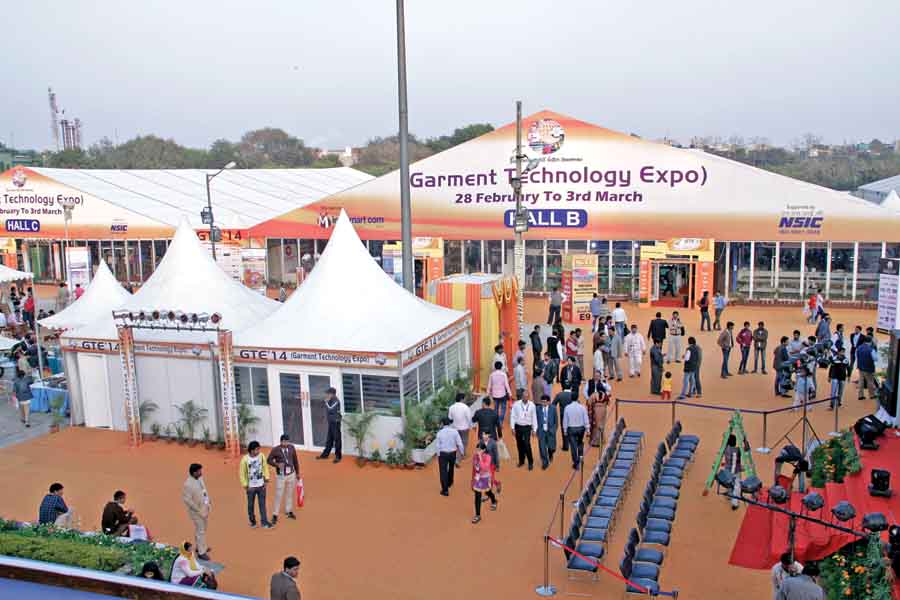
 With business picking up for most exporters, and domestic market also booming, the recently concluded GTE saw visitation from all segments of the garment manufacturing industry looking for technology to add value to their operations. Understanding the need of apparel manufacturers and realizing their mindset, machine companies offered a wide range of products and price points to attract the market. As usual, the domestic segment thronged the show with needs of upgradation and expansion, while most of the manufacturers for exports were just ‘seeing’. Interestingly, either the people had come with a very specific requirement of machinery or were there at the fair just to look at the latest developments.

Many visitors came from smaller upcoming manufacturing centres like Indore, Nagpur, Surat, Gorakhpur, Jodhpur, besides visitors from Chennai, Bangalore, Kolkata, Ludhiana and Jaipur, which are already known hubs. While a lot of the companies from the smaller towns have interesting product basket and are manufacturing quality too, they find it difficult to grow, particularly in the export market as buyers are reluctant to visit their factories. Yet, these small units are looking to invest with very specific needs mostly centred on sewing and value adding machines. A lot of companies like Juki, Brother and Orbito (Mehala) had displayed semi-industrial machines for embroidery, printing and decorative stitches, which are suitable for such manufacturers.

Even in the export segment, companies are looking to bring more and more processes under their roof as controlling the supply chain when outsourcing is a big problem often leading to delays and missed delivery dates. So there was renewed interest in embroidery and printing machines for in-house activities. The team from Pearl Global was looking for machines for value addition especially to duplicate the work which is being done on Adda, if possible. Even Vam Hi-Fashion Garments (Orient Fashions) was searching for options in embroidery segment.
In the retail segment the brands/retailers are looking to invest in sampling units with machines for value additions like printing so as to give faster turnarounds in the stores. The brands are supporting the manufacturers, which are mostly small units having 20-50 machines and who can give quality as per market and price point needs, with both product development and production knowhow. “The factories are relatively smaller with tailoring systems and it is up to us to ensure that the product is manufactured right and gives value for money for our regular customers,” said Wicrant Gambhir, GM – QA, PPC & SNS, Lifestyle International, Max Retail Division.
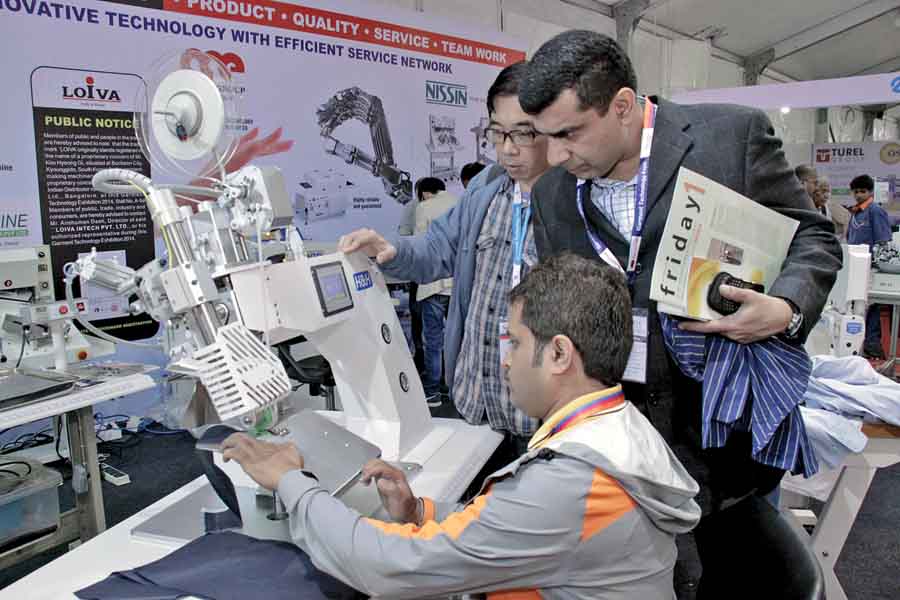
An interesting observation made was that with international retailers now looking at smaller quantities, many of the small and mid-sized export companies are now going back to the concept of piece-rate tailoring from assembly lines as the costs of training and retention are too high to bear in such a competitive scenario for labour.
According to many of the technology providers, expansions are happening in full swing not only from the existing players but also with a lot of new players. The machine dealers have realigned themselves to offering a complete set of solutions for various customer needs, instead of feeding only very specific needs. Moreover the display of the companies like IIGM, HCA, Turel and Mehala was very generic and holistic in nature, and not aligned with a certain product category.
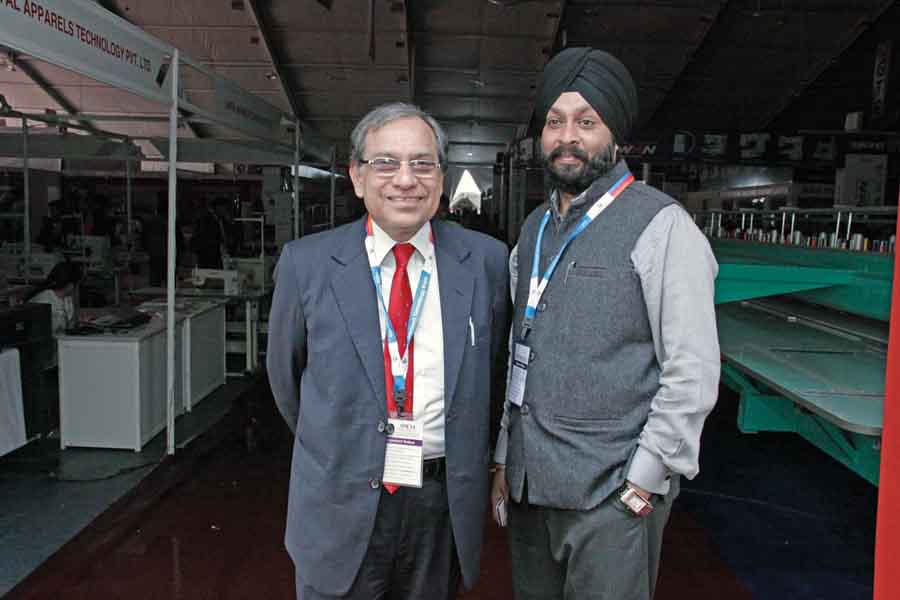
While Denim washing has been in focus at GTE for the past two years with a dedicated denim zone, this year saw the entrance of new players like Metod, which was showcasing at the IIGM booth. Also creating a buzz was sewing machines for denim manufacturing with pioneer Vibemac at the centre of attraction and new entrant was Focus which claims of having machines with similar applications in jeans manufacturing, but at much more economical prices.
Among the new technologies at the GTE which attracted attention was ‘bonding’ with high-end manufacturers showing great interest. Stitch-free garments as a segment is doing very good in India with both the domestic and export market going forward with the same. Besides the stitchless shirt manufacturers, lingerie manufacturers in the country are also looking at bonding machines. H&H marketed by Loiva in India, and a great draw at the fair, has already registered a project for manufacturing stitch-free outerwear jackets with Decathlon, and machines would be installed in GE’s facility for the same. Loiva has also developed a complete project for manufacturing stitch-free shirts for Arvind. Surprisingly, PFAFF despite being the first company to develop such machines did not display the same at the fair.

With such diverse products to see, it was heartening to see a mix of top exporters, big domestic brands, medium and small level manufacturers from across the country, along with their top level management, technical teams, consultants, job workers and students from various institutes visit the fair. Moving towards expansion/upgradation were companies like Pearl Global Industries, Shahi, Orient Fashions, Orient Craft, Richa Global, Jyoti Apparels, Celestial India, Radnik Exports, In Time Garments, Meenu Creation, Pearl International, Indigo Apparels, Maharana of India, Sterling Apparel Manufacturing (Jordan), Superfine Knitters, Jawandsons (Oster Group) S K Exports, Neetee Clothing, Eveline International, Pooja International, Landmark Group (Max), Benetton India (UCB), C&A, Bodycare International, Zonac Knitting Machines (Bonjour), Vasu Clothing, VK Bajaj & Co. (Romance), etc. to mention a few.
[bleft]Many of the small and mid-sized export companies are now going back to the concept of piece-rate tailoring from assembly lines as the costs of training and retention are too high to bear in such a competitive scenario for labour.[/bleft]
As cost is becoming a major decider for manufacturers, many technology providers had economy models to offer. MS Orange, Surat offered the entry level printing with MS JP5 Evo. Studio Next, Mumbai offered complete cutting room solutions at reasonable price. Many companies offered products with some advancement or with few changes to deliver more value at very little additional cost. An interesting point that was strongly observed was that most of the apparel manufacturers are now talking to technology providers on how to get customized solutions. It is no more about what is being sold, but what the industry needs… and the machine manufacturers and suppliers are responding with the same enthusiasm.