Business keyboard_arrow_right Retail keyboard_arrow_right News

PVH to increase sourcing from Africa, set to source bottom wear from Ethiopia

 Image Courtesy: dressedandstripped.nl
               Image Courtesy: dressedandstripped.nl

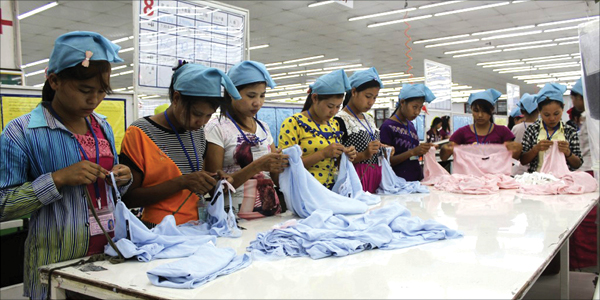
With wages lower than Bangladesh and vertically integrated setups, most countries in Africa are benefitting from free-trade agreements with the US. Africa and especially Ethiopia continues to be an opportunity for apparel retailers. VF Corp., the group owing brands like Lee, Wrangler and Timberland, expects to start getting some of its pants sewn in Ethiopia this year. PVH Corp. has been making some of its clothes in Kenya for at least four years. Others with sourcing in sub-Saharan Africa include Wal-Mart Stores Inc., J.C. Penney Co. and Levi Strauss & Co.

Apparel worker wages in Ethiopia start at about US $21 a month. Ethiopia was identified as a top sourcing destination by apparel companies, according to McKinsey & Co., which surveyed executives responsible for procuring US $ 70 billion of goods annually. Expert feels that given the supportive Government, low wages and power supply, Ethiopia is emerging as a bright option. And, unlike other emerging economies such as Vietnam and Cambodia, many African countries can grow their own cotton, which shortens production time.
Ethiopia introduces attractive incentives to achieve the us $ 1 billion target for apparel exports

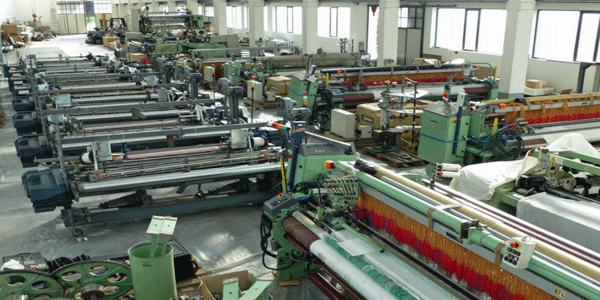
As Ethiopia is entering the second phase of its growth and transformation plan (gtp), the textile industry Development institute of Ethiopia has set a us $ 1 billion target for apparel and textile exports. Due to below- than-expected performance in the first phase of the gtp, even after having benefits such as agoa from the usa, the government will introduce incentives such as 100% duty- free import of textile machinery to attract new investments. similarly, duty-free import of spare parts of 15 per cent of capital goods for the first five years of operation, the possibility to hire expatriates free from income tax provided they stay for no more than two years and reconciliation of vat for materials purchased locally during the project period is possible if declared in six months, are among the incentives provided by the government. 

Such incentives will provide a firm foundation for more than 152 new investments that are expected during the second gtp. Ethiopia’s government is building at least 10 industrial zones. a delegation of bangladeshi apparel, fabric and accessory manufacturers will visit Ethiopia for investment and trade opportunities, under the leadership of Anisul Islam Mahmud, MD, Shasha Denim soon. the company itself is looking at establishing a factory in Ethiopia but would not be the first as two more bangladeshi companies – Dbl group and Experience clothing – have started construction of their projects in the african nation.


Ethiopia sets target of US $ 1 billion for textile export

Image Courtesy: bagrutextiles.com
                  Image Courtesy: bagrutextiles.com

Ethiopia’s Textile Industry Development Institute (TIDI) is eyeing at US $ 1 billion revenue from textile and garment export during the second phase of the growth and transformation plan (GTP II). “We are working to be a leading country in light manufacturing in Africa which will lay the foundation for heavy and high tech industries by 2025,” said Sileshi Lemma, TIDI Director General.  Sileshi further added that over 152 new investments are expected during the second growth and transformation plan. The GTP II is also expected to create more than 170,000 job opportunities.


Kanoria to begin denim fabric production at its Ethiopia plant by May

Image courtesy: d2d00szk9na1qq.cloudfront.net
     Image courtesy: d2d00szk9na1qq.cloudfront.net

Kanoria African Textiles Plc, a subsidiary of India’s Kanoria Chemicals & Industries, will commence denim fabric manufacturing at its plant in Bishoftu (Debre Zeit), Oromia by May 2015. The factory will employ 600 people, and produce both yarn and denim for textile and garment factories. The factory will sell its products in Ethiopia as well as export to African, Asian and South American markets. Kanoria will use cotton procured from the local market and imported from Indian and Pakistan.


Events keyboard_arrow_right News

200 exhibitors to exhibit at Origin Africa 2015

200 exhibitors to exhibit at Origin Africa 2015
                       Image courtesy: originafrica.org

Over 200 apparel and textile exhibitors will participate in the upcoming edition of Origin Africa 2015, an initiative to encourage African cotton, textile and apparel trades. The event is scheduled to take place from October 21 to 23, 2015 at the Millennium Hall, Addis Ababa, Ethiopia. The event will be organized by African Cotton and Textile Industries Federation (ACTIF), Trade and Fairs East Africa (TFEA) and East Africa Trade and Investment Hub (EATIH). In addition to showcasing the exhibits, business meetings and seminars on issues related to ‘Challenges Faced by Manufacturers,’ ‘Role of Government and Associations,’ and ‘Financial Investment Development’ will be held on the sidelines of the show.

Ethiopia-Djibouti joint committee established to reduce transit time

Image courtesy: yourchildlearns.com
                  Image courtesy: yourchildlearns.com

Devising a solution to Ethiopia’s impasse of being landlocked, the country has agreed to establish a joint committee to enhance the port and customs services in order to speed up transportation of commodities to Ethiopia with its sea-coast facing neighbour Djibouti. The development is expected to come as a relief for the export oriented business of apparels and textiles since currently, it takes 2-3 days for a container to arrive from Djibouti to Addis on road (770 km). In addition, 7 days are required for custom clearance and other formalities at Djibouti port. The committee’s intervention is expected to reduce the transit time from Djibouti to Addis Ababa. The committee will be made up of experts drawn from the revenues and customs, transport, maritime and logistics services of both countries.


Etur Textile ready to export products to European and American markets

Image courtesy: gdb.voanews.com
                 Image courtesy: gdb.voanews.com

Etur Textile, the Turkish textile manufacturer operating one of the largest textile factories in Ethiopia is going to start exporting its products in European and American markets. Adil Basoglu, Board Member and Executive Director of Etur, said that the textile factory has fully embarked on production and it will soon start exporting its products to larger overseas markets. At present, Ethiopia is home for 110 textile companies of which Turkish, Chinese and Indians are major contributors for the textile and garment export which has reportedly grown by 28 per cent year on year during the previous fiscal year (2012-2013).


Ethiopia imports cotton to meet domestic demand

Image courtesy: capecentralhigh.com
                 Image courtesy: capecentralhigh.com

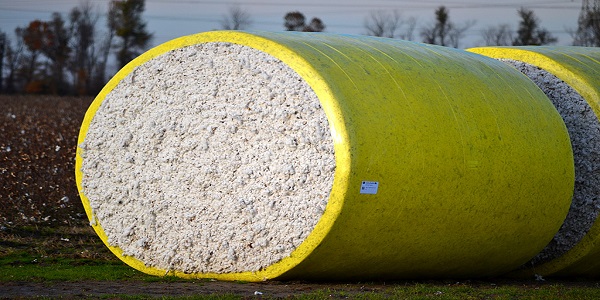
According to the Textiles Industry Development Institute (TIDI), in mid 2014, Ethiopia imported over 3,000 tonnes of cotton to meet demand for its domestic textile industry. Importing cotton was a short-term measure by the government to address the challenge of shortage of raw material. The Government has also introduced a new system, wherein companies owning textile mills are allowed to cultivate cotton, and some textile companies such as Ayka Addis, Adama and Selin Dewan are already working in this direction. Ethiopia that exports yarn, fabric and cotton garments, has a target of increasing its textile and apparel exports to US $ 1 billion by January 2015. But the country is still very far from meeting its target as the local cotton supply is low.


Business keyboard_arrow_right Retail keyboard_arrow_right News

Bagir buys 50 per cent stake in garment factory

Image Courtesy: yuligroup.com
                Image Courtesy: yuligroup.com

Bagir has completed its purchase of a 50 per cent stake in Nazareth Garments Share Co, which owns and operates a garment factory in Ethiopia, for a total consideration of US $ 1.5 million. The factory manufactures trousers and formal shirts and employs approximately 400 staff. US $ 1.2 million of the total consideration will be invested for machinery and general facility improvements to ensure that the output is suitable for export, with the balance paid to the shareholders of Nazareth. The factory is now expected to undergo certain upgrades to its facilities to enable the production of high quality trousers and jackets for export into the global market. As at 7 July 2013, being the end of Nazareth’s fiscal year, Nazareth had revenue of approximately US $ 0.9 million, profit before tax of approximately US $ 0.2 million and net assets of approximately US $ 0.3 million.


H&M Foundation and Reach for Change to sponsor Ethiopian social entrepreneurs

H&M Foundation and Reach for Change to sponsor Ethiopian social entrepreneurs
                   Image Courtesy: rifftheraff.com

The Swedish retailer H&M’s H&M foundation and the Swedish investment company Kinnevik’s Reach for Change have come together to support social entrepreneurs that work for upliftment of women and youth in Ethiopia. Jointly investing US $ 11 million for over three years, the companies have decided to strengthen local initiatives after their recent investments for long term positive development. This joint effort will initially focus on identifying social entrepreneurs with the potential to create sustainable change for women and youth in Ethiopia. Once identified, these individuals will be financially assisted by these two organizations.

Also ReadAfter India, H&M opens first store in South Africa


Ethiopian government sells all its shares of Saygin Dima to Turkish partner

7The Ethiopian Government sells all of its shares in the Saygin Dima Textile Factory S.C. to its Turkish private sector partner company Saygin. Wondafrash Assefa, Public Relations Officer of PPESA (Privatization & Public Enterprises Supervising Agency) informed that Saygin has made the 10 per cent down-payment for the Government’s share of 626.36 million Br. Saygin requested full ownership of the company in April, 2014; the proposal was accepted after the approval from the Prime Minister’s Office in June 2014.


70 German companies visit textile sector

70 German companies visit textile sector
   Image Courtesy: i01.i.aliimg.com

Seventy companies from Germany came to an event for the German textile machinery and accessories manufacturers organized by SBS Systems for Business Solutions and Agathon Consulting. Among the companies that visited Ethiopia were, Groz-Becket KG, Fong’s Europr GMBH, Interspare GMBH, Jakob Muller AG and zHeusch GMBH & co KG. The delegation discussed over the hurdles faced by the textile industry of Ethiopia concerning the supply chain from cotton to the end-product, the lack of foreign exchange to finance, necessary imports of textile machinery and intermediate textile products such as yarns, regular power interruptions and the overall infrastructure and logistics.