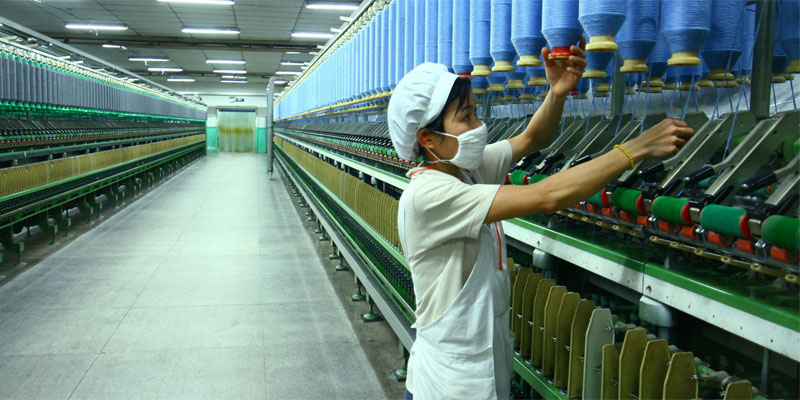
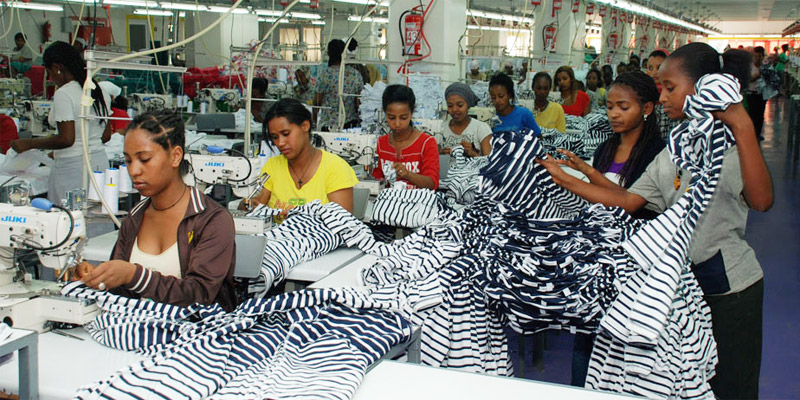
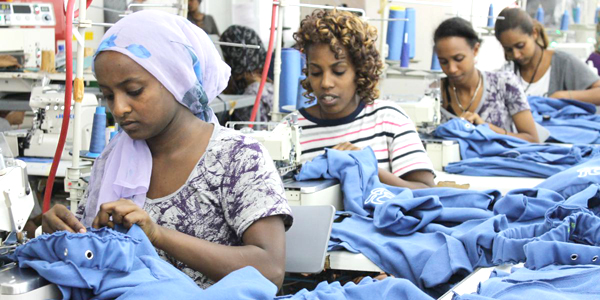
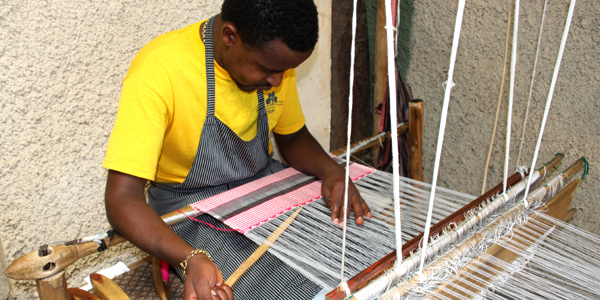
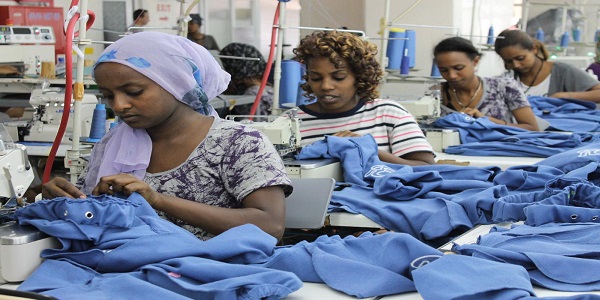
The Commercial Bank of Ethiopia (CBE) has taken control of Turkish-owned textile company Saygin Dima, after repeated attempts to transfer the ownership. The bank is still looking into options for the administration of the company.
Established in 2008 as a joint venture between the Ethiopian Government and Turkish investors, has been in the foreclosure process for the past six months. However, the factory has failed to generate any interest from buyers.
“We will make a decision on how and who will manage (Saygin Dima) soon. We are also looking on how to revive and restore some of the damaged machines and properties,” said Belihu Takele, Acting Communication Manager, CBE.
It may be noted that at the time of the setup, the Ethiopian Government had a 60 per cent share in the company, valued at Bir 625 million while rest were with the Turkish investors. However, the partnership did not last long. The Government dissolved the partnership due to the unsatisfactory performance of the company. Above all, its export performance did not meet expectations. Last year, the company declared that it was only able to earn US $ 105,000.
The Ethiopian Government has set out plans to increase its textile and garment exports by US $ 1 billion through its forthcoming second Growth and Transformation Plan II (GTP II). The T&C sector is also expected to create more than 300,000 jobs during the plan period.
In addition to the suitable policy concerning the sector, the nation is placed in the disadvantageous position with easy access to international value chain and it has abundant and competitive workforce, according to Ethiopian Investment Commission (EIC).
Also, different incentives in terms of structure, training, workshops, loan, machinery lease, finance, advice services, market linkages and the like have been provided for foreign investors and local small scale and medium textile and garment associations in order to encourage the sector, according to Siyoum Wujira, Garment and Textile Directorate Director, Ethiopian Textile and Garment Agency.
As per the training document prepared by the Ministry of Industry, the major challenges are lack of input with fair price, quality and quantity, lack of skilled manpower, and less improved technologies. On the other hand, investors’ lack of awareness about the sector was mentioned as another issue to deal with and which made such a training mandatory. Slow process on credit access and some maladministration of the shades are few challenges for small- and medium-scale associations or people organized in textile and garment sector.
Tukatech Inc., leading technology provider for apparel Industry, has announced the purchase of 50 licenses of TUKAcad Learning Edition software, with modules for pattern making, grading, and marker making, along with digitizers by Bahir Dar University, the premier institution which produces the best technicians and is the most advanced university in Ethiopia’s apparel sector.
“Ever growing demand of setting new factories in Ethiopia and established Tukatech users like Arvind, EPIC, Hirdaramani, Indochine with other factories setting up or already operating need qualified CAD users. We would be able to help fill those positions with our training programme and 50 TUKAcad stations,” explains Ram Sareen, CEO and Founder of Tukatech Inc.
Established in 1963, Bahir Dar University has been known for supplying the Ethiopian market with some of the best technicians. “Our partnership with Bahir Dar University and offering of TUKAcad on the cloud as a subscription will benefit both students and industry immensely,” adds Sonia Chhabra, Director, Tukatech Inc.
Tukatech, founded in 1995, is the leading garment and apparel industry’s provider of fashion technology solutions for 2D pattern making, grading, marker making software, automated marker making software, 3D sample making/virtual prototyping software.
A major pact, to source, recruit and train 30,000 textile and garment workers for the newly inaugurated Hawassa Industrial Park in Ethiopia, has been inked by Enterprise Partners, Trade and Industry Bureau of Southern Nations, Nationalities and Peoples Region (SNNPR), Ethiopian Textile Industry Development Institute, and the Tenants’ Association. The project will also reportedly undertake sourcing process-informing, registering, orienting and pre-selecting a total of 60,000 job seekers (80 per cent women) over the next two and a half years from potential recruitment areas within SNNPR.
“Hawassa Industrial Park is about Ethiopia’s industrialization drive that is creating a prototype foundation in a system that can be scaled up across the country. To increase employees’ productivity, identifying, developing and training them is vital,” avers Nebil Kellow, MD, Enterprise Partners.
The agreement, which will commence training from the month of September this year, aims to control current high labour turnover through effective synchronization of expectation between the new recruits and the factories.
“The project poses an admirable example of public-private partnership which ensures smooth integration of new textile and apparel investments into Hawassa Industrial Park,” states Tadesse Haile, Industry State Minister of Ethiopia, adding, “The industries in Hawassa will have to roll up their sleeves to become efficient and competitive by shortening the learning curb to be successful in the global market and the best practice achieved through this program will be simulated to other pipelined industrial parks. All signatories and stakeholders endeavour for the successful implementation of the project.”
Ethiopia, the emerging global garmenting hub, is all set to get a boost following the recent inauguration of the country’s largest Industrial park at Hawassa by Prime Minister Hailemariam Desalegn Boshe.
Designed and built by China Civil Engineering Construction Corporation (CCECC) at a cost of US $ 246 million in less than a year’s time, the industrial park is spread over an area of 300 hectares and has 1.3 million sq. metres built-up area for factories solely dedicated to textile and garment manufacturing.
Expected to generate employment for over 50,000 people and export of textile and garments worth US $ 1 billion, the industrial park is strategically located about 275 km south-east of capital Addis Ababa and close to the picturesque holiday location of Hawassa. The eco-friendly industrial park has been designed with energy and water conservation as prime concerns with lot of natural light and ventilation, LED lamps for the common areas, and dedicated water recycling unit to treat at least 85 per cent of effluent discharge.
A testimony to the Government’s priorities and impetus on textile industry as the focused sector for achieving its targets of generating job opportunities for the country’s 45 million young population under the 5-year Growth Transformation Plan (GTP) while also eradicating poverty and achieving middle income economy, the Hawassa Industrial Park is well supported by improved road connectivity with extension of Addis – Adama Highway, a planned domestic airport, and extension of Addis-Madjo-Djibouti Railway line. Logistics being the biggest hurdle for existing players together with export/custom formalities, all custom clearance facilities have been set up in the park to facilitate entrepreneurs operating within the park zone. It is well supported with setting up of Hawassa University in the close vicinity and dedicated power supply (hydro-power).
Special care has also been taken to keep 19 buildings for exhibition hall area, food courts and dormitories as well.
Many international companies of repute have already landed here to take advantage of being an early entrant – like PVH, Calvin Klein, Vanity Fair and Tommy Hilfiger from USA; Chargeurs, Ontex from Europe; TAL, EPIC and MUST from Hong Kong; Arvind, Raymonds and Kanoria Textiles from India; Hyderamani from Sri Lanka; Ayka Addis, MNS and Saygin Dima from Turkey; and PT Busana from Indonesia.
Some local companies have also taken up this opportunity to set-up their operations in the park like Selina Trading PLC along with 5-6 others with an average area of approx. 5,500 sq. metres. The Government stipulated lease price for industrial sheds were up for tender at US $ 2 per square metre for first 4 years with a minimum lease period of 10 years, which is further extendable upon negotiation and minimal increase of lease rate for balance 6 years of the lease period. The Government has also extended 85% loan of total investment with further support to cover the cost of manpower training and cost of expat technicians/experts drawn from Sri Lanka, India, Mauritius and Pakistan.
The local companies, however, are required to achieve productivity and quality standards of foreign companies operating in the park up to 100% within first three years of their operations to be allowed to operate in the park.
Encouraged by the success of this project, the Government has awarded projects of US $ 250 million for similar industrial parks in Mekelle, Kombolcha with many more reportedly coming up in Bahir Dar, Dire Dawa and Adama as well.
Ethiopia Investment Commission will soon declare the results of bids placed by companies to set up sheds in the Hawassa Industrial Park of Ethiopia. The 77,500 sq. m. area has been up for grabs for companies working in sectors like textile and garments, with legitimate permits issued by the Trade Bureaus and guarantees of value-added tax payment. Despite the loan arrangement, low capacity is the main limiting factor, causing many to withdraw from the process.
Selina Traders, which is involved in importing yarn and zippers for local manufacturing factories, was amongst the persistent contenders since the second round of the bid. Fitsum Hagos, General Manager of Selina Traders states that the company persisted not because the incentive or price is attractive, they opted for the deal as a last resort, after a failed request for land from Addis Abeba City Administration.
In a contrasting situation, unlike the local manufacturers, world’s 10 leading textiles and garment companies, like PVH, Vanity Fair and Raymond Group, have secured sheds at the Industrial Park… Hirdaramani, Sri Lanka’s top apparel manufacturer, has already hired 1,000 employees for its operations there. Another textile major, Arvind Limited – the Indian T&C manufacturer – is also installing machinery in six sheds at the Industrial Park to start production at earliest.
In a bid to bolster Ethiopian Textile industry, Chinese conglomerate Jiangsu Sunshine Group has announced to invest US $350 million for setting up a textile plant in the city of Adama.
Reportedly, the new factory will produce 10 million meters of worsted wool fabrics and 1.5 million finished parts.
Apparently, in the recent past, Ethiopia has attracted several foreign investors from the textile and clothing domain, including Turkish textile giant Akber and Taiwanese George Shoe Corporation. This investment will definitely open a new vista for the Ethiopian textile industry.
The investor, Jiangsu Sunshine Group with an annual production capacity of 3.5 million sets of high-grade men’s suits and women’s wear, and 35 million meters of fine worsted wool happens to be the world’s largest wool textile manufacturer and is equipped with a high-grade apparel production base.
Aiming to improve the Ethiopian textile industry and make it a sustainable employment generator, the Ministry of Trade, the Ethiopian Textile Industry Development Institute, and the Deutsche Gesellschaft für Internationale Zusammenarbeit (GIZ) organised a conference, titled, Towards Increasing Sustainability and Competitiveness in Ethiopia’s Textile and Garment industry in Addis Ababa on February 8.
The event promoted awareness about the importance of social and environmental standards, while focussing on the Ethiopian Textile Industry’s sustainability challenges and measures. It included many sessions, like discussions on ‘Inputs: sustainability and competitiveness from field to fashion’ and many others like ‘Practitioner perspectives on sustainability’, ‘Social and environmental standards for increased competitiveness and best practices form Bangladesh’, and ‘Training approaches for effective skill development’.
The conference was attended by senior government officials, leaders from Ethiopian and international textile and garment manufacturers, as well as professionals from partner organizations. The main focus remained on digging out solutions to increase the competitiveness and sustainability of the Ethiopian textile and garment industry.
Apparel brand H&M has announced the launch of an industrial relations project in collaboration with the International Labour Organization (ILO), and the Swedish International Development Cooperation Agency (SIDA), for the development of a socially sustainable textile and garment industry in Ethiopia.
The three year project will assist the Ethiopian Government, social partners of H&M, and major industry stakeholders in their efforts to promote social dialogue and improve productivity as well as wages and working conditions by promoting sound labour relations practices and promoting collective bargaining. The project, which will be implemented by ILO along with the Ethiopian Ministry of Labour and Social Affairs, Ministry of Industry, Confederation of Ethiopian Trade Unions and Ethiopian Employers Federation, is being funded by SIDA and H&M.
“We are engaged in projects which have the aim of strengthening employees’ rights and their ability to negotiate on their own behalf on their terms and conditions through trade unions and or democratic elected employee representatives,” said Anna Gedda, Head of Sustainability, H&M. “Our goal is for all of our strategic supplier factories to have democratically elected and functional workplace representation in place by 2018 at the latest,” she added.
The project is a part of the agreement between the ILO and H&M that was signed in September 2014. A similar project in collaboration with SIDA and ILO is being carried out by H&M in Cambodia.
In a bid to address cotton shortage, the Ethiopian textile industry has decided to import pest-resistant cotton. The Ethiopian government had already approved a proclamation in this regard, declaring importation of pest-resistant cotton variety. The reasons behind this strategy are the rising demand of cotton in the country’s textile industry, complexity of the increasing number of textile industries and supply value chain.
According to Fasil Tadesse, president of the Ethiopian Textile and Garment Manufacturers Association, “Following the increasing number of textile industries, shortage of raw cotton has become acute”.
The move has come after a study was conducted to address the shortage of cotton. The most appropriate solution was to import better quality cotton for the country’s textile industry, according to Sileshi Lemma, Director General of Ethiopian Textile Industry Development Institute (ETIDI). The new variety will increase the country’s cotton harvest by up to 40 per cent.
Shortage of cotton in Ethiopia has been a long-standing issue and the government had been making efforts to solve the issue. A total of 2.6 million hectares of land in Ethiopia is earmarked for production of cotton, which is grown in lowlands through large-scale irrigation and rain. This is similar to that of Pakistan, the fourth largest cotton producer in the world.
Despite the country’s potential, its low production of cotton was largely due to the issues of quality seeds, pesticides and credit facilities as well as land lease problems, low level of mechanization and shortage of sulphuric acid, according to reports.
Kanoria Africa Textiles has set up an integrated denim fabric plant at Bishoftu, Ethiopia. The plant, being set up through an investment of US $ 50 million, covers 16 acres of land 50 km off the Ethiopian capital Addis Ababa. The unit which has spinning (1,440 rotors), weaving (60 looms) units, a dyeing facility and a finishing line, will have the capacity of producing 12 million metres of fabric every year. It also has access to local long-staple cotton, low-cost energy, duty-free access to the US, Canada and EU and tax incentives.
With its first Growth & Transformation Plan (GTP I), the Ethiopian Textile Industry Development Institute (ETIDI) could manage to export goods worth only US $ 456 million against the set target of US $ 1 billion. The reason for missing the target by more than half is primarily because of the low cotton production. The plan to cultivate cotton on 265,000 ha of land by the end of 2014/15 as an improvement from 75,000 ha in 2010/11 failed as it managed to produce only on 125,000 ha.
Lack of diversification in products, quality and limited productivity were few other reasons for the export performance according to the report by the institute. The plan of improving the average productivity capacity usage of textile factories from 40 per cent in 2010/11 to 90 per cent by 2014/15 also failed as it could only grow to 67 per cent by 2014/15.
Partner with India's Premier Fashion Business Platform
Position your brand at the centre of the apparel industry by
partnering with Apparel Sourcing Week — where BRANDS,
MANUFACTURERS, RETAILERS and
TECHNOLOGY PROVIDERS come together to shape the future
of fashion sourcing.