Evolution is as much essential for success in any business as it is for apparel! As socio-economic conditions undergo changes, markets go through the cycles and products reach saturation making way for the new ones. In such a scenario, transformation is the only option to maintain business growth and financial viability. The difference between a successful and an extinct business thus is the recognition and successful execution of transformative processes, and who better understands the same than the young and suave Director of the more than three-decade-old Dressmen Limited, Maashed R Abdullah, a Graduate from Indiana University Bloomington (Bachelor of Science in Apparel Merchandising and Business Entrepreneurship), responsible for the Group’s Marketing, Development, Social Compliance, Information Technology and Quality Departments.
Established in 1984 as a partnership business with just 60 machines and 150 workers under a project loan from Pubali Bank Ltd. under the leadership of Managing Director and Chief Executive Officer Hasan Abdullah, Dressmen has come a long way. At present, it owns five production units with a combined workforce of 4000 workers and plans to establish a couple of more units soon to be considered one of the top garment manufacturers and exporters of Bangladesh. Living up to its reputation, Dressmen has always embraced the path of evolution to maintain its relevance in these changing times.
Image Courtesy: dressmen.org
“Business dynamics have been changing rapidly and if one has to stay in the race, there’s no option but to think out of the box and keep evolving… After every 3-4 years, one has to change the game plan in this business and we are currently exploring all the possibilities,” Maashed declares, underlining Dressmen’s evolving business strategy in terms of markets, products, alliances and innovations. Counting USA as its primary market so far (accounting for almost 70 per cent of the business), Maashed is shifting focus to Europe (which accounts for the company’s 30 per cent business) now and has his reasons for the same.
“…Yes, that is one amongst the many reasons,” says Maashed referring to the changed political milieu in USA adding, “Many international retailers are also now moving from USA to Europe. Besides, European brands are coming up strongly as against their American counterparts”. Also to be considered from Maashed’s perspective is the strong emergence of Ethiopia as a garmenting hub. Armed with AGOA, the Sub-Saharan country of late has successfully lured many big names from US with numerous others ready to follow suit. “American policy of Bangladesh has changed after the Rana Plaza incident. Moreover, they are also in a dilemma whether to produce in Bangladesh or Ethiopia,” Maashed explains indicating that this is not a good sign for future development.
Not the one to ignore the risks of single market dependency, Dressmen is seriously looking at market diversification, but with a touch of caution! “We are also catering to some non-traditional markets like India, Turkey and South Africa… Despite the huge potential, I think Japanese market is very difficult for Bangladesh as we are yet to achieve the level of expertise to satisfy the Japanese customers in terms of quality,” Maashed observes.
Out of the three mentioned countries, it is India that excites Maashed the most. “India is very promising. It has a very large population with considerable buying prowess…,” elucidates Maashed, adding that reduced rate of taxes as against those levied currently by the Indian Government could go a long way in paving a mutually-beneficial business relation between the two neighbours.
Traditionally a woven shirts manufacturer (dress shirts, casuals and formals) with combined production capacity of 8,00,000 pieces per month, and catering to names such as Ralph Lauren, TESCO, VF Corporation, MANGO, Eddie Bauer, Nautica, TARGET Stores, HAGGAR, Springfield, etc, Dressmen Limited has now added denims in its product range.
Bangladesh’s rising popularity in denim has surely opened up a world of opportunities for the garment manufacturers, and Dressmen is not the one to miss this moment! Taking a step further in this direction, it has entered into a coalition with an overseas factory, to utilize each others’ strengths better to get an edge over the others.
“We have established a strategic alliance with a factory in Turkey (in which we are also a stakeholder) to manufacture value-added, small quantity orders to the tune of 300-500 pieces. Similarly when they get volume orders, it is routed to us in Bangladesh,” shares Maashed stressing on the importance of resource and expertise sharing between entities cutting across geographical boundaries in the age of globalization.
He also states, “In Turkey, we also have a design studio for product development,” and refers to have hired the services of an Italian agency to feed Dressmen the latest in trends. “Four times in a year, they give us the CAD designs of the ongoing trends in the market and we replicate those designs in our factory. It’s a very exclusive process as there are not many in Bangladesh who use the same for mass production,” says the Director of Dressmen.
For seamless supply chain operations, Dressmen has established a network in Hong Kong and China for all their global procurement. For a better global reach, it has further partnered with two organizations, one in New York for North American operations, and the other in Istanbul for the European operations.
“After completing more than 30 years in this business, we are convinced that we are no longer engaged in the traditional garment manufacturing business. Combination of innovation and technology driven by speed, efficiency and competitive costing is now the recipe behind the science of successful manufacturing. And with our extensive knowledge and experience, we are able to create new collections for heritage brands as well as fulfil directional trends and advise our retail partners on the latest style details. Our ability to replicate the product design cycle for established brands and become the resource for product development and deliver excellence for our customers has earned us the reputation of being ‘The Secret Behind Great Brands’,” reasons Maashed on a concluding note, and proves rightfully so, embarking on a transformation is more than just deciding to do something different or expanding into adjacent markets. Rather it’s a painstaking process of examining, planning and executing the business plans keeping the future in perspective.
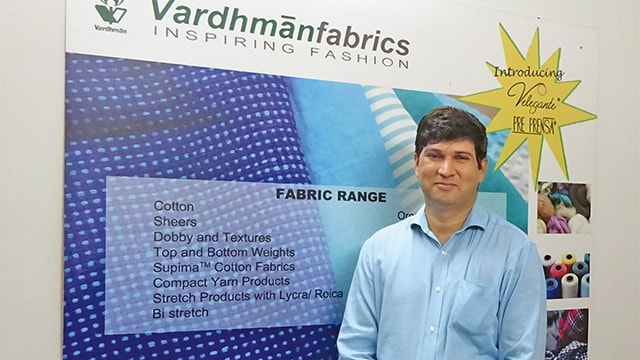
Kulbir Kundu, Country Manager – Bangladesh, Vardhman Textiles
Amongst the biggest names in textiles in India, with one of the largest spinning & fabric capacities, Vardhman Textiles has established its firm ground in Bangladesh since the last 5 years. In a candid discussion with Apparel Online, Kulbir Kundu, Country Manager – Bangladesh, unravels the company’s roller coaster journey so far to sustain amidst the stiffly competitive textile market of this country. With an initial high followed by a distinctly low phase and a gradual revival, this textile giant has rapidly modified its business strategies to carve its own niche regardless of the presence of several small- and medium-level players with the shortest lead time that have emerged in the last few years.
Highlighting the rapidly evolving Bangladesh textile industry and its increasing weaving capacity, Kulbir asserts, “Local mills have increased their capacity and product capabilities. There are also several fresh mills that have ventured in the fabric segment.” He further adds that these mills are delivering reasonable quality fabric. The challenges do not stop here. Lead time is also another constraint for this Indian textile mill as it takes 14-15 days for its trucks to cross the Benapole border successfully due to the poor infrastructure present there. This was one of the prime reasons behind Vardhman’s sluggish performance some time back, more so as the borders were overcrowded for a period of time, leading to further delays. In spite of all these challenges, Vardhman has been able to sustain its volume by adding new customers and shortening production lead time which was possible due to big in-house production capacity from yarn to fabric.
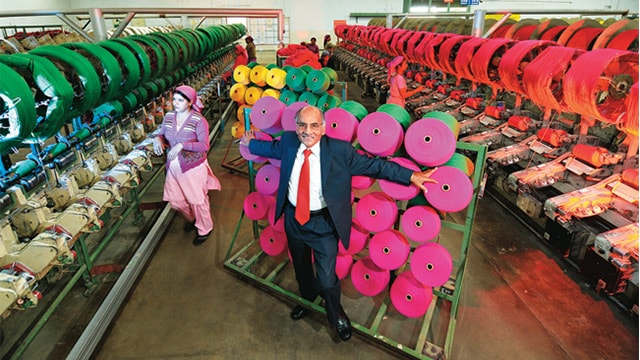
Image Courtesy: India today
Vardhman has also bounced back significantly by diversifying into many new products which it earlier did not have, effectively recovering its lost ground. An optimistic Kulbir states, “About 3-4 years back, we started our liquid ammonia plant. Last year, we added our printing plant as we were losing orders in its absence. In terms of product basket, we diversified our mix. It is now not only in cotton. We create blends like cotton tencel stretch, cotton modal super stretch and difficult products like bi-stretch. These are the types of products which are in demand in the ladies’ wear segment.” Moreover, the country manager confirms that his company is aiming at the product qualities offered by China which is mainly polyester and polyester stretch, cotton polystretch and viscose although originally, they manufactured cotton and cotton stretch at the maximum.
With India being the hub of raw materials like tencel fibre and different types of yarn, these product variations were not difficult to be achieved by Vardhman. They are now producing 100% tencel, 100% modal and are very competitive in terms of their lead time as compared to China. Kulbir clarifies that their focus on their basics or core programs still accounts for 70-75% of their total volume as they have a huge capacity build-up. He shares, “Whatever is the quantity, we can easily deliver them provided we have the projections because we are a big mill with a huge capacity and an extensive R & D centre.” Playing at one end on niche and another on volumes, the company has devised a winning balance.
It is indeed remarkable to note the expansion that Vardhman has undergone in Bangladesh especially in the bottomwear segment despite their earlier benchmark in shirt fabrics. Explaining the factors that inspired them to go for this massive shift, Kulbir avers, “In shirts, the major component is yarn dyed varieties for which local mills are now quite capable as their prices and deliveries are good and their quality is just fine. Because of this tight competition in shirts domain, we started offering different types of blends, washes and finishes.’ Even in fabric finishes, Vardhman offers qualities like moisture management and climate control which are highly appreciated by the buyers and they hope to take it up also in their next upcoming season. Going forward, the focus for Vardhman in Bangladesh is predominantly into the bottoms business for both men and women. Even in shirting which still constitutes a big part of their product category, they have transformed to more modal and tencel based fabrics which is seeing a surge in demand in the women’s clothing section.
With fast-evolving new product categories, Kulbir predicts that though the market growth of Bangladesh is slow (2.5%) in the current year, it would bounce back and achieve the target of 10% annual growth, considering the responsiveness and capabilities of the entrepreneurs in the country. He is quick to admit that this market would never see an absolutely lull phase as it generates consistent business for those who are actively involved in this trade.
With some of the world’s leading brands as its major buyers like GAP, JCPenney, American Eagle, H &M, M & S, s.Oliver and even Inditex, Vardhman continues to prove its mettle in fabric manufacturing. With a strong belief in the concept of made to order, they endeavour to present their clients with new qualities every time by seeking inputs from their buyers and also presenting collections from their own ideas.
The strong design and product development team which creates ideas and converts them into beautiful niche fabrics is the key which gives Vardhman an edge over its competitors. Vardhman’s current strategic orientation is towards keeping the buyers’ interests alive which makes it unique and way ahead of the local mills who are still largely focused on supplying volumes to the buyers.
Being focused on a defined goal has paid dividend to Well Group Industries, established in 1973 by Founder Chairman Abdus Salam under Bangladesh Textile Industries (BTI) in a small workshop in Chittagong. With an initial target to produce sewing threads to cater to its growing domestic demand, it has in just over four decades expanded into a conglomerate with multiple interests apart from only sewing threads. WELL THREAD (its flagship product), packaging, food, hospitality, real es tate and readymade garments together generate a combined annual turnover of over US $ 100 million and employ over 20,000 workers. Apparel Online caught up with the dynamic CEO of the Well Group Industries, Syed Nurul Islam, to get an insight on Well Group’s mercurial rise and its diverse offerings in RMG, which Islam prefers to call ‘clothing’, and justifies using the term of his choosing with a rational explanation.
Syed Nurul Islam, CEO, Well Group Industries
“I personally do not like to use the word readymade garment (RMG)… Today Bangladesh is not only about cutting and stitching, but much more as it has matured tremendously. From producing yarns to making fabrics to cutting and stitching to finishing and packaging, we are doing everything. Today the majority of the big names, be it in woven or knits, have their own vertically-integrated set-ups. For basic denim fabrics, Bangladesh is not only self-sufficient but one amongst the best globally. In twill also, we are doing very good and so also in knit,” states Islam proudly.
The readymade garment units of Well Group (Well Fashion Ltd., Well Designer Ltd., Well Mart Ltd., Well Dress Ltd. and Well Fashion Ltd. Unit-2 with combined machine strength of 3000) together produce 20 million pieces of garments (trousers – denim and twill, besides cargo shorts) for names such as Walmart, H&M, JCPenney, Kmart, Carrefour, Aeropostale, George, Sears, Dollar General, Tesco, etc. However, Well Group’s preferred product in its initial days of garment manufacturing was not bottoms, but shirts! “We started in a very small way making shirts with 100 machines in 1999 but have shifted focus exclusively to trousers afterwards,” maintains Islam. Changing demand dynamics of the existing clients and Well Group’s inherent strength in washing are the main reasons behind this shift from shirts to bottoms.
“Having our own washing facility, wash garments was an obvious choice, so we went for bottoms like heavy twills, denims and cargo shorts with diverse wash effects,” Islam explains.
Well Group’s wash facility is equipped with the latest in wet and dry processes as well as power laser, taken care of and supervised by a Sri Lankan expert while another Sri Lankan is in charge of the production units ably aided by two IEs from the same island nation to help ensure smooth and hassle-free garment manufacturing.
Image Courtesy: wellbd.com
Currently, almost 80 per cent of Well Group’s production is cargo shorts with an (average FOB of US $ 6) and remaining 20 per cent caters to women’s denims (average FOB US $ 6 that can go up to US $ 9 depending on wash and value addition). “Walmart is our main client from USA and H&M from Europe and both have big order volumes which suit us well,” avers Islam. Dealing in volumes, Well Group is not keen on adding too many names to its clientele and is content only with a handful, but with voluminous orders. “This is actually our marketing strategy. It is very difficult to handle large number of buyers, who would have different needs and requirements with diverse order volumes,” shares Islam, conceding to the fact that working with only a few clients comes with its own share of drawbacks and briefs. “There are two sides to it. The biggest risk is if the buyer does not have orders, we do not have business. While at the same time when we have very big orders, we cannot entertain other customers as our capacities are filled,” he continues.
Going forward thus, Well Group is investing in a manufacturing unit to resume producing shirts, in tandem with market diversification, keeping the future in perspective. “To start with, we will have 10 lines (500 machines) to make specialized shirts from yarn dyed fabrics,” informs Islam, who has a well-equipped unit for yarn dyed fabric (WELL Fabrics) with weaving capacity of 500,000 yards per month. While in terms of market, Islam is readying himself to look beyond USA (where Well Group exports 80 per cent of its products) and Europe (20 per cent), and sees a very good prospect in Japan.
“We are already in talks with clients there and hopefully by next season, we would have orders from Japan, which again is a non-traditional market for Bangladesh but has very good potential in my view,” Islam underlines, citing Japan’s increasing volume of garment trade with Bangladesh. “You will find a large number of Japanese buyers in Bangladesh these days; even Uniqlo has its own office in Dhaka,” he says, adding, “Japan for that matter is buying apparel worth almost US $ 1 billion from Bangladesh currently; and especially for knits and denims, the prospects are very positive.”
British fashion retailer Marks & Spencer and ShanghaiTex will jointly organise a ‘Plan A 2025’ Business Forum at the 2017 edition of the show.
ShanghaiTex is the leading international trade fair for the textile industry.
The agenda is to promote ‘industry sustainability’. The event will be held on November 28 this year at Shanghai New International Expo Centre in China.
M&S’ Plan A 2025 is the eco, ethical strategy which it introduced to tackle the fresh set of 21st-century challenges.
The Plan A focuses on the core value of the company to protect the planet by sourcing responsibly, reducing waste, utilising recycled materials, supporting fair trade and helping the communities.
M&S has already made its UK operations 28 per cent more energy-efficient using ‘green’ electricity and is also actively encouraging its suppliers to be a part of its carbon-neutral project.
At the Forum, experts from different fields will share the most cutting-edge information and exchange opinions on sustainable industry developments as well.
The fashion month is in full swing and after New York, it’s now time to bid adieu to London Fashion Week’s commotions as well.
The two cities share similar upheavals on the eco-political side, so it comes as little surprise to see that New York’s ‘Americana’ trend has crossed the sea and translated into an edgy ‘Brit-pop’ theme for British designers.
Notably, there are quite a few crossovers like the abundant ‘celebration of femininity’ in all its regalia and a rage of transparency. Taking the infamous ‘Keep Calm and Carry On’ wartime poster quote very close to their heart, the British creatives unleashed their most innovative and artful designs for the upcoming spring season.
The standout trends were a tug of war between heritage checks, last season’s ruffles and shiny transparent fabrics as well as bright new hues like yellow, baby lilac and tomato red.
For Spring/Summer 2018, Christopher Kane championed sheer fabrics, feathers and micro florals in pastels; JW Anderson presented a very naturalistic line-up in dressed down linen, Napa leather and marled yarn knit materials.
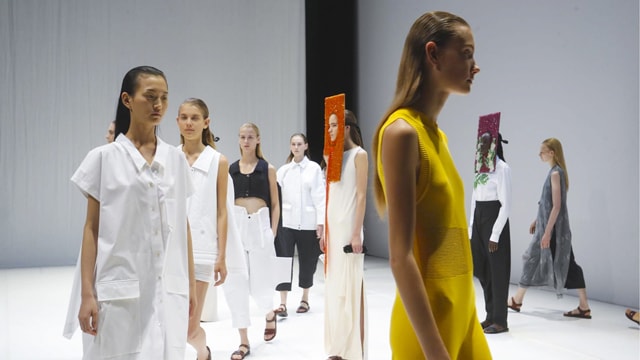
Chalayan, RTW, Spring/Summer 2018.
Meanwhile, Hussein Chalayan made a strong case for British tailoring with his reimagined shirting, jumpsuits and impeccable suiting options; whereas Mary Katrantzou, ever the celebrator of all things fancy went all out on bubble hems, eye-catching beading and embroidery in bright colours.
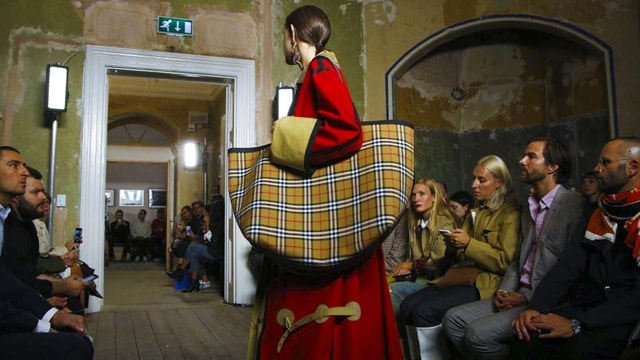
Grabbing eyeballs yet again with its fashion innovations, Burberry too brought back its trademark vintage brown check and plastered it on almost everything. The entire collection was a mix of classic verses street silhouettes like military coats, translucent plastic outerwear, horse-riding shirts and sheer separates.
Burberry, RTW, Spring/Summer 2018
The younger designers also did not disappoint with Richard Quinn’s bodysuits in clashing florals and Simone Rocha’s voluminous Victoriana dresses to Toga’s plastic panelling. At Mother of Pearl, a fun add-on to the brand’s beautiful garments were their ruffle-edged pillows and lush blankets that are actually a part of the brand’s new lifestyle banner.
In addition to the big runway shows in London, various brands, designers and retailers were trying to create immersive experiences that go beyond the traditional 15-minute catwalks.
For instance, Gareth Pugh’s confrontational film presentation of his new collection; Erdem’s Selfridges takeover where the designer has dressed the store in his romantic floral print for 8 weeks which will retail his fall 2017 collection along with an exclusive capsule.
Also, a one-week free exhibition was hosted at the Somerset House showcasing some of London’s biggest design hits. The exhibition not only coincided with the fashion week but also with London Design Festival, making the city a melting pot for design festivities.
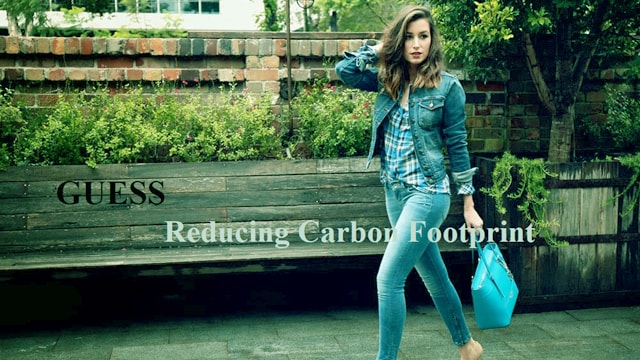
GUESS reduces carbon footprint and energy consumption
American fashion brand GUESS has unveiled its second sustainability report on Thursday (September 21).
The report reveals details about steps taken by the fashion company on the environmental front and the future ideas to be worked on to move forward sustainably.
GUESS has claimed carbon footprint reduction across its stores, distribution centres and headquarters in Los Angeles, California. It has also reduced its power consumption to a great extent by replacing the existing lighting systems with energy-efficient LED lighting.
The company has so far made 286 of its stores energy-efficient in Canada and the US.
The retailer also mapped the water consumption level of the denim products it manufactures, considering global water availability. The company is currently working on a comprehensive water action management plan to address these impacts that will be released next year.
During the past year, GUESS also joined a global industry pledge to advance a circular fashion system. Under the pledge, the brand is supporting an ideology that fashion should last, and be continuously ‘repurposed, reused and recycled’. The company is also going to announce a product take-back programme later this year.
Additionally, the firm has installed new HVAC units and achieved 46 per cent savings in natural gas consumption.
“At GUESS, we understand that we must continue to grow and contribute to the global community with increasing care for people and the environment. We aim to embrace the existing solutions as well as try new ones to address the social and environmental challenges of our time,” says Victor Herrero, Chief Executive Officer, GUESS.
Univogue – a name that is synonymous with quality has collaborated with Bullmer, a pioneer in the field of cutting room technology solutions to become leaner and more cost-effective. The Group’s strength lies in rapid decision making, superior product quality, good capacity and timely deliveries. Speaking exclusively to Apparel Online, Jagath Priyantha, Director, Univogue Group, Chittagong, explains how automated equipment, in cutting areas will broaden product capabilities significantly.
Counted among the leading garment manufacturing companies in Chittagong, specialized in bottom wear, Univogue Garments Ltd. is catering to some of the world’s leading brands like Ralph Lauren, Perry Ellis, Haggar Clothing, DXL, Bodek and Rhodes to name a few. A Sri Lanka-based company, Univogue started its operation in Bangladesh with one production unit at the CEPZ in 1985 and today it is operating four production units, including two sewing units, one cutting and storage unit and a finishing unit with wrinkle-free facilities. For this Group, adding capacity is not a one-time affair, but a growth strategy.
“We have continuously added capacity over the years, as we find that in the industry now, minimum of 10 per cent growth is required to sustain, otherwise we cannot meet our cost. In the last three years, we have increased our capacity by about 30 per cent,” informs Priyantha.
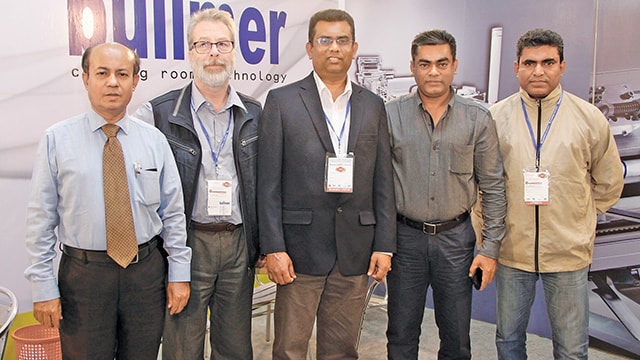
Jagath Priyantha, Director of Univogue Group (C) with team from Bullmer and Uni Asia Associates
The focus today for the company is on adding automation in the cutting room to reduce the labour costs and boost efficiency in cutting. “This year, we have decided to centralize cutting to minimize the cutting cost and also to consolidate the business. Those are the new changes and by centralizing the cutting, we will be able to increase 15-20 per cent capacity for the next year in the cutting areas,” says Priyantha. The efforts for the same are being supported by automated equipment by Bullmer, offering sustainable solutions in cutting areas. “We found that it is difficult to maintain the labour and maintenance costs in manual cutting. For accurate quality, we had been using systems earlier also, but we found that in the current scenario, Bullmer is the most viable solution for us and then we simply went for that.”
Priyantha strongly believes in Bullmer and sharing his experience while working with the very basic machines states, “machines are very work-friendly and the company is offering extensive support regarding the same.” Progressively, Bullmer is also supporting the Group to keep its viability alive. Priyantha further added: “Initially I found that installation was done well. They supported us by giving operators and other workers to train our people. Then we found that systems are not that critical for us to run by ourselves. Now internally, we have trained our people and we also have a technical team that comes in here every month to do the routines and we found that it is working out well.”
The management is very confident of the future and already has an expansion plan under implementation. “In 2017, we will have expansion on sewing and production capacity in place, following centralization of cutting. By the end of this year, we have planned for a turnover of around US $ 70 million and for 2018, our plan is to touch US $ 85 million turnover,” shares Priyantha.
The Group currently is very upbeat; cost reduction with innovative ideas like cutting room optimization, will definitely reap benefits. “The maximum saving comes from the fabric, because in our product, at least 55 per cent cost is of the fabric. We are focusing on optimization front to utilize the fabric to the maximum. The automation basically helps you to discipline cutting room, this will improve monitoring and reduce malpractice,” says the Director of Univogue Group.
The Group is simply looking at cost advantage tactics in its production module to reduce costs, increase revenue and drive profits. Priyantha, sticking to his similar product strategy advocates, “We have more or less set-up our lines for 60 machines. At present, we are having three cutters and four spreaders. The products are chosen to suit our operation.”
Bangladesh’s ready-made garment exports achieved a substantial growth in all its major export destinations including the European Union, the US and Canada in the first two months (July and August) of the current fiscal year 2017-18.
A report published by Bangladesh Export Promotion Bureau (EPB) has announced the latest figures.
According to the EPB, Germany has outstripped the US to become Bangladesh’s biggest apparel export destination in the last two months. The export has grown by 9.72 per cent to US $ 992.39 million from US $ 904.4 million in the same period of FY 2016-17.
The export earnings, however, from the Asian countries including China, Japan and India declined in the reporting period.
Garment exporters and business experts maintained that the growth rate has been satisfactory so far and Bangladesh is enjoying benefits of the recent rebound of the Euro against the American dollar.
Though the Chinese market is a promising one for Bangladesh’s apparel industry, it has been failing to gain market share there due to lack of competitiveness. Vietnam is, however, gaining market share rapidly, they added.
RMG export earnings from China in July-August period of the FY 2017-18 fell by 6.80 per cent to US $ 62.38 million from US $ 66.94 million in the same period of FY 2016-17.
Meanwhile, earnings from the readymade garment export to the US market in the first two months of the FY 2017-18 grew by 9.62 per cent to US $ 990.81 million from US $ 903.89 million in the same period of the FY 2016-17.
Apparel export to the UK, the 3rd largest export destination for Bangladesh, rose to US $ 733.78 million from US $ 567.17 million with 29.38 per cent growth during the period.
Bangladesh apparel industry is expected to remain as the top apparel sourcing destination for international fashion brands and retailers over the next five years, highlights Mckinsey & Company’s latest survey.
The competitive prices offered by the country and China’s shrinking market share are the factors contributing to the sector’s growth.
Mckinsey & Company, an influential worldwide management consulting firm, prepared the survey titled ‘Digitization: The next step for the apparel-sourcing caravan’. The report is based on the interviews of Chief Purchasing Officers (CPOs) of 63 leading global apparel retailers and brands that buy garment items worth US $ 137 billion a year.
According to the survey, the CPOs were asked to name three countries which they expect to be the top sourcing destinations over the next five years. In response, 49 per cent of the CPOs mentioned Bangladesh as their first choice, 43 per cent chose Ethiopia, 37 per cent opted for Myanmar, 35 per cent for Vietnam and 22 per cent selected India.
“Bangladesh retains the top spot, selected by nearly half of all respondents, similar to its rating in 2015,” the survey underlined.
Bangladesh, the second-largest apparel exporter globally after China, exported apparel items worth US $ 28.04 billion in the recently concluded 2016-17 fiscal year, securing 0.20 export growth rate year-on-year.
Although the last year’s growth rate was the slowest in last 15 years, the promising sector of Bangladesh has rebounded and increased by 14.05 per cent on year-on-year basis to US $ 5.52 billion in the first two months (July-August) of the current fiscal year.
“I certainly believe Bangladesh will be the top choice of global retailers and brands as the garment sector improved workplace safety and other compliance after fixing the structural, electrical and fire loopholes,” said Siddiqur Rahman, President of Bangladesh Garment Manufacturers and Exporters Association (BGMEA).
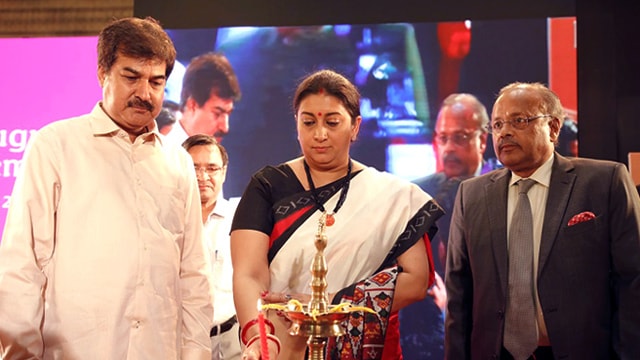
India’s Union Textile Minister Smriti Irani lightening the lamp at the inauguration ceremony of Vastra 2017 in Jaipur, Rajasthan
The Union Minister for Textiles and Information & Broadcasting Smriti Zubin Irani inaugurated the 6th edition of the four-day international textile and apparel fair VASTRA 2017 at the Jaipur Exhibition and Convention Centre (JECC) in Rajasthan on September 21.
The event is being organised by the Rajasthan State Industrial Development and Investment Corporation Ltd. (RIICO) and Federation of Indian Chambers of Commerce and Industry (FICCI).
At the inauguration ceremony, Irani said, “The textiles sector, which provides direct employment to over 45 million people and indirectly impacts close to another 20 million households, is growing exponentially in the country. The influx of Foreign Direct Investment (FDI) has been vital in its growth in recent years.”
The Government is providing skill opportunities and incentives to support the industry in reaching new heights, she added.
Over 250 exhibitors from 13 states, around 300 overseas buyers from more than 50 countries and about 200 representatives from around 100 Indian buying houses/agents are participating in the 2017 edition of Vastra.
The Textile Minister also expressed satisfaction on the inclusion of design and other workshops in VASTRA 2017.
As shirt manufacturers gear up competencies and expertise to cater to new and potential markets, the importance of quality standards and value-additions have become vital parameters deciding the success and failure of businesses. Apparel Online spoke to a prominent accessory supplier and some top-of-the-line testing labs to know what they think about the shirt business and what is it that they have to offer to achieve value-addition and set new benchmarks in quality and standards.
KDS Accessories
Based out of the port city of Chittagong, KDS Group is one of the leading multi-national apparel and textile conglomerates in the country. KDS Accessories has selected its products finely intertwined with not only the evolution of its accessories business but also with the dynamic nature of the country’s apparel industry. It all started with manufacturing of corrugated cartons for packaging purposes and was sequentially followed by sewing threads, polybags, plastic hangers, tags, labels, polyester button, etc. Debasis Daspal, CEO of KDS Accessories, shares his views.
Shirt Business
Shirt as a product category has good potential to grow but currently is facing some operational challenges to meet the global high standards of quality and craftsmanship. However, the growth rate of shirts significantly lags compared to that of denim and lingerie items in Bangladesh. But as more and more entrepreneurs are inclining towards higher value creation, the possibility of higher number of shirt manufacturers coming up besides capacity augmentation of existing manufacturers seems not so far.
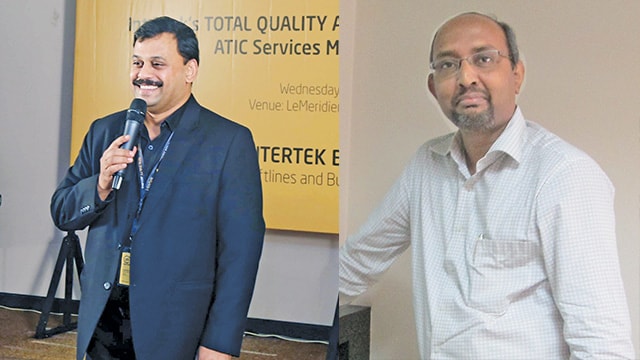
Dr. Karthik N.D., Country Managing Director, Intertek Bangladesh and Debasis Daspal – CEO of KDS Accessories
Accessory requirements
The total number of different trims and accessories is quite substantial in various kinds of shirts depending on styles and sizes. The general requirements of some major accessories in a shirt are: Buttons (2%), Labels & Tags (1%), Carton & Poly (5%), others (7%).
[The percentages are average in terms of FOB value of a garment].
Apart from the considerable value that accessories play in garments’ FOB, the complexity and varieties of any trims are also significant.
Special Buttons
There have been so many special polyester buttons’ requirements for any kind of shirt. The need for variety of buttons range from normal pearl buttons to horn buttons to several types of fancy buttons. Apart from the polyester buttons, several types of metal buttons and snaps are also needed in denim shirts and childrenswear.
KDS’s strength to meet the accessories’ demands
KDS accessories, being the foremost trims and packaging player in the country, stands tall in supplying most of the accessories needs of a shirt manufacturer in the country. Starting from providing sewing threads, buttons, all kinds of labels and print material, hangers, poly and cartons, we are the one-stop trims solution providers to any shirt manufacturer.
Our button facility ramps up overall business by developing our fancy button facility – nickel quoting button (metal look), layer button and others.
Further, we can also develop butterfly, collar bone unit in plastic division which can help gear-up sales.
Over the years, KDS accessories has been working with some of the major shirt manufacturers in Bangladesh like Viyellatex, Interfab Shirt, Mohammadi Group, New Age App, Evince Group, Dressman/Shirt Maker, Shinest Apparels and several others.
Bureau Veritas CPS
Bureau Veritas Consumer Products Services is world’s leading testing, inspection and certification solution provider for the global consumer. It works closely with clients to effectively manage quality assurance needs throughout their supply chains and mitigate risks in terms of quality, health, safety, social responsibility and environment, thus protecting the brand’s reputation and minimize costs. Rasanga Ulluvis Hewage, Regional Chief Executive, responsible for BV Central Asia – covering Bangladesh, Singapore, Thailand, Malaysia & Myanmar, shares his views…
Bangladeshi exporters on scale of 10
Bangladesh is No. 2 in EU and No. 3 in USA, so we could give the country 9 or 8 on a scale of 10 in shirts.
Challenges…
Price and technical barrier to trade ZDHC MRSL, beside PRSL.
BV Support
We conduct technical meetings, seminars and awareness workshops regularly to help and support the industry in various aspects.
UL VS Bangladesh Limited
For over 120 years, UL has been developing scientific-based methods to test the quality, performance and safety of diverse key consumer products. Today, UL solves the safety, security and sustainability challenges of the 21st century. Around the world, UL along with its employees promote safe working and living environments for all people. UL tests, inspects, audits, certifies, verifies claims, advises and trains as well as provides software solutions. Md. Golam Sarwar, Consumer and Retail Services – UL VS Bangladesh Ltd., shares his views on shirts…
Bangladeshi exporters on scale of 10
I will give Bangladesh 6 out of 10 and this is so because we are still not strong enough for woven fabric manufacturing and we cannot accept shorter lead time like less than 45 days.
Five critical testing norms
Dimensional stability to washing, Appearance after washing, Seam slippage (light weight fabric), CF to washing and CF to rubbing.
If the fabric has been treated for easy-care properties, then tests for Formaldehyde, Appearance of seams and Appearance of fabric, includes the above mentioned tests.
Any new testing norm
Nowadays ZDHC (Zero Discharge of Hazardous Chemical) is a very sensitive issue and everybody should know the ZDHC roadmap.
Support from UL
As a third-party, we have expertise in state-of-the-art testing laboratory that can help industry to ensure garment performance quality. We have expert/qualified quality inspection team for garment and fabric inspection to support suppliers and buyers and ensure good quality products.We provide compliance audit like, SEDEX & BSCI that can ensure workers’ health & safety.
We are also offering ZDHC waste water testing, ZDHC audit and sharing knowledge about ZDHC by organizing vendor seminars.
Intertek
Intertek is a leading total quality assurance provider to industries worldwide through its network of more than 1,000 laboratories and offices and a dedicated workforce of over 42,000 people in more than 100 countries.
In Bangladesh and across the world, Intertek offers customers a Total Quality Assurance value proposition, assisting organizations as their trusted quality partner providing ATIC (Assurance, Testing, Inspection and Certification) solutions which go beyond just assuring the quality and safety of a corporation’s physical components and assets to also look at the reliability of their operating processes.
As the globally leading quality assurance provider, Intertek goes beyond physical quality control to provide total peace of mind through its innovative and bespoke assurance, testing, inspection and certification solutions for customers’ operations and supply chains. Country Managing Director of Intertek Bangladesh, Dr. Karthik N.D. shares his viewpoint on shirts…
Five critical testing norms
In physical/colour fastness parameters:
Seam strength/slippageb.
Button attachmentc.
Tearing strengthd.
Pilling resistance for synthetic blendse.
Appearance after washf.
Colour fastness to washing/light
Analytical/RSL:
If trims sourced from local factories or without nominated source the possibility of failure are as below:
Twill tape?Labels: Azo
Button/plastic accessories: Lead, Phthalate
Any new testing norm
Mainly ZDHC requirements and especially focusing on printed shirts/with embellishments, focusing on waste water testing, chemical management etc., in addition to product quality.
Support from Intertek
Increased capability for testing all requirements in Bangladesh, conducting awareness seminars/workshops – DETOX, TECHNICAL – Performance, Regulatory, Product Integrity, etc.
Besides, with a focus on “TOTAL QUALITY ASSURANCE”, we have introduced “ASSURANCE” services, enabling manufacturers and brands to avoid failures by technical collaboration from initial stage of product designing until complete supply chain cycle, till consumer management, named as ATIC services.
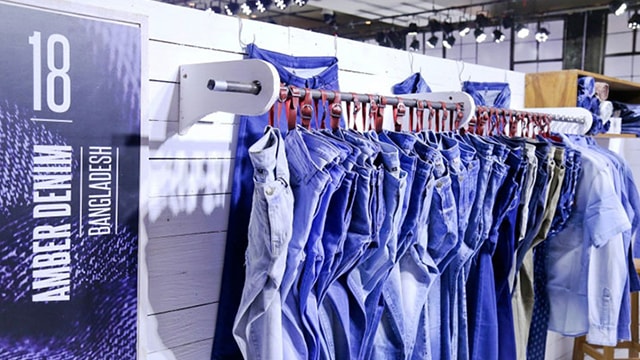
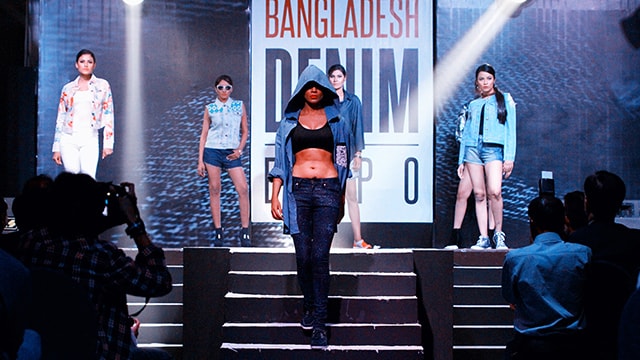
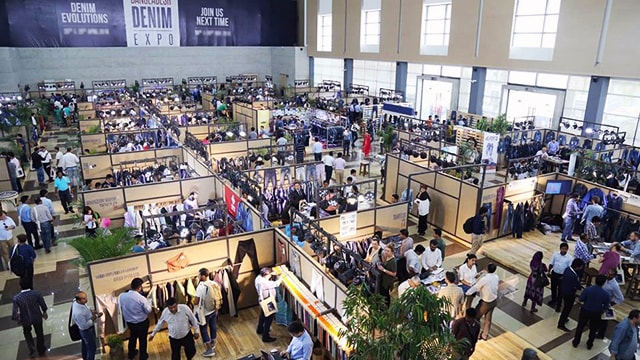
Fifty-eight exhibitors from 12 countries, over 5,000 visitors, four unique seminars and workshops and a bigger ‘Trend Zone’ with a brand new ‘Information Exchange Zone’, the 6th edition of the Bangladesh Denim Expo once again proved why it is one of the most sought-after and much-awaited denim show in the country.
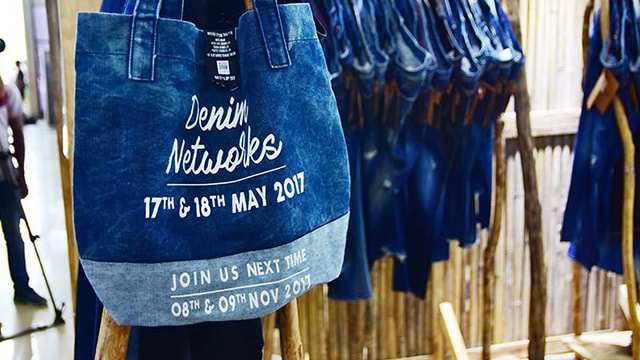
Themed ‘Denim Networks’, underlying the importance of global market in strengthening long-term relationships and mutual approach with focus on innovation and sustainability, the two-day denim extravaganza kicked off to a rousing start at the capital’s International Convention City Bashundhara on May 17, reinforcing the importance of forging business relationships and promoting best working practices.
Image Courtesy: bangladeshdenimexpo.com
Exhibitors from Bangladesh, Brazil, China, Germany, Hong Kong, India, Italy, Japan, Pakistan, San Marino, Spain and Turkey were present in full strength showcasing the latest developments in denim that drew in 5,545 visitors from 1,029 companies and 52 countries, surpassing even the organizer’s expectations, more so considering the security concerns following the string of unfortunate incidents that had rocked the country in the recent past.
Fabrics on the forefront
A regular participant in the Denim Expo, Shasha Denims Limited – one of the leading denim fabric producers in Bangladesh – was back again, and this time with products woven around the theme of sustainability, the company’s thrust area in terms of offerings in the last couple of years. “This time we introduced a new theme, ‘Blue is the new Green’, through which we want to share a message with all our buyers and the denim lovers in general. ‘Blue’ means Denim and ‘Green’ means Sustainability, thus ‘Blue is the new Green’. Whatever we’re producing currently and plan to do are/and would be sustainable,” proudly declared Mohammad Jamal Abdun Naser, Director, Shasha Denims Ltd.
Living up to the billing of the largest textile industry in Latin America which takes pride in innovation and novelty, Brazilian denim specialist that thrives on the concept of sustainability – Vicunha Textile showcased a wide range of products in the expo including the latest in innovation from their sable.
“We consider Bangladesh an extremely potential market and have come this time with our vintage authenticity, the authentic high ridges, our heavyweight denims, high-stretch items and luxury fabrics,” underlined Abdelkader Amouche, Regional Manager, Vicunha Textile, expressing satisfaction that the expo has been a decent business generator for them.
Image Courtesy: bangladeshdenimexpo.com
For NASSA Denim, another big name in fabric production in Bangladesh, the stage of Bangladesh Denim Expo was the apt setting it was looking for to display its latest innovation – antimicrobial fibres, fit for prolonged usage sans washing, thanks to the anti-bacterial properties! “This highly-specialized fabric has been used in hospitals and hotel industry earlier but never in denim jeans manufacturing and that too with dyeing…,” maintained Agha Nadeem Mirza, Head of Denim, NASSA Denim.
Despite increased production cost (almost 20 per cent compared to conventional fabrics), NASSA is more than happy with the buyer’s response and looking forward to market it in countries that have good demand for such products. “We may not sell this fabric to Bangladeshi manufacturers… We’re looking at Japan as the market there always seeks innovative and diversified offerings,” revealed Arafat Hossain, Executive, NASSA Denim, who like many others was all praise for the expo and vouched for its increasing popularity. “Earlier, we had to remind our overseas clients about this expo, but now the scenario has changed completely. They not only remember the dates (of the event) but also look forward to attending it,” said Arafat while advising the organizers to allow participation of only those who have a R&D team. After all, the platform of Bangladesh Denim Expo is about showcasing something new and unique, reasons Arafat.
China-based denim fabrics producer Guangzhou Foison Textile Co. Ltd. was also extremely delighted to be part of the event. The fourth time participant is a manufacturer of an array of denim fabrics such as overdyed, mercerized, mercerized stretch and even printed items. With its experience of more than 10 years in denim fabrics, Foison showcased a number of innovations. “For this edition of Bangladesh Denim Expo, we’ve a number of new developments in cotton, twill, rayon fabrics, etc. We’re here to showcase competitively-priced, superior-quality good-stretch fabrics to the customers,” stated Yoo, Country Manager of the company, who hailed the expo for the sheer significance that it carries for the denim fraternity. “With every edition they are breaking the record of visitors and exhibitors. It has become a very good platform to exhibit our products to the potential customers. It’s a big boost for our business… Dhaka also is a tremendous market for denim fabrics,” Yoo quipped.
Image Courtesy: bangladeshdenimexpo.com
Present in the event was also Nice Denim Mills Limited (NDML), a subsidiary of Noman Group, exhibiting its range of cotton stretch fabrics as well as blends in viscose, tencel, etc. “We have received very good response so far. The platform of Bangladesh Denim Expo is a very good opportunity to showcase our offerings,” underlined Nur-E-Yasmin Fatema, Deputy Managing Director of Noman Group, adding how NDML is all geared up to produce high-quality denim fabrics. One of the top-of-the-line denim mills in Bangladesh (considering the fact that it is integrated with weaving, spinning and processing/colouration), NSDL is equipped with state-of-the-art machines, including rope dyeing machines from Morrison and Greenvile (USA). “We have the capability to produce fabrics in line with what are being manufactured in Pakistan and China as we are using technologically advanced rope-dyeing machines,” added Fatema. NSDL produces around 2.5 million yards of fabrics per month to cater to names such as H&M, Marks & Spencer, Next, Aldi, Lidl, Levis, Lee, etc.
Fifty-eight exhibitors from 12 countries, including Bangladesh, Brazil, China, Germany, Hong Kong, India, Italy, Japan, Pakistan, San Marino, Spain and Turkey participated in the expo.
Altogether 5,545 visitors from 1,029 companies and 52 countries attended the event.
Technology – An important aspect of fashion denim
Not to be left behind, machine manufacturers, solution providers and accessories makers also came up with the latest developments. One such name in sustainable and efficient finishing technology was Jeanologia which introduced its laser solutions and ecosystems in this expo. The Spanish company which is operating in Bangladesh for the last 17 years and boasts of a rich clientele here, showcased novel solutions that are able to increase the production capacity of laundries, reduce the time-to-market and offer innovative, creative and ecological products. The ‘Zero Water Washing Plant’ of Jeanologia allows water savings of up to 95 per cent and 90 per cent chemical use in finishing processes of jeans. It further aims to transform Bangladesh’s denim production centres into eco laundries by integrating all technologies – laser, ozone and nano-bubbles.
Image Courtesy: bangladeshdenimexpo.com
Participating for the second time in this event, Jeanologia understands how denim expo has become a key platform for the Bangladesh denim industry over the years. “It has started to become well known internationally. In fact, we’ve many visitors from sourcing companies, and brands and retailers this time from around the globe. I think that it has got a real big impact and hope that it is going to be a good tool for the industry to improve the image of Bangladesh denim in the world,” said Jordi Juani, Director – Asia Division, Jeanologia.
Accessories impress…
One of Italy’s leading label producers (nominated supplier of some of the biggest European retailers), Panama Trimmings Ltd., was the sole Italian exhibitor in the Bangladesh Denim Expo. “The market here is growing a lot. It has great potentiality… I believe the demand will only increase by each passing day. But Bangladesh needs also to develop infrastructure to facilitate buyers, manufacturers and exporters as a whole,” observed Davide Menini, Area Sales Manager of the company.
Another torchbearer of sustainable production, ISA TrimTec, the leather trimming division of Germany-based global footwear brand ISA TanTec, presented the latest developments of leather patches and laces for apparels, shoes, bags and accessories in the exposition. Manufacturing from three different factories in China, Vietnam and USA, respectively, the label producing giant exhibited an array of labels for the Bangladesh market. “We’ve been focusing on credibility and sustainability as sustainability has become the buzzword for the industry. As Europe is our main market and being the nominated supplier of global retailer like TomTailor, we realize how important Bangladesh market is for us,” said Susan Fu, Sales Manager of ISA TrimTec. A first-time participant in the denim expo, Susan termed the exhibition a great opportunity for business generation. “This is our first time in this event. But we have already decided to participate here on a regular basis as we feel this expo can play a crucial role in helping us grow in Bangladesh,” Susan underlined.
From the visitors’ eyes
Considering the significance of Bangladesh Denim Expo as one of the prime business generating platform, most of the visitors were unanimous in their opinion that it has been a game changer for sure. One of the leading native denim manufacturers of Bangladesh and a regular visitor, Gazi Mahmudul Alam Director of Mahmud Group observed: “In Bangladesh we have two denim exhibitions, of which Bangladesh Denim Expo is better in my opinion…” The bi-annual nature of the event was not something which was up to Alam’s likings though, who suggested a sole edition of the exposition per year instead.
Notwithstanding its reputation and role in catapulting Bangladesh as the preferred denim hub globally, some visitors rued the so-called lack of directions in terms of products. “We look for open-ended products, stressed twill garments, open-ended denims with stretch. We tried open-ended products last time also but it wasn’t worth because of limitations. In this edition there are some exciting innovations, but I would like to see more in terms of trends and directions,” underlined Luke Langthorne, Design Manager, Next Sourcing Limited, London. A regular visitor as he claims, the design manager otherwise was happy with the denim expo, terming it “a great platform to exchange ideas, opportunities and generate business.” Speaking to Apparel Online Luke maintained, “It’s not all about price but also opportunities and trends… This one is a brilliant initiative at bringing all the stakeholders under one roof.”
Seminars add to the charm
Exhibitors apart, who were more than successful in drawing the attention of the visitors from across the globe, the vibrant expo also featured several special events among which were the ‘Tonello Denim Gallery’, ‘Sashiko Stitch’, the ‘Repair Display’ along with the special ‘Information Exchange’ and the absolute novelties of the ‘Virtual Reality Booths’, enabling one to take a virtual trip of a fabric mill, denim factory as well as laundry.
Amongst several seminars organized during the course of the two eventful days, ‘From ideas to technologies: Discovering a new age for garment finishing’ by Alice Tonello, R&D Manager at Tonello Garment Finishing and Piero Turk, a world renowned denim designer, is worth mentioning, which explored the new trends in finishing through cultural, economic, ecological and technical aspects.
The ‘Seminar on Total Quality Assurance: Holistic Approach for Business Excellence’ by Intertek Bangladesh was also a major attraction of the event, which highlighted the company’s assurance, testing, inspection and certification services to the textile and apparel industry of Bangladesh, presented by Dr. Karthik ND, Country Managing Director of Intertek Bangladesh.
Organizer’s perspective
“Bangladesh Denim Expo is an international platform showcasing the wealth of opportunities available in Bangladesh covering all aspects of the denim supply chain with exhibitors displaying fabrics, garments, threads, machineries, finishing equipment and accessories – a true top to toe representation of the denim industry,” observed the beaming CEO of Bangladesh Denim Expo, Mostafiz Uddin, commenting on the success of the 6th edition of the denim extravaganza. “And doing it with an international perspective, especially concerning the inevitable sustainable transition, we all must face, learn to promote and defuse sustainability as much as we can,” Mostafiz added.
The next edition of Bangladesh Denim Expo will be held on November 8th & 9th this year with its promise to overshadow the success and grandeur of the previous editions, keeping true to its tradition of setting new benchmarks in showcasing the latest innovations in denim.
Partner with India's Premier Fashion Business Platform
Position your brand at the centre of the apparel industry by
partnering with Apparel Sourcing Week — where BRANDS,
MANUFACTURERS, RETAILERS and
TECHNOLOGY PROVIDERS come together to shape the future
of fashion sourcing.