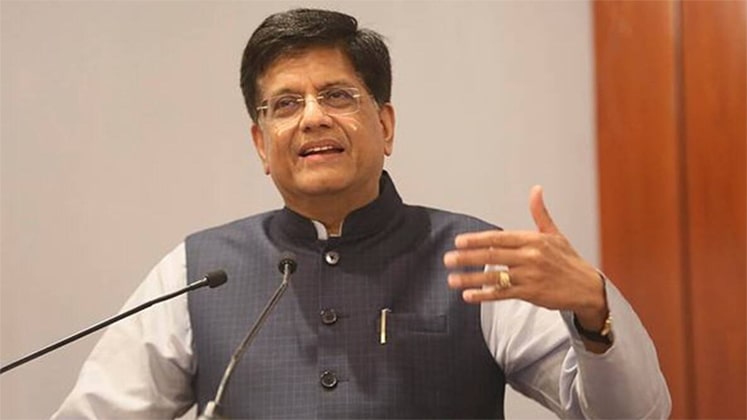
Union Minister of Textiles, Commerce and Industry, Piyush Goyal held the first meeting with the newly constituted Textile Advisory Group at Vanijya Bhavan, New Delhi.
Secretary (Textiles) Rachna Shah initiated deliberations with the Group which consisted of various associations and councils from the industry including AEPC, SRTEPC, ASFI, AMFII, CPMA and SIMA which represent the entire Manmade Fibre (MMF) value chain. Also attending were senior officials from the Ministries of Textiles, Commerce and Petroleum and Natural Gas.
The overview of the sector and its challenges were presented by Association of Man-Made Fibre Industry of India (AMFIl) and Association of Synthetic Fibre Industry (ASFI). The challenges presented were high degree of fragmentation in the downstream textile value chain, from weaving to garmenting along with the need to have measures in place to contain the rising imports of MMF raw materials and yarn and fabric.
Also discussed was the issue of unutilised production capacities and their high levels due to imports. Various possible solutions were discussed by the stakeholders to strengthen and revamp the MMF value chain as well.
The Minister said the enforcement of Quality Control Order (QCO) on MMF products will be expedited by the Government and suggested for the holistic growth of the sector. Different segments of the value chain need to be supportive of each other’s requirements and challenges.
The Minister, additionally, cited the Production Linked Incentive (PLI) scheme for man-made fibre (MMF) apparel, MMF fabrics and products of technical textiles, as the Government’s flagship intervention. This was to augment the size and scale of the domestic MMF sector and assured the attendees of providing dedicated handholding support to the beneficiaries of the PLI scheme through specially designated officers from the Ministry of Textiles for this purpose.
On behalf of spinners, Southern India Mills’ Association (SIMA) raised the issues of revision of standard input output norms under Advance Authorisation Scheme. Synthetic and Rayon Textiles Export Promotion Council (SRTEPC) raised the issue of capacity shortage for quality processing and effluent treatment facilities. Apparel Export Promotion Council (AEPC) also raised the issue of availability shortage of high-quality processed fabric.