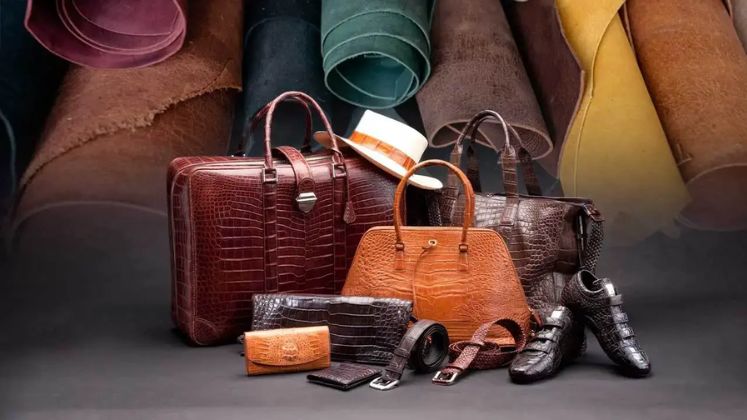
Bangladesh’s earnings from leather goods and footwear exports are heavily concentrated in ten countries, accounting for approximately 80 per cent of the nation’s total shipments in the fiscal year 2022-23.
Industry stakeholders emphasised this point during a recent discussion, stressing the importance of diversifying their markets to mitigate the risk of export losses linked to fluctuations in demand within these markets.
Such diversification would also open up new opportunities for exporters to expand into fresh territories.
Simultaneously, they urged Bangladeshi businesses to adopt strategies aimed at enhancing market access and bolstering their competitiveness in the export arena.
“Leveraging its abundant labour force and raw materials, Bangladesh can explore new markets and broaden its export portfolio,” noted Lien Chun Yao, Managing Director of Blue Ocean Footwear Limited, during a seminar held recently in capital Dhaka.
Chun Yao recommended that Bangladesh integrate into the global value chain, underscoring leather as one of the nation’s most promising industries with considerable room for both vertical and horizontal expansion, offering substantial economic potential.
Abdur Rahim Khan, Additional Secretary for the Trade Support Measures Wing of the Ministry of Commerce, emphasised the need for Bangladesh to seek new markets to enhance its competitiveness, especially considering its forthcoming graduation from least developed country (LDC) status.
Bangladesh currently benefits from duty-free market access and reduced tariff rates when exporting to various developed and developing countries worldwide.
However, future trade agreements will be necessary to sustain these benefits.
Khan mentioned that Bangladesh has identified 12 to 14 countries for potential bilateral trade agreements to secure its export possibilities post-LDC graduation.
Michael Roy, President of the Manufacturing and Operations at Advanced Manufacturing Group, pointed out that political stability in Bangladesh in recent years has created a favourable environment for conducting business and advancing the leather industry. He highlighted Bangladesh’s strengths in the leather sector, including ample raw materials, cost-effectiveness, a skilled workforce, product quality, and infrastructure, which contribute to its competitiveness in the global leather product export market.
Amrita Makin Islam, Director of the LFMEAB and Deputy Managing Director for Picard Bangladesh Limited, moderated the discussion.



 Bharat Tex Special Report 2026