Some entrepreneurs and business owners are starting to see hope as the turmoil in the garment industry subsides and banking sector reforms take hold following the receipt of more than US $1 billion in support from international development partners.
Remittance inflows have been rising, the dollar exchange rate has mostly stabilised, LC margin setting has been liberalised, and inflation control measures are expected to have a positive impact, all of which should reassure business investors.
Until recently, the student movement of July and August, internet disruptions during the protests, the breakdown of law and order after Sheikh Hasina was overthrown, devastating floods in the east of the country, and labour unrest in the apparel and pharmaceutical industries had all undermined investor confidence.
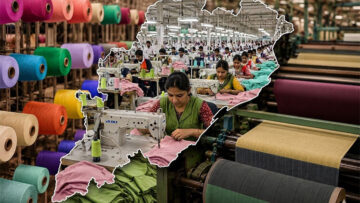
Despite it being a national holiday, most clothing manufacturers in the capital’s Ashulia and Gazipur industrial belts resumed operations on Monday, indicating that the worst has gone. The unpleasant situation that has been present for the past few weeks has subsided thanks to factory owners making agreements with workers and law enforcement efforts that target political infiltration in labor demonstrations.
In addition to the increased protection, the World Bank, Asian Development Bank, and USAID offered numerous financial help on Sunday.
Senior US officials made investments in Bangladesh’s private sector and pledged to support the interim administration on matters including banking sector reforms during their high-level US delegation’s visit to Dhaka on Sunday.
Nonetheless, the reduction in confidence is certainly reason for concern, even in light of signs that the overall economic climate is becoming better. To rebuild business trust, it appears that cooperation between the interim administration, political parties, civic society, and the broader public is required.
Even with the recent advances, there is still instability in the law and order situation because the Awami League, which was evicted, is still looking for unfair opportunities by taking advantage of other people’s mistakes.
Furthermore, a number of business stakeholders have requested a relaxation of the loan payback terms.
Investor reluctance to expand company operations is seen in the notable 44% yearly decrease in capital machinery imports during July–August and the 36% annual decline in petroleum product imports during the same period.