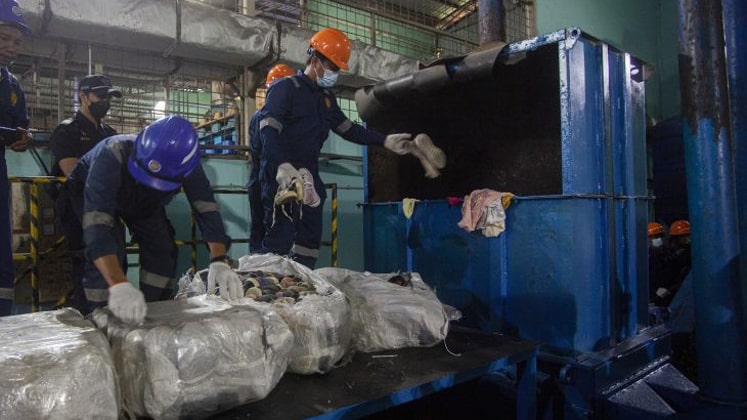
According to the Indonesian Trade Ministry, the Government has taken down 40,000 links that were selling imported secondhand clothing on social media and e-commerce platforms till March 2023.
“Approximately 40,000 links selling imported secondhand clothing have currently been removed. E-commerce and social e-commerce would be monitored in the future,” Moga Simatupang, the ministry’s temporary director general of commerce and consumer protection, stated.
After the Content Handling Coordination Meeting and the Sale of Imported Illegal Used Clothes Through E-Commerce, Market Place, Social Commerce, and Social Media on Thursday in Jakarta, Simatupang made the announcement during a press conference.
He added that merchants of imported used clothing on social and e-commerce platforms used a variety of strategies to evade product recalls, including changing their product names.
“After being removed, it can resurface under a different name. To address this, we require assistance from the e-commerce team,” said Simatupang.
Even Alex Chandra, the head of logistics at the Indonesian E-Commerce Association (IDEA), stated that all 40,000 links offering imported secondhand clothing were from IDEA members at the time.
“We will carry out manual investigations and use artificial intelligence (AI) to take down the links. However, we are also asking for help from the Trade Ministry to give us the list of the links then we will take it down,” he revealed.
Chandra acknowledged that fewer products were being sold after the unlawful ones were removed, while some stores continued to carry them. He pointed out that merchants might use a variety of strategies to prevent product recalls, like switching the keywords to product images.
“We were able to get rid of the phrase ‘ball’ that the dealers were using to advertise their goods in the early weeks. Now, a different word has been used as the keyword. We need to keep looking,” he declared.
Moreover, individual fabric shots have taken the role of prior product images that showed sacks of clothing. He explained that after the word ‘used’ was changed to ‘preloved,’ the e-commerce team had to conduct a manual search while working with the appropriate ministries.