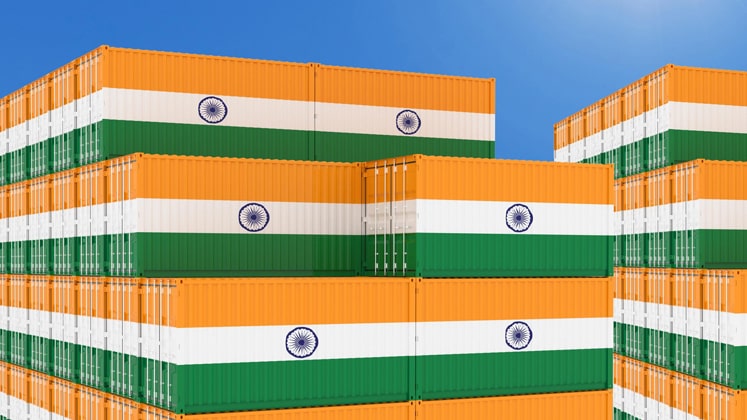
Bangladesh’s exports to the Indian markets are expected to reach US $ 2 billion for the first time at the end of the current financial year as the demand for Bangladeshi products is increasing in the neighbouring country.
This was underlined by none other than the Federation of Bangladesh Chambers of Commerce and Industry (FBCCI).
Headed by Md. Jashim Uddin as the President, FBCCI is the apex trade organisation of Bangladesh, which plays a pivotal role in consultative and advisory capacity to safeguard the interest of the private sector in Bangladesh.
The FBCCI statement follows a one-on-one meeting between Indian High Commissioner to Bangladesh Vikram K Doraiswami and the trade body’s President even as reports suggest in the last one year, the trade between Bangladesh and India has increased by 94 per cent.
Credit to a large extent, in this direction, should go to the country’s readymade garment sector, offerings from which have gained a strong foothold in India’s domestic market.
As per McKinsey & Co.’s FashionScope report, India’s apparel market will reach US$ 59.3 billion this year, only to grow and develop to emerge as the sixth-largest market globally.
“…the Indian retail landscape is very exciting…Now with markets opening up in Tier-2 and Tier-3 cities, the growth is going to be even faster,” maintained earlier Mohit Batra, Country Head, Bangladesh Liaison Office, Reliance Trends, speaking to Apparel Resources.
According to data analysed by Team Apparel Resources(AR) from various sources, Bangladesh earned US $ 473.53 million from apparel exports to India in 2021 from what was US $ 299.42 million in 2020, registering 58.14 per cent increase.
Further,in first half of FY 2022 (July-December period, Bangladesh), the country fetched US$ 366 million from apparel exports to India achieving 58 per cent Y-o-Y growth compared to the corresponding period of last FY.
“Trade picking up within the region signals a tremendous potential for growth,” observed ex-BGMEA President Rubana Huq, adding, “India is a huge country and we can take advantage of their vast consumer class.”
The second most populated country in the world after China (estimated 1.38 billion in 2021) with the gross domestic product (GDP) projected to grow at 9.2 per cent for the current financial year (ending March 2022 for India), India is emerging as a very exciting market for Bangladesh apparel makers with its upwardly mobile young population boasting of increased spending power, which has led local and global brands and retailers spreading their wings beyond the metro cities to cash in on the opportunities that are on offer in the smaller cities, to increase their sourcing volumes from Bangladesh.
“In all aspects, India has a huge population and their buying capacity is commendable….” underlined Director of BGMEA & Envoy Group,Shehrin Salam Oishee.
Crossing the one-billion mark…
Exports to India for the first crossed the US$ 1 billion mark in 2019, with goods worth US$1.25 billion shipped to the neighbouring country, of which the apparel sector earned US $499.09 million in 2018-19 fiscal, which is 79.09 per cent higher compared to US $278.67 million in the previous year.
“Bangladesh offers apparels at reasonable prices, while global retailers are opening more outlets in India, who buy products from here…,” maintained Managing Director of Classic Group Shahidullah Azim.
As per latest data analysed by Team AR, the top product categories exported to India from Bangladesh are T-Shirts, Trousers, Men’s Shirts and Sweaters, which collectively account for over 73 per cent of Bangladesh’s total apparel export earnings from India.
The highest growth was recorded in T-shirt category, in which Bangladesh’s export to India valued US$ 62.59 million in the January-December period of 2021, registering 122.31 per cent increase from the corresponding period of 2020 (when the value of T-shirts exported from Bangladesh to India stood at US$ 29.48 million).
In Trousers category, Bangladesh earned US$ 171.01 million from exports to India in the January-December period of 2021 that was around 36 per cent of the country’s total export earnings from apparels in the said period.
The export value of trousers was 45.58 per cent higher than the earning from the shipment of trousers to India in the corresponding period of 2020 even as Bangladesh shipped Men’s Shirts worth US$ 76.45 million to India in the period under consideration (January-December period of 2021) compared to what was US$ 52.83 million in the same period of 2020, registering 44.71 per cent increase.
Similarly, in the January-December period of 2021, Bangladesh exported sweaters worth US$ 37.34 billion to India, growing by 41.33 per cent from what was US$ 26.42 million in 2020.
“If the testing facility becomes smooth, garment exports to India will grow a lot…,” said Managing Director of Rupa Knitwear (Pvt) Ltd., Md Shahidul Islam, who claims to export more than one lakh pieces of sweaters every year to India.
Factors propelling apparel export growth…
According to industry insiders and economists, there area host of reasons that are to be credited for the increasing trend of apparel exports to India.
“Production costs in India increased due to implementation of the Goods and Services Tax (GST). As a result, demand for Bangladeshi goods increased in the country,” explained Shahidullah Azim, BGMEA Vice President as one of the reasons.
Duty-free market access is another major reason!
India allowed duty-free import of apparels from Bangladesh under SAFTA in 2006. Earlier, this facility was limited to 8 million pieces per annum even as the restriction was removed in 2010 following which imports from Bangladesh have been growing at a steady pace.
SAFTA or South Asian Free Trade Area is the free trade arrangement of the South Asian Association for Regional Cooperation (SAARC), which came into force in 2006, succeeding the 1993 SAARC Preferential Trading Arrangement with signatories being Afghanistan, Bangladesh, Bhutan, India, Maldives, Nepal, Pakistan and Sri Lanka.
Geographical proximity and improved connectivity also played their role in giving an impetus to apparel exports from Bangladesh.
“…transportation cost from Bangladesh is low, which encouraged importers to buy goods for both local brands as well as foreign brands,” further added Sahidullah even as Shehrin Salam on her part underlined, “…keeping the geographical location in mind, our neighbour is probably one of the closest destinations for shipping. Considering all costs, it will not be wrong to say India will benefit from our products as a huge cost of freight compared to other exporting nations shall not be incurred in this case.”
In the age of fast fashion, lead time is a big determinant for business success. Add to this the transportation cost. Both these factors industry people say prompted brands and retailers operating in India to source more from Bangladesh.
With mutual connectivity between the two countries set for further improvement on the back of a slew of initiatives taken by the respective Governments, exports from Bangladesh is all set to touch new high in the coming days, feels many.
The Indian envoy during his meeting with the FBCCI President ensured a new gate would be opened soon at Petrapole to facilitate better movement of trucks between the two countries even as a recent World Bank report underlined seamless transport connectivity between India and Bangladesh could lead to 297 per cent increase in Bangladesh’s overall exports to India.
The easing of non-tariff barriers is also said to be another growth booster as far as apparel shipment to India is concerned.
“India is a growing market for Bangladesh, where non-tariff barriers were hindering exports…. In recent times, these barriers are relaxed to some extent,” stated World Bank Lead Economist in Bangladesh Zahid Hussain, who also attributed the Government’s cash incentives to garment makers for successfully catering the non-traditional export markets, for increased export earnings from apparels, especially from countries like India.
Bangladesh Government offers garment exporters 4 per cent cash incentive for exporting to non-conventional export destinations even as the BGMEA has called for increasing the same to 5 per cent, to give a further boost to apparel exports.
Fashion retail revival to boost exports
India has always been a key market for the global fashion industry. However, like in other parts of the globe, fashion retail in India took a hit due to the pandemic before starting to make a comeback of sorts lately.
As per Retailers Association of India’s recent survey, retail sales in India in December 2021 rose by 7 per cent over December 2019 and by 26 per cent Y-o-Y and now with the latest Omicron wave having fizzled out, the positivity is set to rise further, even as experts underlined while big-ticket purchases will most likely get pushed back, there may be an increase in small-ticket spending like buying apparel as consumers’ will give vent to their pent-up demands for clothing.
They further added even though the retail sector in India faces various challenges of inequality, infrastructure, and market fragmentation, anticipation is high the sector will exhibit strong economic growth and scale, and collectively all these will make the Indian market even more vibrant in the times to come.
“…it’s imperative for us to also grow exports with our neighbouring countries,” stated a Bangladesh garment exporter underlining if Indian fashion retail is set for the much-awaited revival, suppliers in Bangladesh have also pulled up their socks to cater to their requirements for mutual benefit.
“Garment export to India will grow more soon…,” claimed BGMEA President Faruque Hassan to wind up on a positive note adding a business delegation is all set to visit India in April as well.




 Bharat Tex Special Report 2026