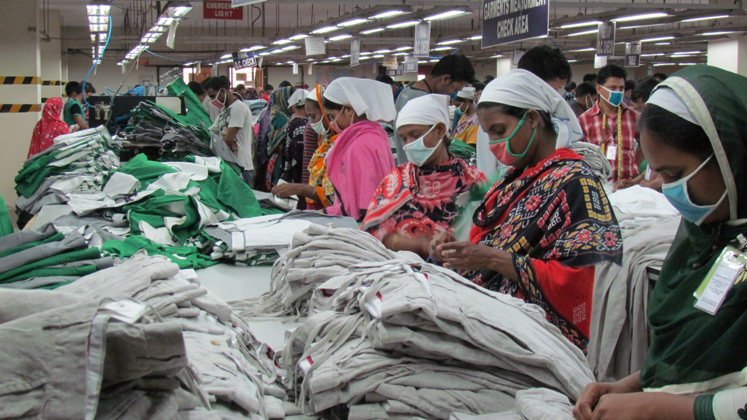
It won’t perhaps be wrong to maintain, apprehensions apart, there hasn’t been any marked impact of Omicronon Bangladesh garment industry as yet.
The country ended 2021 on a high registering overall earnings of US $ 33.6 billion, in which apparels contributed US $ 20 billion.
Notably, apparel shipments were more than satisfactory in export strongholds as well as the non-traditional markets.
As per the latest information made available by the country’s Export Promotion Bureau (EPB) and analysed by Team Apparel Resources, shipments in the first six months of the current fiscal year 2021-22 (FY ’22) to non-traditional destinations increased by 24.26 per cent fetching US $ 3.06 billion in foreign earnings, while that to traditional markets have been even better.
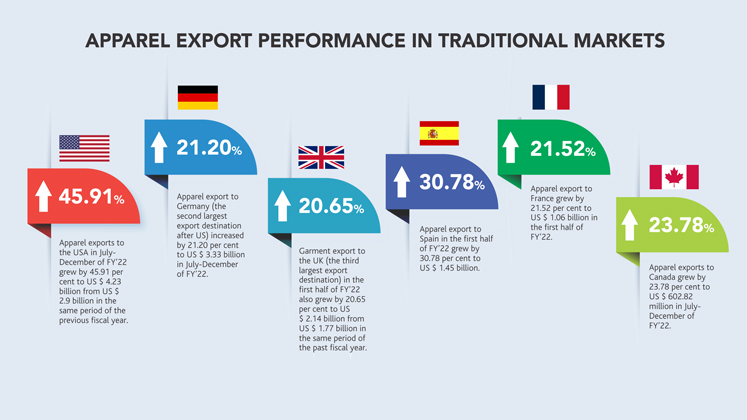
Said Senior Secretary of the Ministry of Commerce,Tapan Kanti Ghosh: “With the improvement of the pandemic situation in 2021, overall sales of apparels were on rise in most of the countries. As a result, the demand for clothes has increased globally and as a RMG-producing country, Bangladesh is getting its benefits.”
For information, United States, Canada and European countries are generally known as the traditional markets for garment exports.
How things are poised going forward?
According to data from the National Board of Revenue, in the first seven days of 2022, apparel shipments registered around 32 per cent in growth, to a little over US $869 million year-on-year.
This has added to the optimism of the garment exporters, who believe things aren’t set for any major change, at least in the foreseeable future.
“For now, everything is normal…,”underlined BGMEA Vice-President Shahidullah Azim.
Work orders flowing in even in the post-Christmas period, considered a lean period otherwise,led garment makers to see a clear connection with consumers continuing to release pent-up demand for clothing, resulting in higher footfalls for brands and retailers even after the holiday period, especially in Europe and USA, which together importbulk of ‘Made in Bangladesh’ apparel items.
“…we are now receiving a good number of work orders from buyers even after the Christmas sales,” claimed BGMEA President Faruque Hassan, who,however,preferred to wait and watch for another month or so before ruling out any impact of Delta’s successor on apparel exports even if renowned economist and CPD Fellow Mustafizur Rahman on his part underlined if the Omicron variant does not cause an unprecedented situation, exporters expect the first six to seven months of 2022 will be a good time for them.
“…2021 was better than 2020 for the RMG sector and hopefully the trend will continue in 2022 as well,” stated Md. Fazlul Hoque, a former President of the Bangladesh Knitwear Manufacturers and Exporters Association (BKMEA) and Managing Director of Plummy Fashion Limited, adding, “The new variant of COVID-19 will not have any impact on our exports until lockdowns and business shutdowns are enforced in export destinations.”
It would come as a big relief for Fazlul and others in the industry to know that far from imposing fresh lockdowns, countries in the West which still have restrictions in place, are scampering to throw everything open now.
Take, for example, UK, which on 27th January lifted the Coronavirus restrictions imposed to tackle the Omicron variant. With the number of positive COVID-19 cases falling sharply over the past couple of weeks, the UK Government which introduced the so-called ‘Plan B’ restrictions on 8th December after Prime Minister Boris Johnson warned of a looming ‘tidal wave’ of Omicron, has now opened up everything.
What’s more, the British Government has also now made it clear that masks will no longer be required in enclosed places even if vaccine passports had already been done away with for good.
Meanwhile, the European Union has recommended people who are fully vaccinated or have recovered from Coronavirus to be allowed to travel among the union’s 27 member states without testing or quarantine requirements with experts maintaining the recommendation is the latest sign the bloc is coming to accept COVID-19 as a part of everyday life rather than a severely disruptive force.
What about market dynamics…
In the US, consumer sentiments have been on a positive trajectory, while in Europe, 67 per cent of fashion executives expect better trading conditions in 2022. Business and economies opening up amidst gradual withdrawal of travel and other pandemic-related restrictions, the newfound optimism amongst the stakeholders is rather palpable.
“… consumers’ demand for clothing likely will still follow a seasonal pattern. There is no indication anywhere that the rising cases in the US have negatively affected consumers’ enthusiasm for holiday clothing shopping,” underlined Dr. Sheng Lu, Associate Professor of Fashion and Apparel Studies at the University of Delaware.
The new variant even though can add new uncertainties and pressures to the supply chain, Dr. Sheng Lu said there’s no need to panic.
Now that the Omicron is losing steam and showing signs of fading out sooner than later, will retail spending and manufacturing pick up?
“After the Omicron surge eases, pent-up demand will lead consumers to increase spending,” maintained Economist David Ely of San Diego State University even as Economist Gary London of London Moeder Advisors on his part stated, “Retail sales have been relatively strong despite the pandemic. The small declines have been more than made up for in other sector spending (think hotels, goods and services for home remodels, etc.). Pandemic-related shutdowns are certain to end soon, with better vaccines and herd immunity. Supply chain disruptions will subside, and manufacturing levels will rise. Inflation levels will also ebb.”
Formerly the London Group,London Moeder Advisors provides analytical and advisory services to a broad range of clientele.
Is Bangladesh ready for eventualities?
Bangladesh, which managed to ward off the fallouts of the pandemic to a great extent since the first wave, has been somewhat on the tenterhooks and understandably so considering how the pandemic brought to knees the Vietnam garment industry earlier last year, albeit temporarily.
However, having learnt from the previous waves of the pandemic as well as how its neighbour India has been able to tide over the Omicron wave with limited restrictions and increased focus on health safety measures, in Bangladesh too, the Government authorities concerned and experts have commenced working hard to take necessary preparations even as health department has already sent 15-point instructions to field officials as a preliminary step to tackle it.
Starting administering booster shots to the vulnerable in tandem with integrated and regular immunisation programmes which will help more people get vaccines in shorter time period, experts think things are not going to turn very serious as majority of the population is vaccinated already and even if it does temporarily, Bangladesh Government and the garment manufacturers have already shown last year how to run the manufacturing units by embracing safety protocols and strike the right balance between life and livelihoods without causing much impact to the economy.
“Bangladesh needs to be prepared for dealing with the situation by utilising its previous lessons and experiences gained during the Delta-variant surge. It can be said without any hesitation just as the Government alone could not prevent the corona, so the new variant of the corona cannot be prevented by the Government alone. People from all walks of life must come forward to tackle it…,” winded up Monirul Haque Rony of the Department of Social Work of Savar Government College on a cautious yet positive note even as a recent World Bank report maintained economic growth prospects improved in Bangladesh, supported by returning of readymade garment orders from abroad while it kept up its forecast upgrades for this fiscal year and the next.