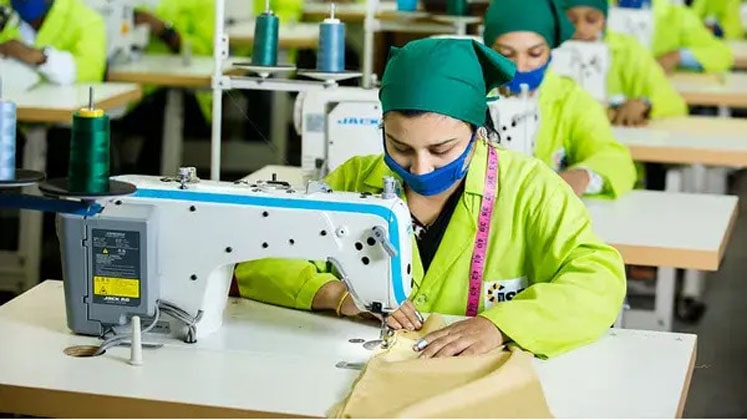
Experts and exporters have highlighted that Bangladesh was failing to seize the opportunity to expand its share in the global apparel market. They attribute this missed opportunity to the absence of a comprehensive policy concerning diversification, investment, and market access, which is giving other Asian countries a competitive edge.
For almost a decade, Bangladesh’s apparel industry has been the world’s second-largest exporter, trailing behind China. This achievement can be primarily attributed to the production of low-cost basic items and the advantage of duty-free market access as a least-developed country (LDC).
However, concerns have now arisen due to the potential withdrawal of duty-free access for Bangladeshi products in the global market when the country transitions from a least developed to a developing nation in 2026.
Experts and exporters have cautioned that such a withdrawal would negatively impact the competitiveness of the apparel sector.
They have added the competitiveness of other manufacturing countries has been progressively rising even as the potential discontinuation of trade preferences related to LDC status for Bangladesh in most countries by 2026, combined with Vietnam’s duty benefits in the European Union (EU) and Canada markets, as well as the EU’s free trade agreement (FTA) negotiations with India and Indonesia, has now raised concerns.





 Bharat Tex Special Report 2026