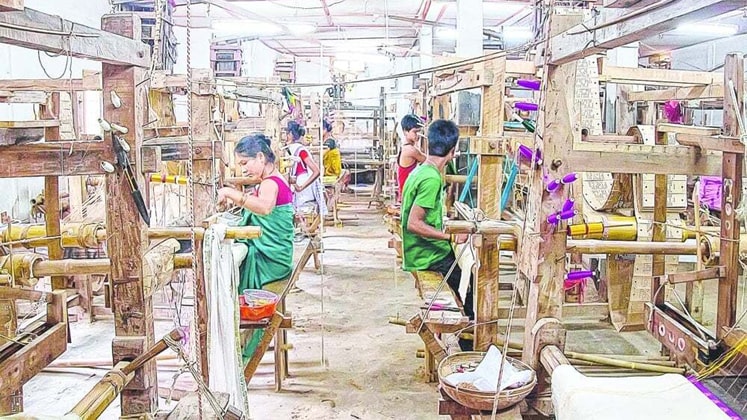
To establish a lab to assess the quality of the yarn used in gamosa and mekhela-sadors, as well as other handloom products, and to determine whether the products are made on a handloom or a powerloom, the Assam Handloom and Textile department plans to enlist the assistance of the Assam Textile Institute.
Since Assam currently lacks a testing lab, the state sends samples to Kolkata for analysis. The state will soon receive a lab with the approval of the textile institute to serve as an expert, according to Parag Mahanta, Director of the Handloom and Textile department.
“The lab is in planning stage. Once set up, it will help detect powerloom gamosas and mekhela-sadors that are transported from outside the state and sold at a cheaper rate in the state, which has harmed local weavers,” he added.
He continued by saying that since a certificate from a testing lab is required to submit a complaint, the department is unable to file FIRs with the police against the traders who sell powerloom gamosas and mekhela-sadors in defiance of the department’s mandate.
“It takes several days for us to get a certificate from a lab as we have to send the sample to Kolkata for testing. Therefore, we can only seize such products if they are being sold by any trader. We cannot take any action,” he added.
Also Read: Lack of laboratories in Assam preventing legal action against businessmen selling powerloom products
In an effort to revive the indigenous handloom industry, which is in decline, the state government on February 28 issued an order forbidding the powerloom gamosas and mekhela-sadors from entering the state, notably from Gujarat and Tamil Nadu.
All of the districts’ SPs and deputy commissioners were instructed to take action right away to confiscate powerloom products starting on March 1. The department purchased approximately two lakh gamosas and mekhela-sadors from regional handloom weavers in the previous month.