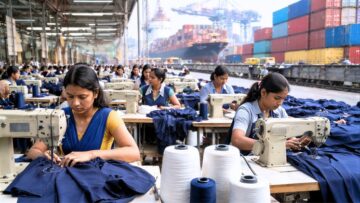
It is estimated that there are around 20,000 apparel manufacturing units in India, spread across various geographical locations in the country, producing for both the domestic and international market. We have established natural garment clusters, like Tirupur, Ludhiana, Bengaluru, Delhi-NCR catering to different product specifications along with recognised apparel parks established by the Government. However, there are also many smaller hubs operating in India which are contributing to India’s textile and apparel ecosystem. With fashion retail penetrating deep into Tier-2 and Tier-3 cities, the scope of the organised retail industry is on the rise. These retailers are expanding and would like to explore new production capacities in already established hubs as well as emerging clusters. Not surprisingly, they are looking for new vendors nearer to the markets with self-sustaining capabilities.
Armed with the knowledge and backing of one of the biggest retailers in India with over 1200 stores, Apparel Resources (AR) has conducted a study to map the vendor base in lesser known and emerging hubs, identify what they have to offer a buyer – as independent identities, self-sufficient in the technical, raw material and labour needs of specific products.
The study is an attempt to seek out apparel hubs that have potential for growth with the aim to create a comprehensive analysis of each hub with its competitive advantage, its unique value proposition and product and player demographics. The target was to identify players with over 100 machines in apparel and home furnishing in various hubs. In the process, 20 such cities with over 400+ vendors were identified. Though issues like AQL and productivity were asked about, most of the unit owners being new to the business were unable to or unwilling to share such information, leaving scope for an extension of the report analysis in the near future.
The report can be divided into two parts – the first is related to hubs that are already on the radar, however small, but have seen growth spurt in last few years taking on new dimensions as apparel hubs. The second is a list of those centres which are new in the true sense but are well positioned to become significant centres/regions for good quality apparel manufacturing for both the domestic and international market.

Smaller but growing hubs
While many of the destinations have existed for some time with few players and hence were never considered as apparel manufacturing hubs, but now they have over time considerable number of players to justify being hubs for apparel like Indore, Lucknow-Kanpur region, Erode and Surat.
Indore now has over 50 apparel product companies: There was a time when Indore was known mainly because India’s first large-scale organic cotton manufacturer – Pratibha Syntex was based out of the city. But today there are over 50 apparel manufacturing companies in the city producing various product categories and 5 textile companies. The products are manufactured both for the domestic and international retailers. Most of the players in the city are having their own brands and a majority of the units have been set up in last 5 years. Good Logistics is one of the major strengths of the city and a few of the bigger players here are Pratibha Syntex Ltd., Trends Apparels, Half Ticket Apparels.
Lucknow- Kanpur belt increases focus on apparel manufacturing with export: Uttar Pradesh as an apparel manufacturing state is mostly connected to Noida, which in reality is a part of the Delhi-NCR belt. But the AR survey found that a strong corridor for apparel manufacturing is emerging in the state combining the cities of Lucknow and Kanpur, which are about 70 km apart.
The survey unearthed a total of 21 companies in Lucknow from the industry of which 18 were apparel units, 2 textile units and one unit was a composite set-up. This city is majorly into womenswear and though chikankariembroidered products are the core of the hub, the city is now also developing as a hi-fashion hub as most of the companies are into exports working with high street brands. Manpower is available easily from Bihar and raw materials are comfortably sourced from Delhi-NCR. Major players in the city are MLK Exports, Paramount Chikan Export, Radhakrishan Overseas Corporation, to name a few.
Strengthening the region, Kanpur too has emerged from just a leather manufacturing destination to now having over 13 apparel manufacturing companies. The city was earlier known as an Equestrian Equipment manufacturing hub, but with availability of cheap and skilled labour, raw material, good connectivity, the city is able to offer better pricing for products specific to menswear and workwear. Some units are being planned for technical textiles and protective wear category. Since social and environmental compliances are already being followed in the city due to the strong leather base, the city is very upbeat of future growth opportunities.
Erode is now more than a fabric manufacturing destination: Of the 72 vendors identified in Erode, majority of 28 players belonged to the apparel category followed by 26 in the fabric category, while four players had vertically integrated units. Erode is the major hub for cotton textiles, and the region as a whole – Erode, Salem and Karur – is already a well-established cotton raw material base for the whole country with strong base in spinning, weaving and dyeing units. Now the region has good processing and garment conversion facilities and many units around the region come to Erode for sizing.

Surat has picked up in apparel production: There was a time when the name Surat was identified with man-made fabrics and exporters in Delhi-NCR were heavily dependent on the city for georgettes, voile and chiffon fabrics for womenswear. The city today boasts of a total of 19 apparel units that deal majorly with domestic market, though a few companies have entered the international market recently. The city has a good availability of raw material, good transportation facilities and manpower resources.
Some new centres have been identified
Few of the really new areas that look promising are Ranchi with 14 apparel manufacturing units, Ulhasnagar -Maharashtra with 7 apparel units, Bhuj -Gujarat with 4 apparel units and Guwahati -Assam with 4 apparel manufacturing units. These areas have come up only in the last few years and their state governments are promoting them for apparel manufacturing, laying the base for more units in the near future.
The Government has already identified India’s textiles and garment category as one of the 25 sectors capable of being a world leader; it has allowed this manufacturing sector to be the beneficiary of 100 percent FDI. With India being the world’s second largest textile manufacturer, home to 24 percent of the world’s spindle and 8 percent of the world’s rotors, it is widely believed that this sector could be one of the biggest success stories to come out of ‘Make in India’, right after the IT sector.