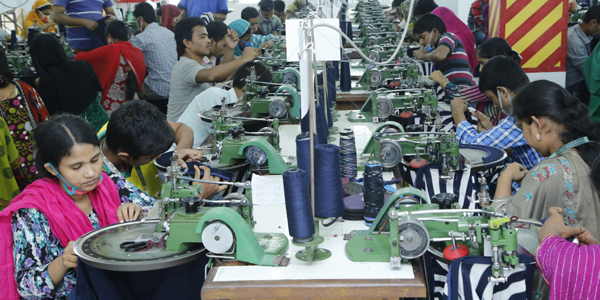
 Contrary to BGMEA’s reported success in bringing in about 1,550 readymade garment (RMG) units under the biometric database as of April 21, Bangladesh Knitwear Manufacturers and Exporters Association (BKMEA) has allegedly failed to emulate the good work done by BGMEA, and reportedly has been unsuccessful in including relevant information of around 2.1 million workers involved in the knitwear sector of the country’s flourishing RMG industry, in the biometric database. This was underlined in media reports, which blamed BKMEA’s lacklustre approach in recording the workers’ details.
Also Read – BGMEA’s ‘no’ to time extension for implementing workers’ biometric database
“We started process of preparing biometric database, but the response was very slow from the owners and only 11 factories have completed the process so far,” reportedly said Chief Executive Officer of BKMEA Sulav Chowdhury to a news daily of the country, adding, “But we have renewed the contract and started the process and I hope that it would be complete by June as the system has already been developed.”
According to BKMEA, it has 2,192 members, who employ about 2.1 million workers. Meanwhile, a former BKMEA leader, who spoke to the news daily on condition of anonymity maintained, “This poor performance is due to the negligence and dilly-dallying of the board.”
However, as per BKMEA second Vice-President Mansoor Ahmed, it had started the process of recording the workers’ details but lacked to gain momentum owing to lack of eagerness from the factory owners. “But we are holding meeting with the owners and urging them to expedite the process,” Ahmed reportedly underlined.
Also Read – BGMEA to stall service to factories with no workers’ biometric database
It may be mentioned here that, once created, the database would help store the basic information about a worker, including his or her identification, family details, record about service details, including factory and employer, dates of his or her joining or leaving the job and its reasons and also details of his/her skill. Besides, the database is also deemed important for successful implementation and use of a proposed fund for all export-oriented sectors as the fund would be collected at a rate of 0.03 per cent from each export receipt.