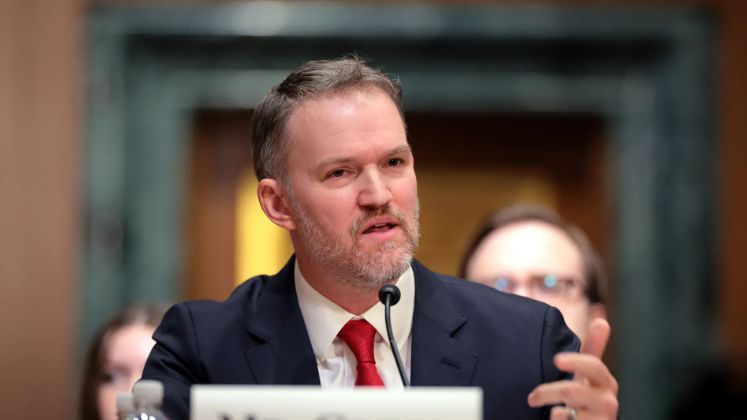
The United States’ Trade Representative, Jamieson Greer, is scheduled to visit New Delhi this week for discussions with Commerce and Industry Minister Piyush Goyal and other senior Indian officials, as both countries seek to conclude a long-awaited bilateral trade agreement.
Greer’s office confirmed on Sunday that the visit forms part of ongoing efforts to advance negotiations under the US-India Bilateral Trade Agreement (BTA), which was launched in February 2025. Discussions between the two sides have continued for more than a year as they work towards resolving outstanding trade issues.
Trade relations between New Delhi and Washington have improved in recent months following a period of tension last year. The Trump administration had imposed a 50% tariff on Indian exports, including a 25% penalty component, raising concerns across multiple export-oriented sectors in India.
Speaking on Sunday, Goyal indicated that the framework agreement between the two countries was ready. However, he noted that its implementation would depend on the resolution of remaining tariff-related issues and on securing a competitive advantage for Indian exporters relative to rival exporting nations.
The negotiations come at a time when India faces the prospect of additional trade restrictions from the United States. India is among a group of countries that could be subjected to an extra 12.5% tariff under a proposed US trade measure targeting economies that Washington believes have not effectively prevented imports produced through forced labour.
The proposal was announced by the Office of the United States Trade Representative (USTR) following a Section 301 investigation. If implemented, the measure would impose higher duties on imports from countries including India, China, Japan, South Korea, Brazil and Switzerland. Public hearings on the proposal are due to commence on 7th July.
According to the USTR, India’s failure to establish and effectively enforce a prohibition on imports linked to forced labour constitutes an unreasonable practice that places a burden on US commerce.
In addition, the USTR is examining a separate textile trade mechanism that could permit limited imports from selected countries at reduced tariff rates, potentially creating new opportunities for exporters that meet the programme’s requirements.





 Bharat Tex Special Report 2026